
Last updated September 20, 2026
Full 25-point door and opener safety check with every visit - springs, cables, rollers, tracks, and your LiftMaster or Chamberlain opener included
You get a price before we start. It does not change when the truck arrives.
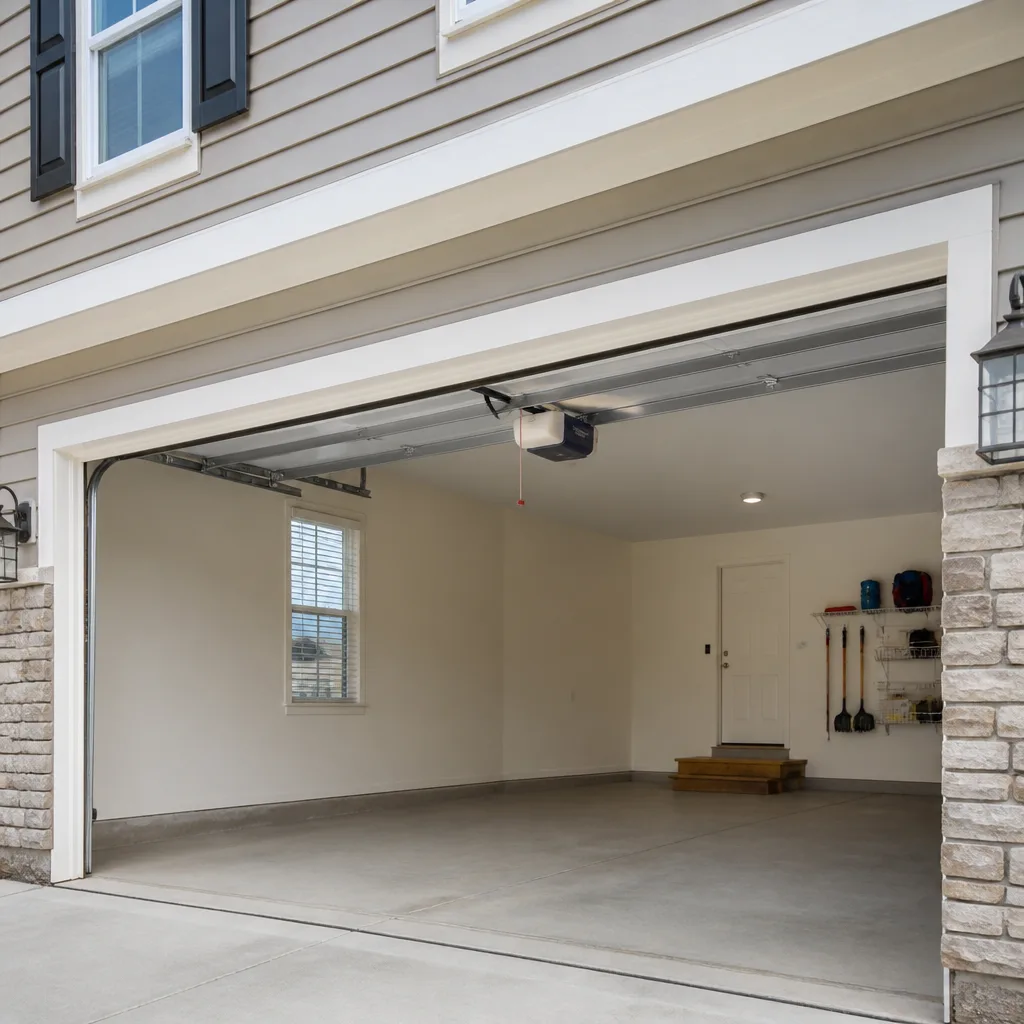
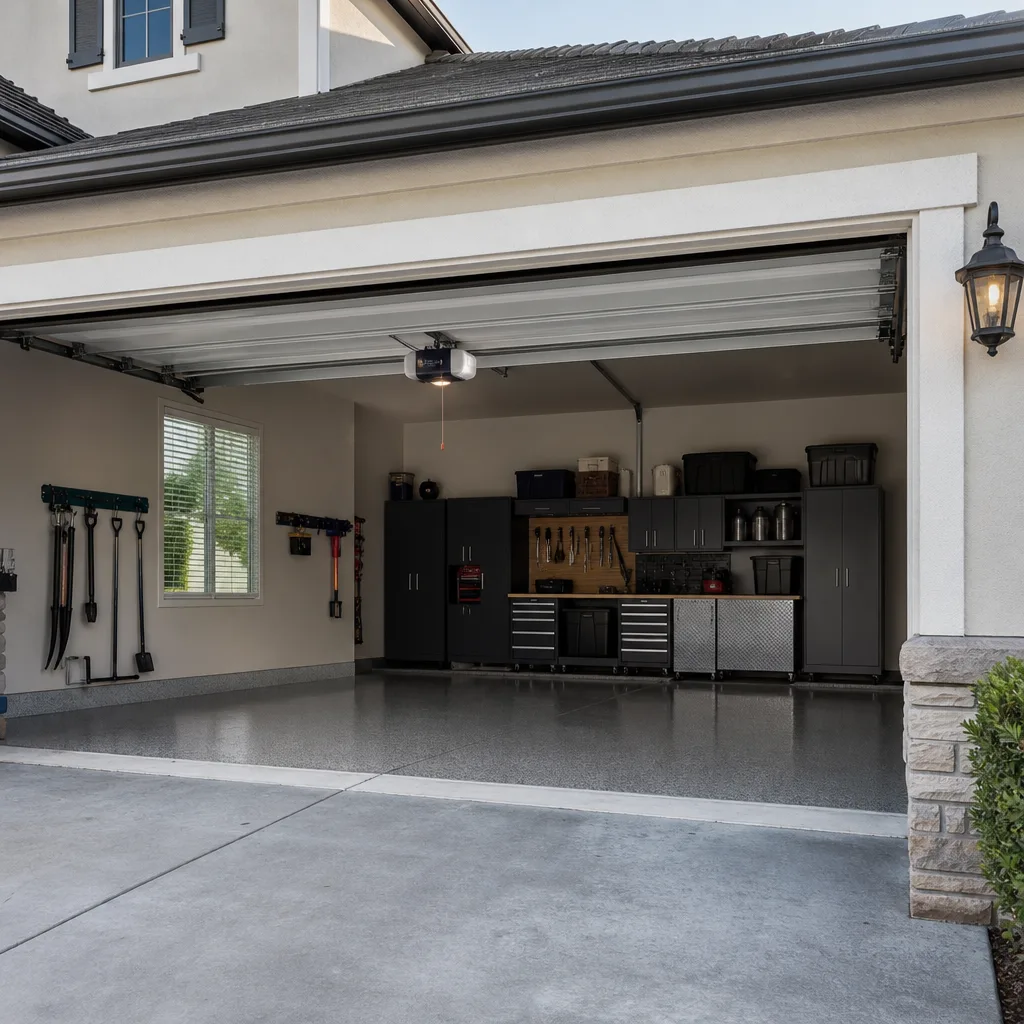
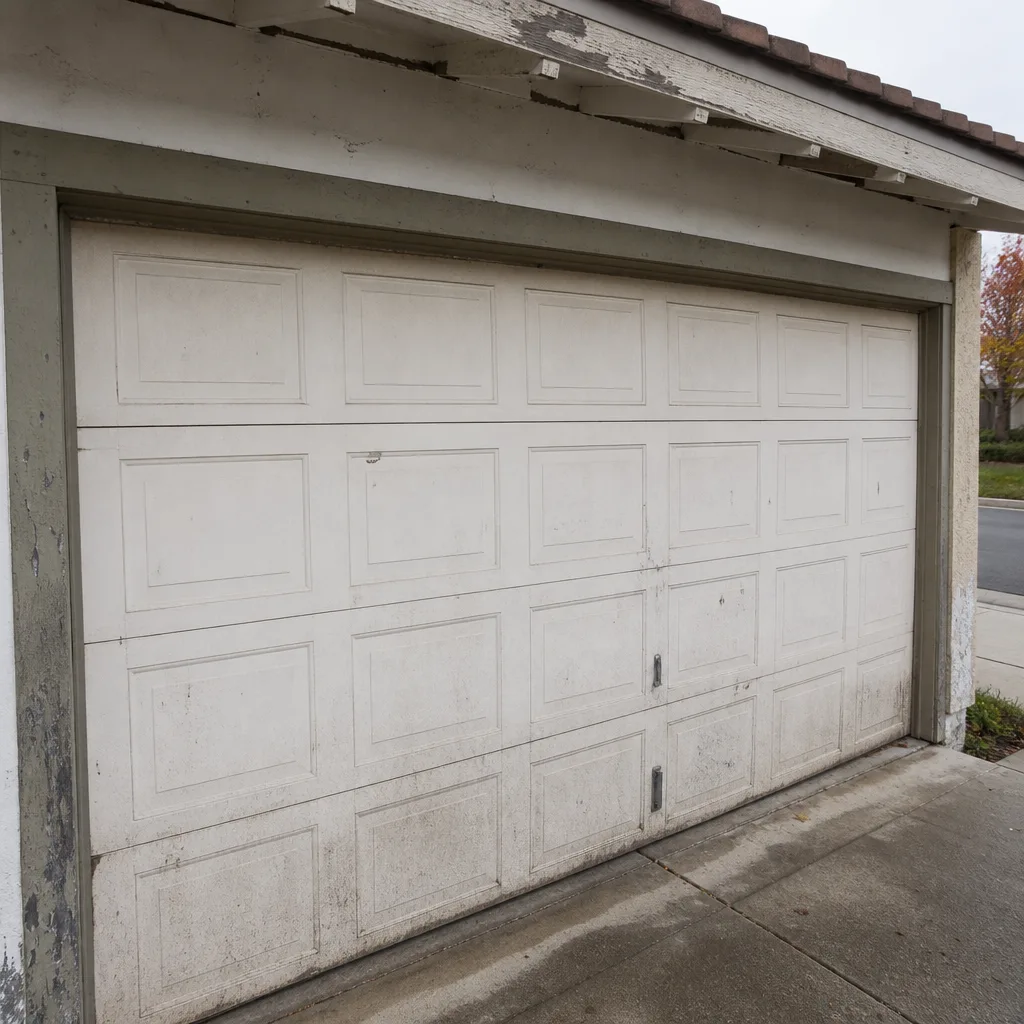 Before
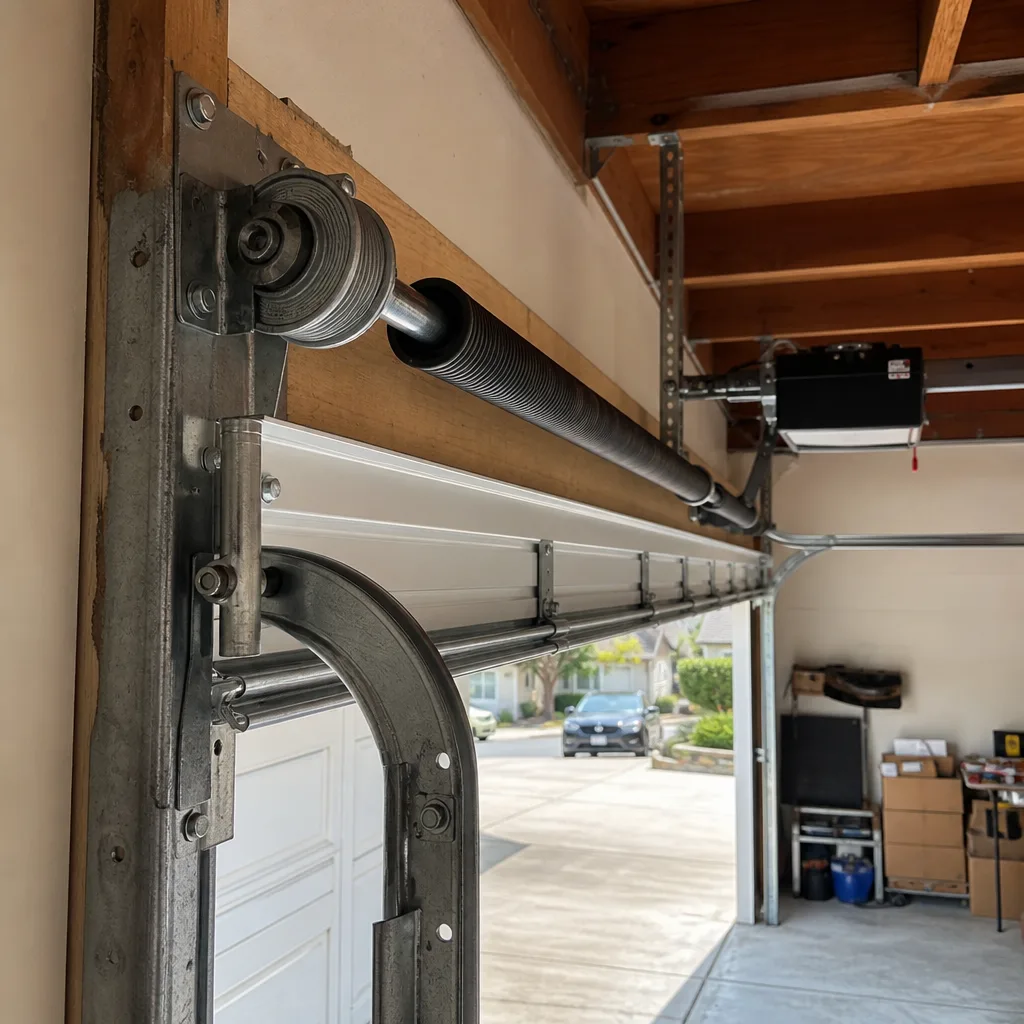 After
After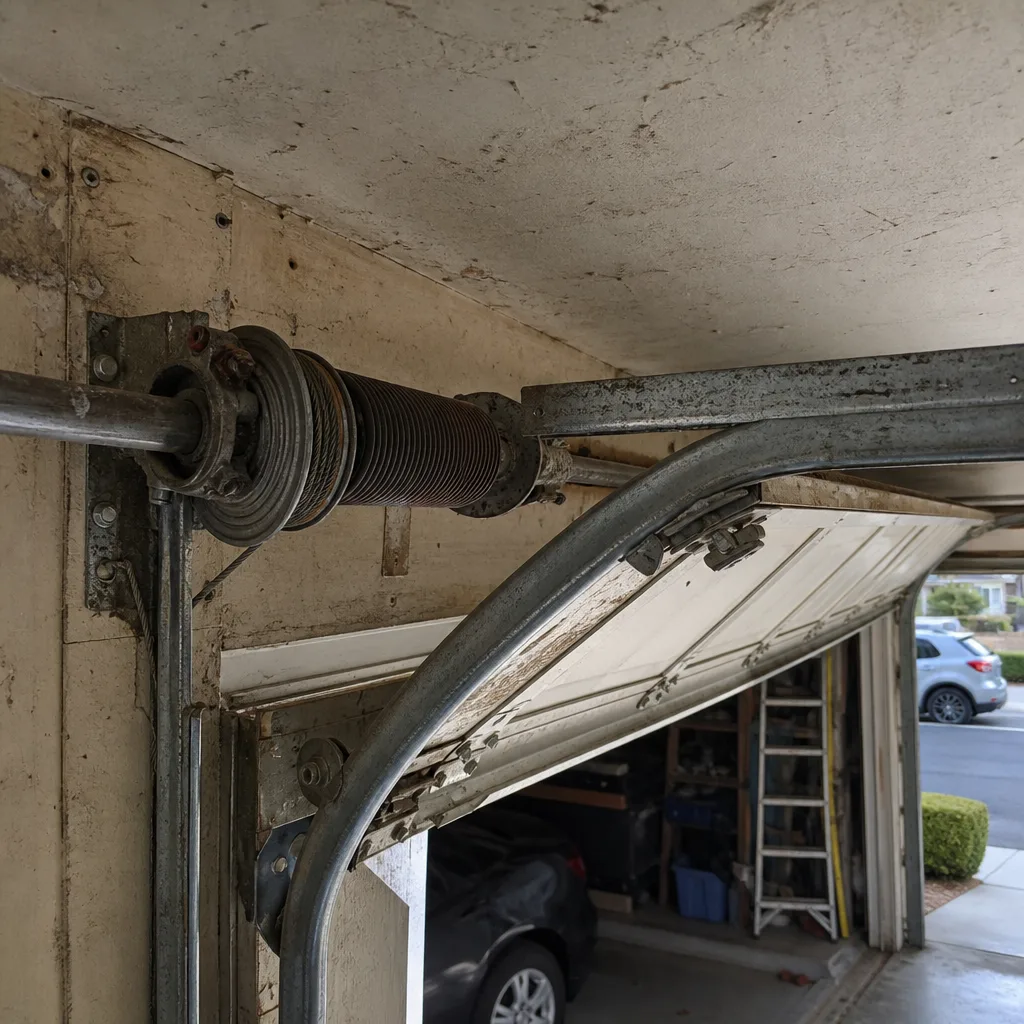 Before
 After
After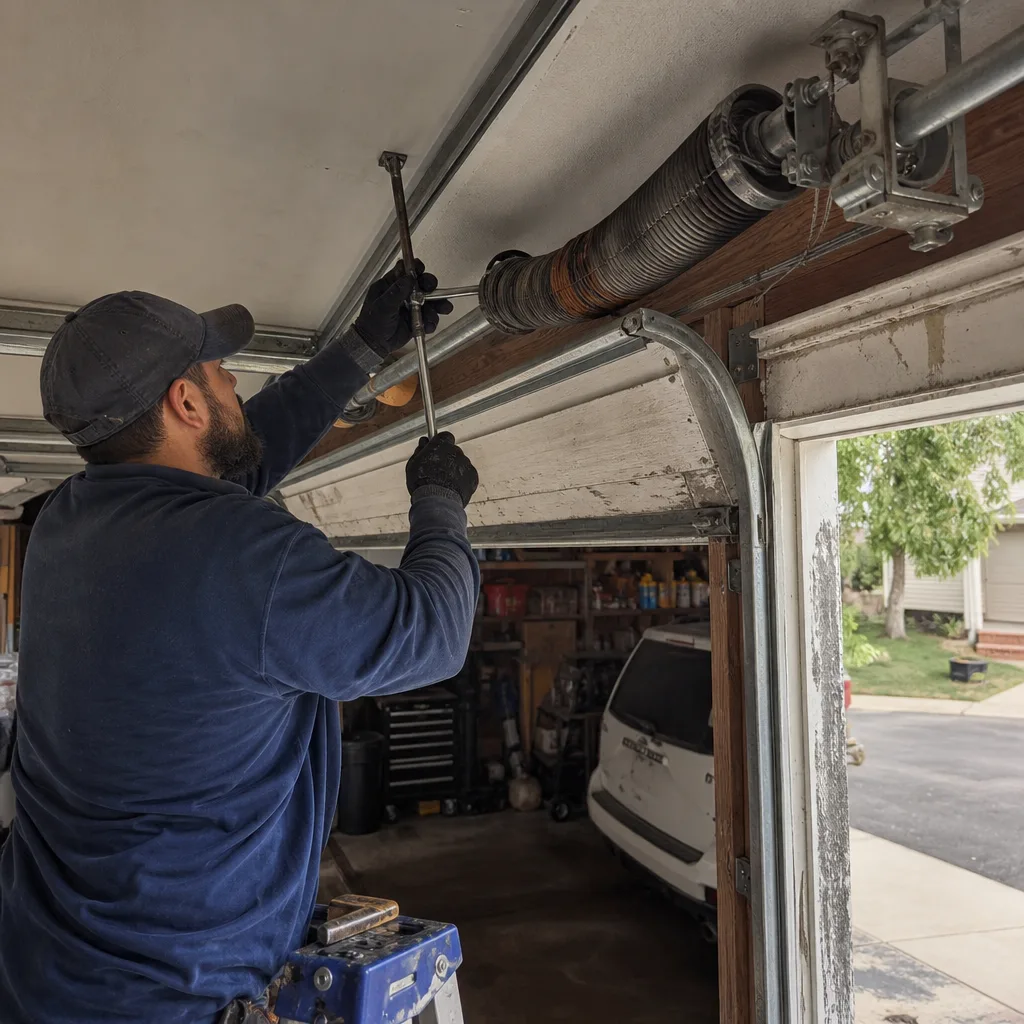 Before
 After
AfterThe Complete Guide to Garage Door in Mission Viejo
Most Mission Viejo homeowners replace a garage door once in 20 years, which means they’re negotiating a $1,200-$4,500 purchase with zero prior experience against a technician who does it daily. The information gap is the real problem, not the door. This guide closes that gap. You’ll learn how Mission Viejo’s specific climate affects material choices, why the panel-spring-opener-track sequence matters more than any single component, what your HOA will and won’t allow, and what a written quote should itemize before you sign anything. By the end, you’ll know exactly what questions to ask when you call a garage door company in Mission Viejo.
Quick Answer
A garage door in Mission Viejo is a system of interdependent parts - panel, springs, opener, and track - where one wrong spec creates compounding service calls. Homeowners in Mission Viejo should expect to pay $1,200-$4,500 for a full replacement depending on material, insulation, and opener class, per our Garage Door Cost Breakdown: The Mission Viejo Homeowner’s Reference for 2026, and should insist on a written, itemized quote before any work begins. The most important decisions are panel material (steel gauge matters in coastal-adjacent air), spring cycle rating, and opener horsepower matched to door weight.
Table of Contents
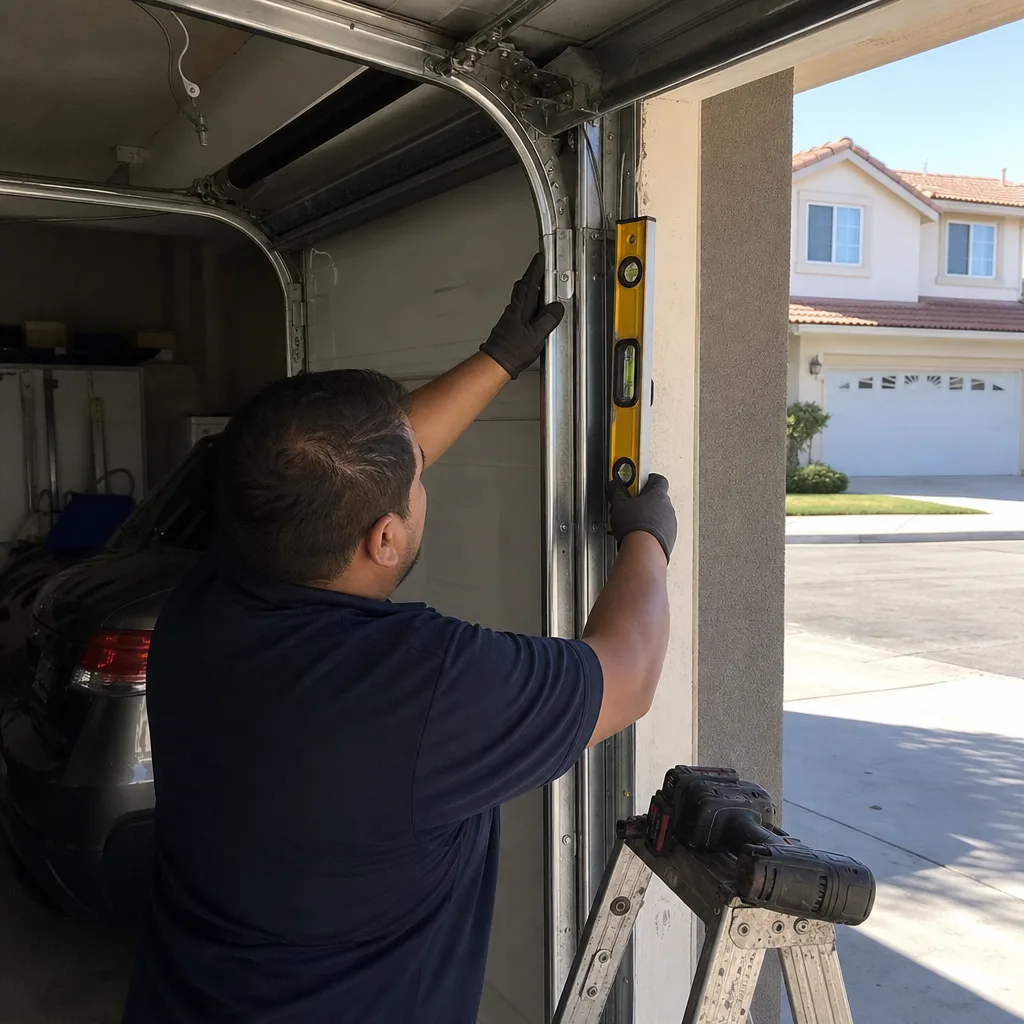
- How Mission Viejo’s Climate Affects Your Garage Door
- The Spec Chain: Panel, Springs, Opener, and Track
- HOA Architectural Guidelines in Mission Viejo
- What a Written Pre-Work Quote Must Itemize
- Door Replacement vs. System Replacement
- Understanding Spring Systems: Torsion vs. Extension
- Choosing the Right Opener for Your Door Weight
- What a Proper Installation Actually Looks Like
- Common Mistakes to Avoid
- When to Call a Professional
- Frequently Asked Questions
- The Bottom Line
BeforeAfterHow Mission Viejo’s Climate Affects Your Garage Door
Mission Viejo sits in a peculiar meteorological pocket. We’re close enough to the Pacific to catch marine-layer mornings, but far enough inland to bake in afternoon heat. This temperature swing, often 25-30 degrees between dawn and mid-afternoon, does more to a garage door than most people realize.
Steel expands and contracts with temperature. In Mission Viejo, a 16-foot steel panel can expand by roughly 1/16 to 1/8 of an inch across a hot summer day. That doesn’t sound like much, but it affects how the door seats against the weatherstripping, how smoothly the rollers track, and how much strain the opener motor absorbs. Cheap, thin-gauge steel doors - the kind advertised at “starting at” prices - flex visibly under this daily cycle. Within three to five years, you’ll see oil-canning: that wavy distortion across the panel face that no repair truly fixes.
What matters in Mission Viejo specifically is steel gauge. The lower the gauge number, the thicker the steel. A 24-gauge door is standard economy. A 26-gauge door should not be sold in this microclimate. We recommend 24-gauge minimum, and 21-gauge (often called “sandwich” construction because the steel skins wrap a foam core) for west- and south-facing doors that catch the most afternoon sun.
Marine-layer mornings add a second factor: moisture. Mission Viejo isn’t as humid as coastal cities, but the morning condensation cycle is real. Untreated steel, unsealed panel edges, and exposed hardware corrode faster here than in Riverside or Rancho Cucamonga. A quality door from Wayne Dalton or Clopay will specify a rust-through warranty; read that number carefully. It’s the single best indicator of how the manufacturer expects the door to handle exactly this kind of environment.
If you’re replacing an existing door, note which direction it faces. A north-facing door in Mission Viejo can last 20 years with basic maintenance. A west-facing door, full afternoon sun, same material, might need panel replacement at year 12. The sun here is not gentle. It’s why the Garage Door Installation in Mission Viejo decisions we walk through always start with orientation, not color.
The Spec Chain: Panel, Springs, Opener, and Track
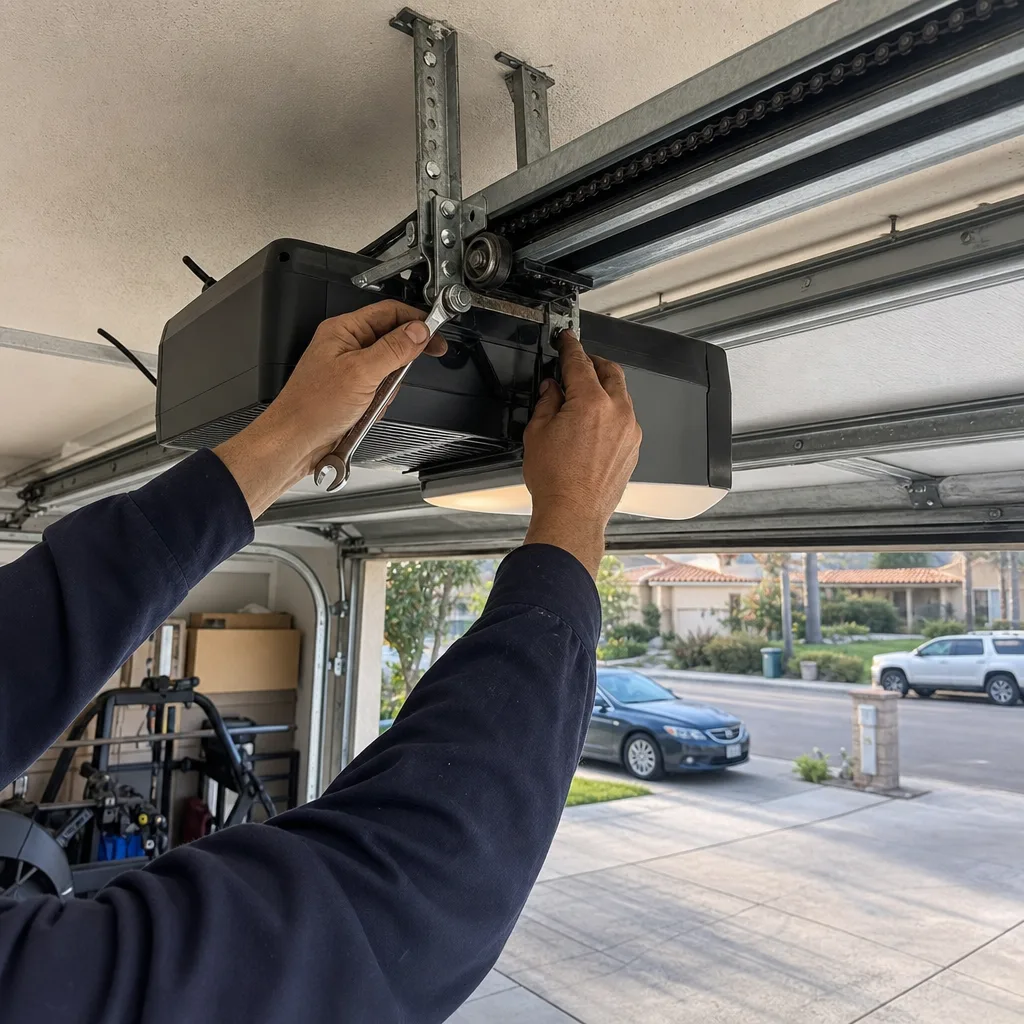
Here’s the part competitors miss. A garage door is not four independent purchases. It’s a chain of specifications, each depending on the one before it. Break the chain and you’ll get premature failures that no single repair resolves.
The sequence works like this:
- Panel - Material determines weight. A steel door with insulation weighs between 150 and 250 pounds for a double door. Wood weighs more. Vinyl less. Weight is the number everything else keys off.
- Spring system - Springs are rated by cycle life and sized to counterbalance the exact door weight. Change the panel weight and the springs must be recalculated. This is math, not preference.
- Opener - Opener horsepower and torque must match the door weight plus spring system. An undersized opener struggles, overheats, and burns out logic boards. An oversized one wears the door faster.
- Track gauge - Heavier doors require thicker track. A 0.083-inch track holds a standard steel door fine. Put a solid wood custom door on that track and you’ll get binding, roller wear, and eventually a derailed door.
We’ve seen this break in Mission Viejo more times than we can count. A homeowner orders a heavier door. The installer reuses the old springs because “they still work.” Six months later, the opener starts grinding. Eighteen months later, a spring snaps. The homeowner now thinks they bought a bad door. They didn’t. They bought a door without a system behind it.
Before any Garage Door Repair in Mission Viejo visit, write down your door’s current weight, spring size if you can see it, and opener model. That information lets a technician tell you in five minutes whether your problem is a component failure or a spec mismatch.
HOA Architectural Guidelines in Mission Viejo
Mission Viejo is one of the most HOA-dense cities in Orange County. The Lake Mission Viejo Association governs many of the larger communities, and individual neighborhood associations layer additional architectural restrictions on top. If your home is in any of these communities, you do not get to pick a garage door on aesthetics alone.
Most Mission Viejo HOAs regulate three things on garage doors:
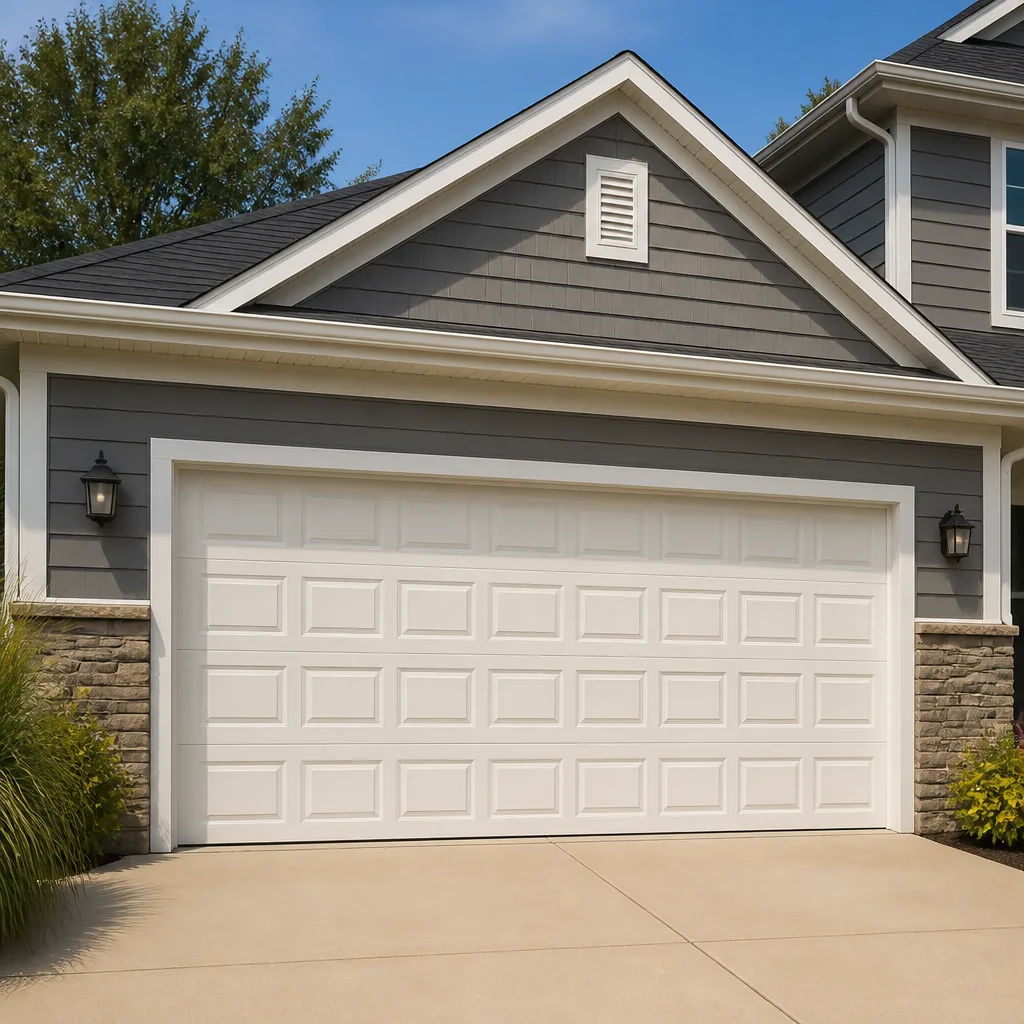
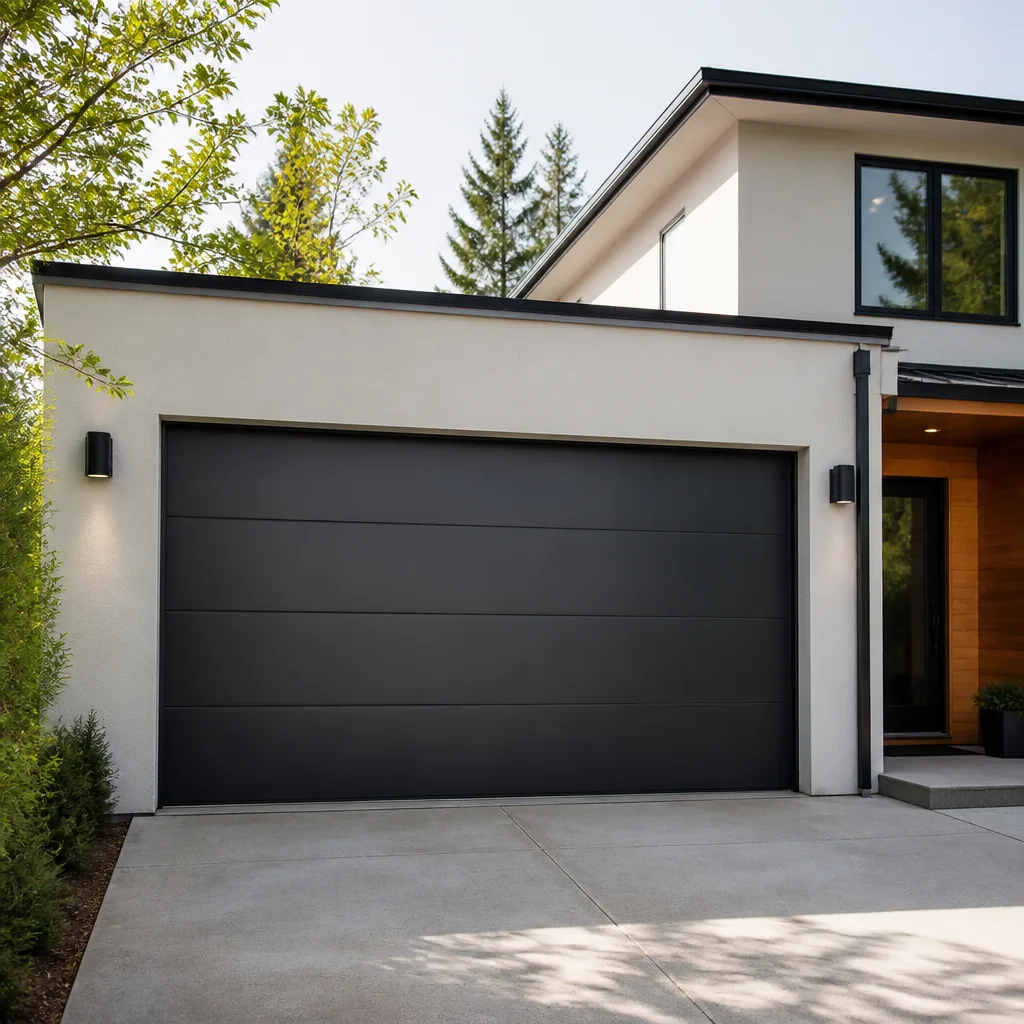
- Panel style - Many communities require flush or recessed panels. Raised panels (the classic “barn” look with visible rectangles) are restricted in several neighborhoods because they read as visually prominent.
- Color - Approved palettes exist, usually earth tones and muted neutrals. Black and dark bronze are increasingly allowed, but bright white is often restricted on certain streetscapes.
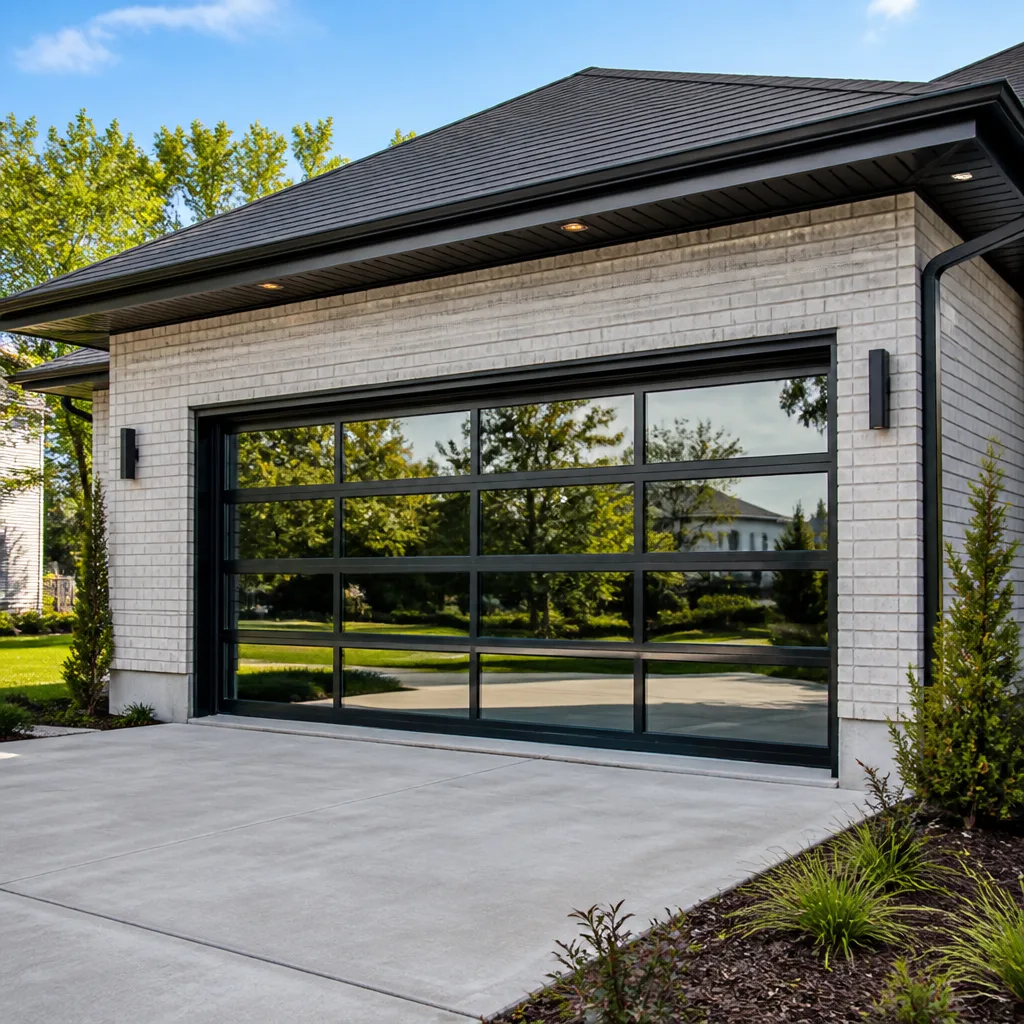
- Window placement - Upper windows are generally acceptable. Full-view or mid-panel windows are frequently denied because they change the home’s front-facing character.
The mistake homeowners make is ordering before checking. A $3,200 custom door with the wrong panel profile gets installed, then rejected by the architectural review committee, and now you’re fighting a removal order on your own dime. Pull the architectural guidelines document before you even browse materials. It’s usually available through your HOA’s management portal, and if it isn’t, a five-minute phone call gets you a PDF.
Once you have the document, send it to whoever quotes the door. They need to see the restrictions in writing, not hear about them secondhand. This is exactly the kind of documentation that prevents expensive misorders. In our experience with Mission Viejo HOA work, the homes that pass architectural review on the first submission are the ones where the door spec matched the guideline document line by line, not the ones where someone said “this should be fine.”
What a Written Pre-Work Quote Must Itemize
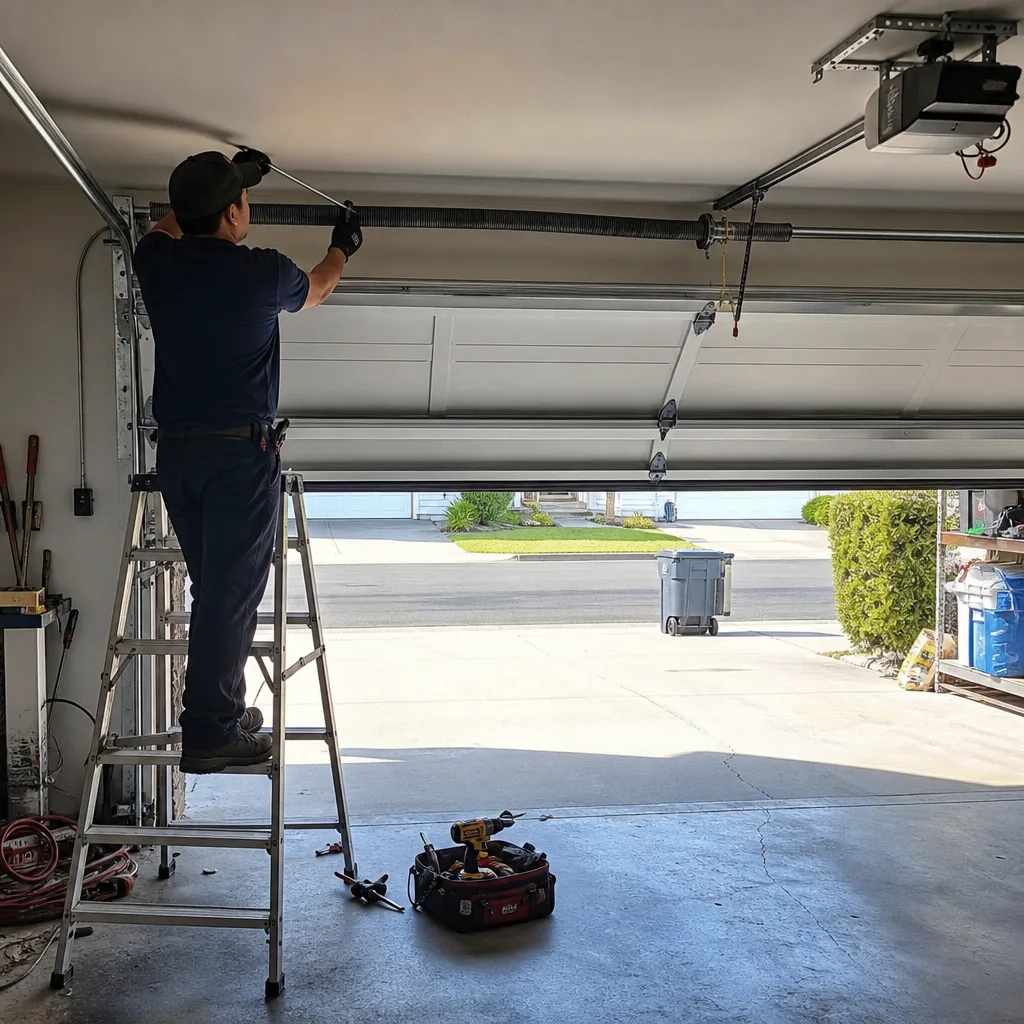
“Starting at” pricing is not pricing. It’s a marketing hook. A real quote for a garage door project in Mission Viejo itemizes every cost you will actually pay. If a company won’t put it in writing before they start, walk.
Here’s what a proper written quote includes:
- Labor - Hourly or flat rate, stated clearly. Most garage door work is quoted flat, and it should be.
- Hardware - Every part with a part number or brand name. “New springs” is vague. “2x 0.218 x 2 x 24 torsion springs” is specific enough to verify.
- Disposal - Old door, old springs, old opener, packaging. If this isn’t on the quote, it’s getting left in your driveway or billed later.
- Permit (if applicable) - Most Mission Viejo door replacements on existing openings don’t require a permit, but if your project triggers HOA architectural review, that filing fee belongs on the quote.
- Sales tax - Some “starting at” prices omit tax. For a $3,000 door in Mission Viejo, that’s a $232.50 surprise.
- Scope of work - What gets installed, what gets removed, what gets adjusted. Written scope protects you when a technician says “that wasn’t included.”
Clause 1 of The Haven Standard, the operating standard we work under at Servo Garage Doors Mission Viejo, requires a flat, written price and written scope delivered before any work starts. No exceptions. You should expect the same from any company you call. If they say “we’ll figure it out on site,” you’re about to negotiate against yourself.
A quote you can hold is also the document you bring to a competitor for a second opinion. We offer a Free Second Opinion on any written estimate from another company. Bring the paperwork. We’ll go line by line and tell you what’s necessary, what’s padded, and what’s missing. No coupon required, no obligation. It’s the simplest way to keep Mission Viejo pricing honest.
Door Replacement vs. System Replacement
There’s a distinction most homeowners don’t know exists. A door replacement swaps the panel. A system replacement swaps the panel, springs, track, and often the opener as a matched set. They’re different jobs with different prices and different lifespans.
You need a door replacement only when:
- The existing door is cosmetically worn but structurally sound
- The springs and track were installed within the last 5 years and are correctly specced for a similar-weight door
- The opener is in good working condition and rated for the new door’s weight
You need a system replacement when:
- The existing springs are 8+ years old and near the end of their cycle rating
- The track shows visible wear, rust, or misalignment
- The new door material differs significantly in weight from the old one (wood to steel, uninsulated to insulated)
- The opener predates the current safety sensor requirements or struggles with the current door
In Mission Viejo, the most common scenario is a homeowner with a 1990s single-skin steel door, original extension springs, and a chain-drive opener from the same era. That’s a 25-year-old system. Replacing just the panel on that setup puts a new door on infrastructure that’s already past its service life. It works for a while. Then the spring snaps. Then the opener logic board fails. Then the track binds. You’ll pay for three service calls that a system replacement would have avoided.
Understanding Spring Systems: Torsion vs. Extension
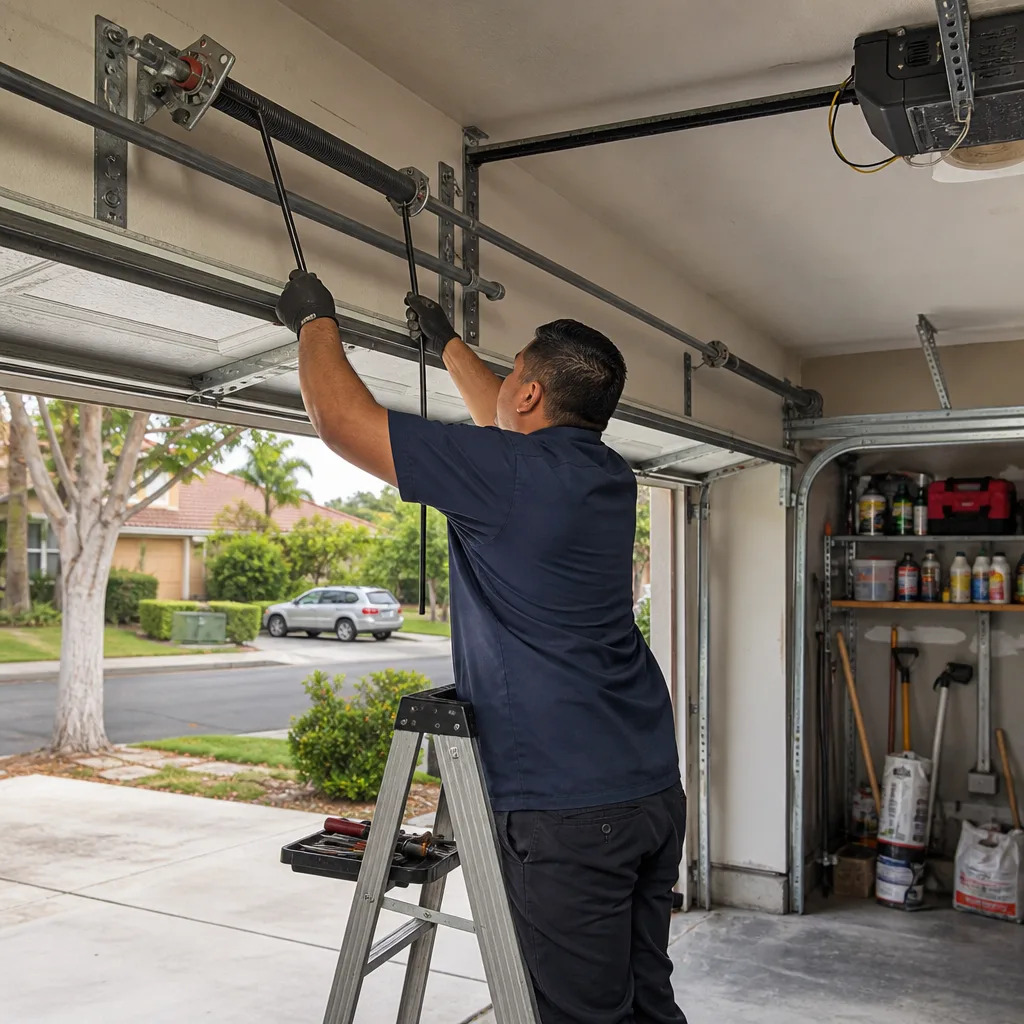
Springs are the part most likely to fail on any garage door in Mission Viejo, and the part homeowners understand least. Here’s the plain-language version.
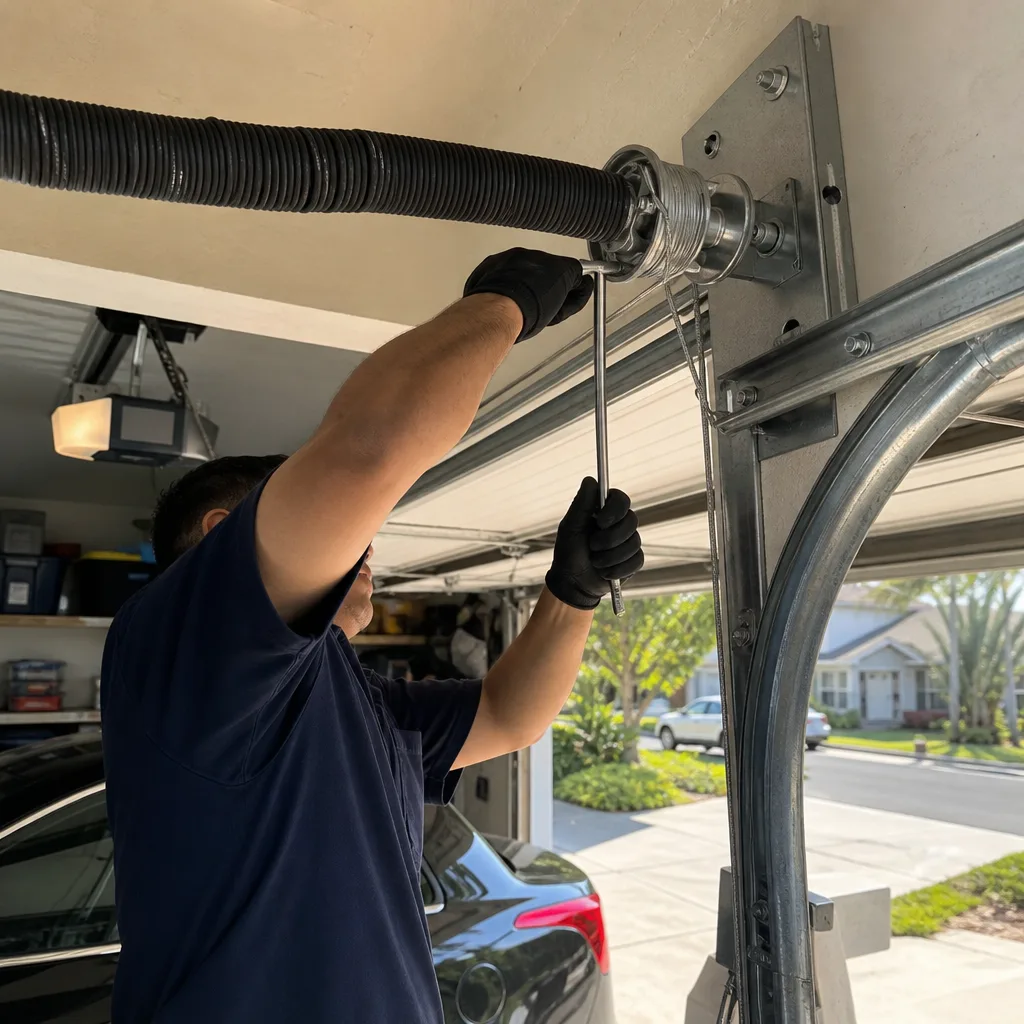
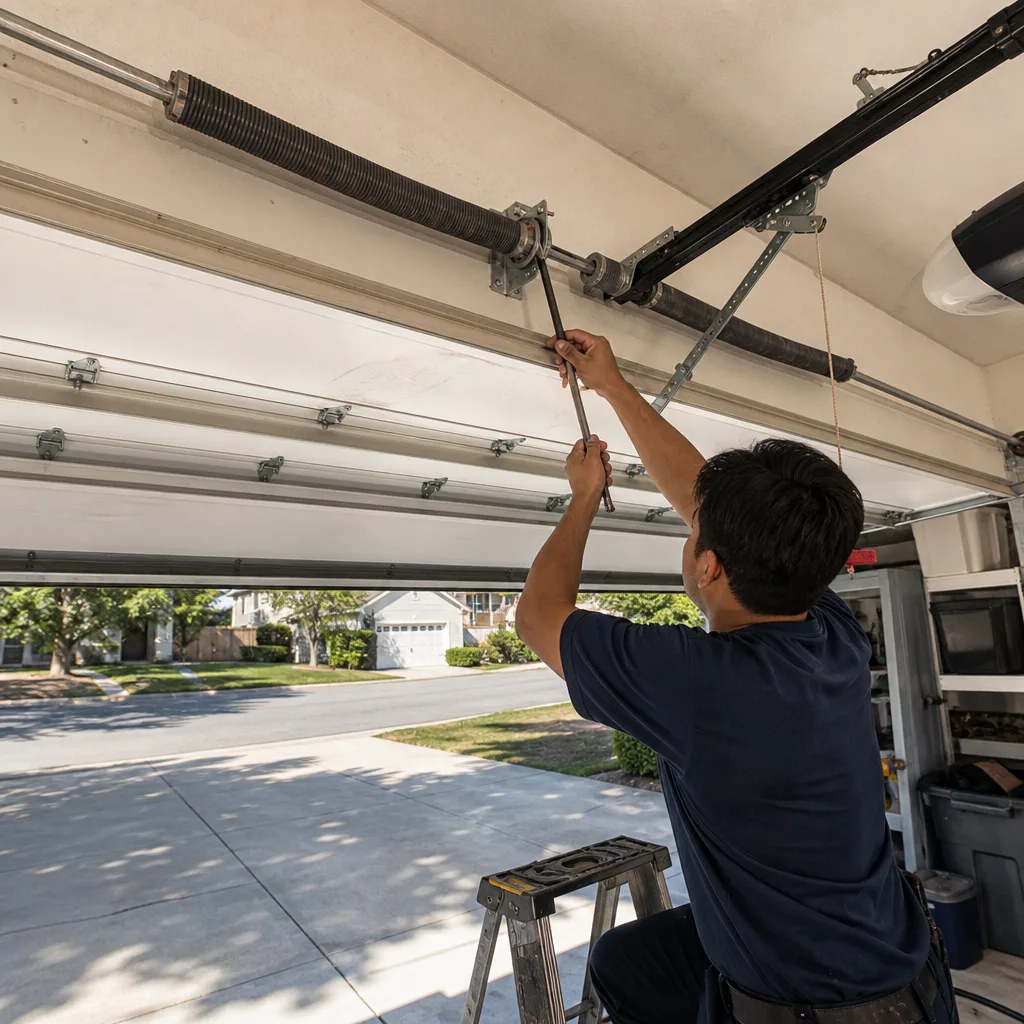
Torsion springs mount above the door opening, parallel to the header. They twist to store energy, then release it to help lift the door. Modern torsion springs are rated by cycle life - the number of open/close operations they’re built to survive. A 10,000-cycle spring lasts about 7 years with normal use. A 20,000-cycle spring lasts 14 years. The difference in price is small. The difference in service calls is not.
Extension springs mount above the horizontal tracks and stretch to store energy. They’re the older technology, common on doors from before 2000. They fail more violently, which is why building codes now require safety cables through their centers. If you have extension springs and one breaks without a safety cable, the broken half becomes a projectile.
The safety point matters. Torsion springs hold lethal amounts of tension. A proper torque calibration requires a winding tool and a clear understanding of where that energy goes if something slips. This is not a DIY job. We say that not to sell you a service call but because we’ve seen the injuries. If a torsion spring breaks in your Mission Viejo garage, don’t try to adjust anything. Leave the door closed, call a professional, and get the spring replaced with a properly rated cycle count.
When we quote spring work, Clause 4 of The Haven Standard means we photograph the failed spring before quoting a replacement. You see the break. You see the coil diameter measurement. You see exactly why the part failed before you agree to pay for a new one.
Choosing the Right Opener for Your Door Weight
Opener selection is a math problem most people treat as a brand preference. Horsepower isn’t marketing - it’s a torque specification that must match the door’s weight.
A single aluminum door with minimal insulation might weigh 120 pounds. A double steel sandwich door with polyurethane core can weigh 250 pounds. A solid wood custom door can exceed 350. Those are three different opener requirements.
- 1/2 HP chain drive - Adequate for single lightweight doors, marginal for double steel
- 3/4 HP belt drive - The right choice for most standard double doors in Mission Viejo. Belt drives are quieter, which matters when the garage sits under a bedroom.
- 1 HP or greater - Required for heavy wood doors, full-view glass doors, or doors with high-frequency daily use
LiftMaster, Chamberlain, and Genie all make quality openers across these classes. The brand matters less than the spec. We service all three, plus Craftsman and Raynor, and the pattern we see in Mission Viejo is consistent: openers that fail early are almost always undersized for the door they’re driving. The motor burns out. The gear strips. The logic board overheats. The fix isn’t a better brand. It’s a better spec.
Modern openers also include battery backup. In Mission Viejo, power outages are less common than in fire-prone inland areas, but a garage door is the largest moving object in your home. If the power’s out and you need your car, you need that manual release to work smoothly. Battery backup is a $100-$200 add that eliminates that problem entirely.
For a deeper look at opener-specific issues, see our full Garage Door Opener Repair & Installation in Mission Viejo guide.
What a Proper Installation Actually Looks Like

A garage door installation is a sequence with no skippable steps. Here’s what a proper job includes, in order:
- Site assessment - Door size, headroom, side room, level check on the floor, condition of the frame. A good installer measures before touching anything.
- Old door removal - Panels, track, and hardware come down in sections. This includes safe decompression of the old spring system.
- Track and hardware replacement - New track matches the new door weight. Rollers, hinges, and brackets are installed fresh. Reusing 20-year-old hardware on a new door is how premature failures start.
- Panel installation - Panels stack from the bottom up, each one aligned and squared before the next goes on.
- Spring winding - Torsion springs are wound to the exact torque spec for the door weight. This is the step where precision matters most.
- Opener mount and travel adjustment - The opener is mounted, the travel limits are set, and the force settings are calibrated so the door reverses on obstruction.
- Safety sensor alignment - Photo eye sensors at floor level are aligned and tested. This is the number one cause of “door reverses for no reason” calls.
- Balance test - The door is disconnected from the opener and run by hand. A properly balanced door stays put at waist height. If it doesn’t, the springs are wrong.
- Documentation delivery - You receive photos of the installed components, the written warranty, and a summary of what was done. At Servo, this photo record is included on every visit, tracing back to the founding rule from 2015: you see the failed part before anyone quotes a replacement.
Most installation problems trace to skipped steps. A rushed balance test. A reused track. A spring wound by feel instead of by measurement. The homeowner can’t see any of these in the moment. They see them six months later when the door binds or the spring snaps. Ask your installer how they handle each step. If they can’t answer in detail, keep looking.
Common Mistakes to Avoid
These are the errors we see regularly across Mission Viejo, from Lake Forest to the mission district itself:
- Optimizing for price on springs - A $90 spring job sounds great until it fails in 18 months. Cycle-rated springs cost $50-$100 more and last three times as long. This is the most expensive place to save money on a garage door.
- Ordering before checking HOA guidelines - See the section above. The architectural review process in Mission Viejo’s communities is specific. Read the document first.
- Matching opener horsepower to door size, not door weight - A “1/2 HP opener handles a 16-foot door” claim ignores weight. Check the weight rating, not just the door width.
- Ignoring cycle ratings - Springs are rated by open/close cycles, not years. Ask for the rating. A 10,000-cycle spring in a busy household with two working adults and two teenagers needs replacement in about 4 years, not the 7 the “average” suggests.
- Skipping the balance test - After any spring or panel work, disconnect the opener and test the door by hand. If it doesn’t stay at waist height, get it fixed before hooking the opener back up. A properly balanced door is a mechanical check, not a matter of feel.
- Replacing a door without upgrading the track - New panels on old track wears rollers unevenly and binds within a year. Track goes with panel, not against it.
- Not documenting the work - Photos beat receipts. If a repair fails, you’ll be glad you have a visual record of what was installed. This is core to how Servo Garage Doors Mission Viejo home does every job.
When to Call a Professional
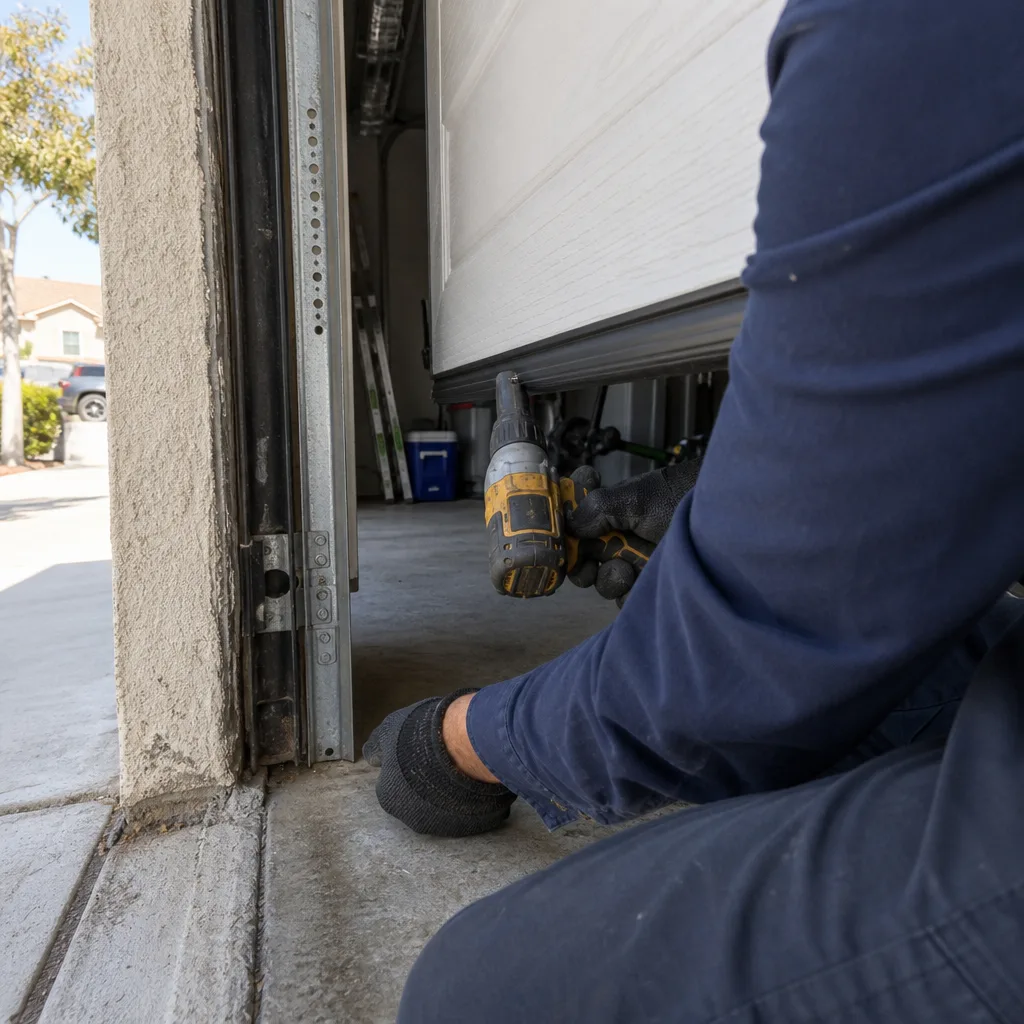
Some garage door work is genuinely for professionals. Torsion spring replacement is the obvious one - the energy stored in a wound spring can cause life-altering injuries if mishandled. Cable replacement falls in the same category. If you see a frayed cable, don’t touch it. A derailed roller section is another: the door weighs 200+ pounds and will come down hard if it shifts while you’re working underneath. Opener logic board failures, track realignment, and any repair involving electrical wiring all belong with a qualified technician. If the door won’t open or close, and you’ve verified the opener has power and the manual release is functioning, that’s also a call.
Servo Garage Doors Mission Viejo offers free estimates in Mission Viejo - call (657) 293-2416.
Frequently Asked Questions
A full garage door replacement in Mission Viejo typically costs between $1,200 and $4,500, depending on panel material, insulation R-value, opener class, and track replacement. Labor is included in that range for a standard double door. Call (657) 293-2416 for an exact written quote - estimates are free.
A standard garage door installation in Mission Viejo takes 4-6 hours from old door removal to final balance test. Complex jobs with custom panels, opener replacement, and track rebuild can run a full day. We’ll give you a written window before starting.
Yes. Spring replacement is a standalone repair, not a door replacement. If the existing door panels are structurally sound and the track is in good condition, new cycle-rated torsion springs can extend the door’s life by years. We’ll photograph the failed spring before quoting the replacement, per Clause 4 of The Haven Standard.
A 10,000-cycle spring is rated for roughly 10,000 open/close operations (about 5-7 years of normal use in Mission Viejo households), while a 20,000-cycle spring lasts twice as long. The price difference is typically $50-$100 per spring. We recommend the higher rating for any door used more than twice a day.
Most garage door replacements on existing openings in Mission Viejo do not require a building permit, though Garage Door Permits, Codes & Inspections in CA: What You Need to Know explains when they do. However, HOA architectural review may be required depending on your community. Check with your HOA’s management office before ordering hardware. If a permit is needed, we’ll itemize that cost on the written quote.
No. The written price we deliver before work starts is the price you pay. If we discover additional issues during the job - a cracked track, framing rot, an unsafe wiring setup - we’ll stop, show you what we found with photos, and give you a separate written quote for the additional work. Nothing is added to your bill without your written approval.
The Bottom Line
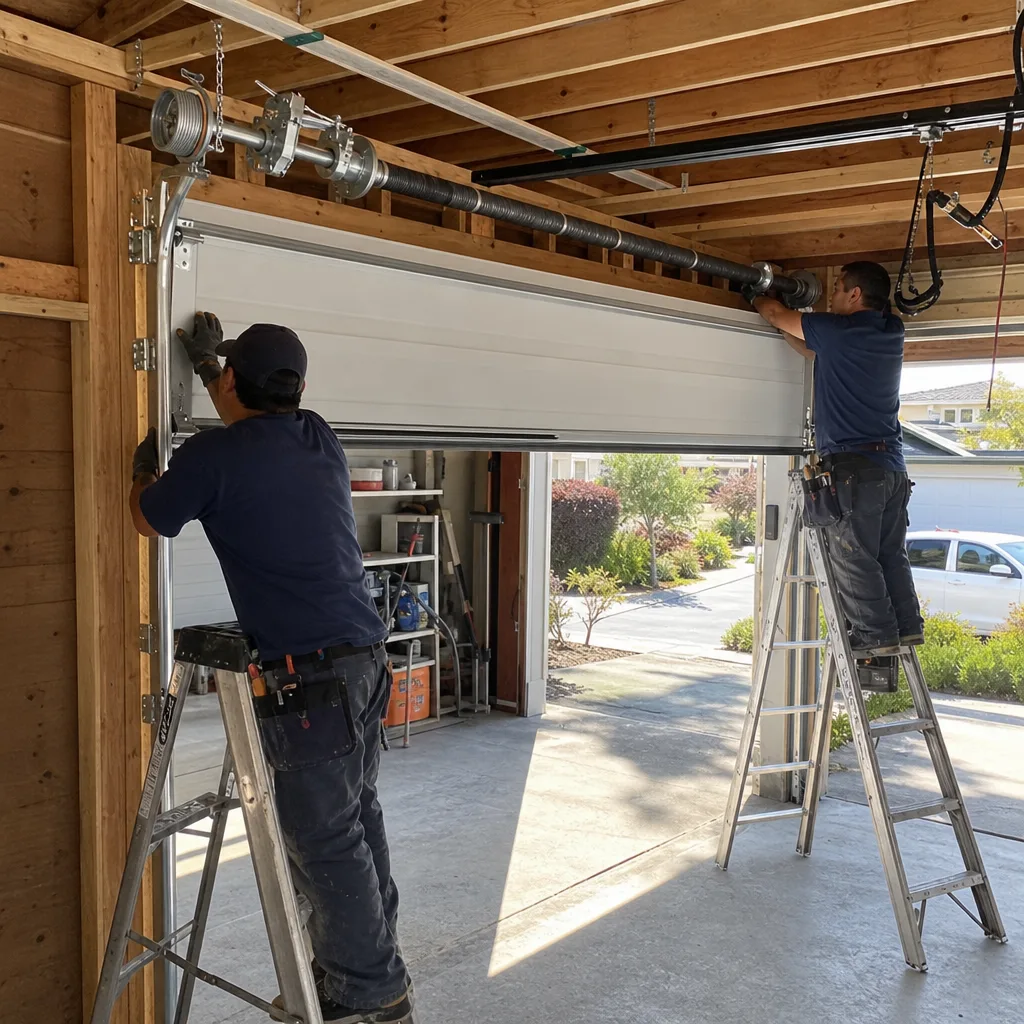
Your garage door is the largest moving object in your Mission Viejo home, and it’s a system, not a product. The panel determines the weight. The weight determines the springs. The springs determine the opener load. The track holds it all in alignment. Break that chain anywhere and you’ll pay for it in repeated service calls. Get a written, itemized quote before any work starts. Check your HOA guidelines before ordering. Insist on documentation when the job is done. And when in doubt, the Garage Door Repair in Mission Viejo guide covers the specifics of what a repair visit should include.
Written by Marcus Deller, Owner at Servo Garage Doors Mission Viejo, serving Mission Viejo since 2015.