
Last updated September 20, 2026
Full 25-point door and opener safety check with every visit - springs, cables, rollers, tracks, and your LiftMaster or Chamberlain opener included
You get a price before we start. It does not change when the truck arrives.

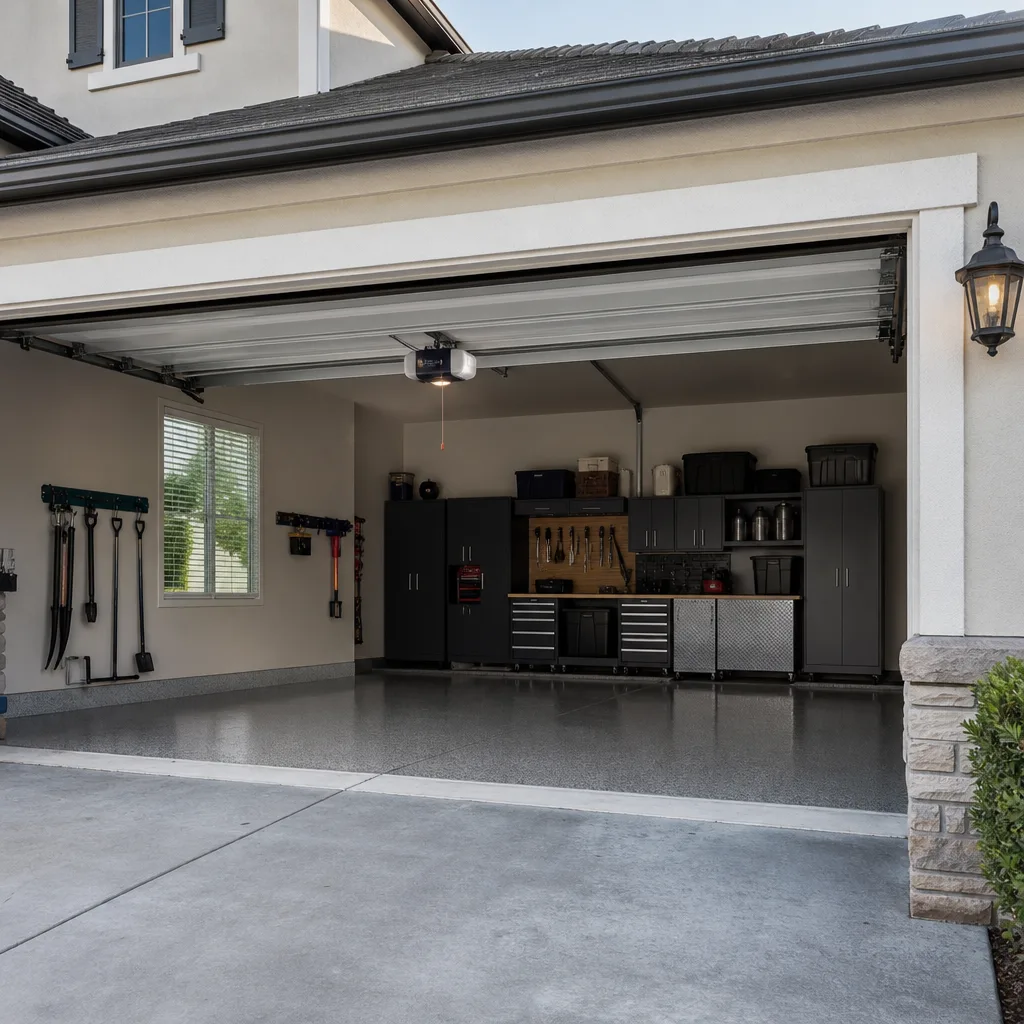
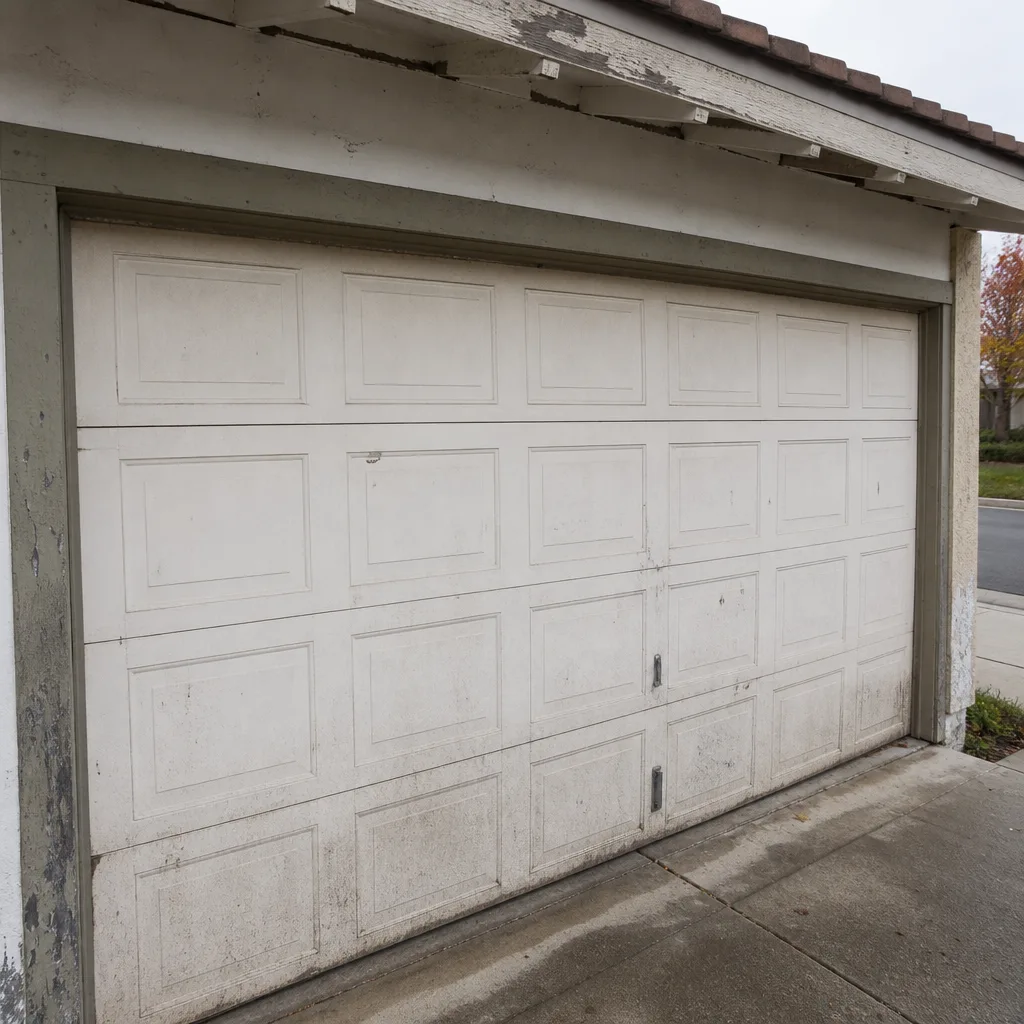 Before
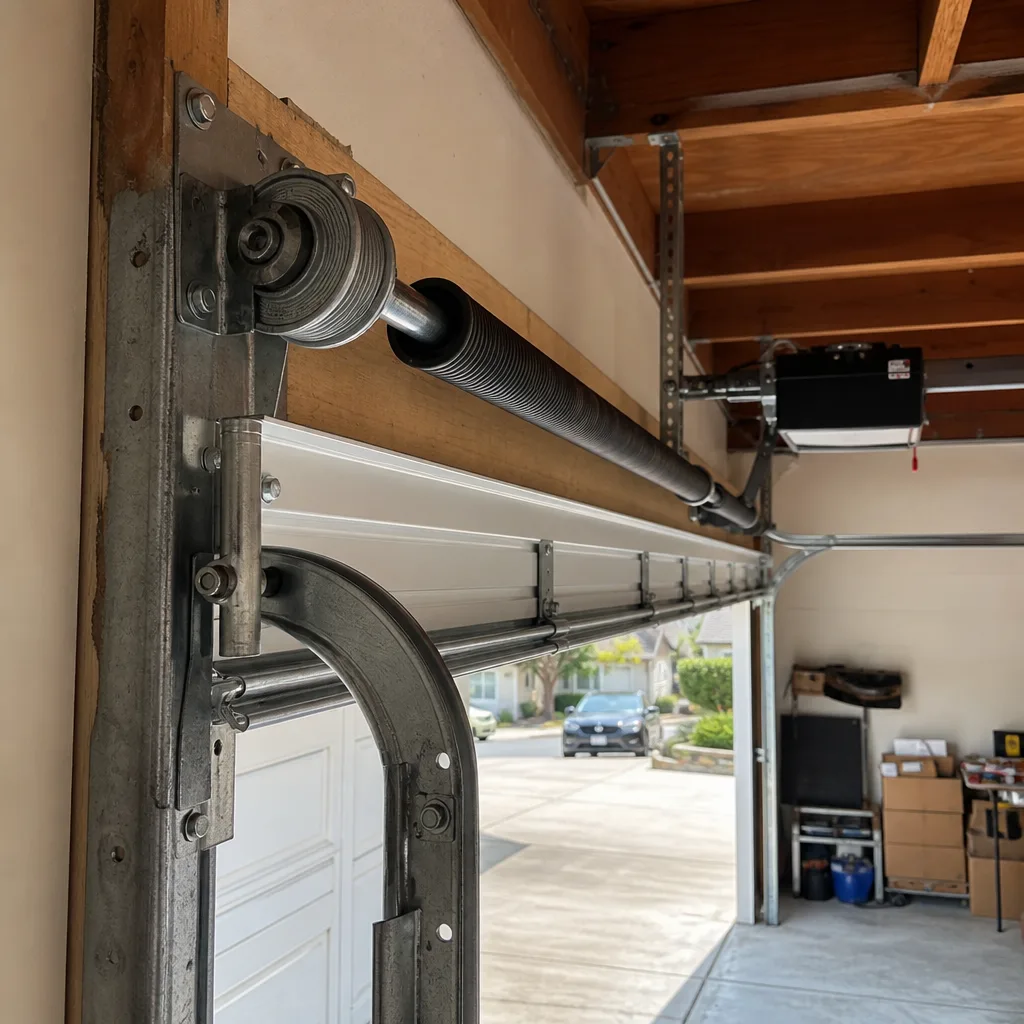 After
After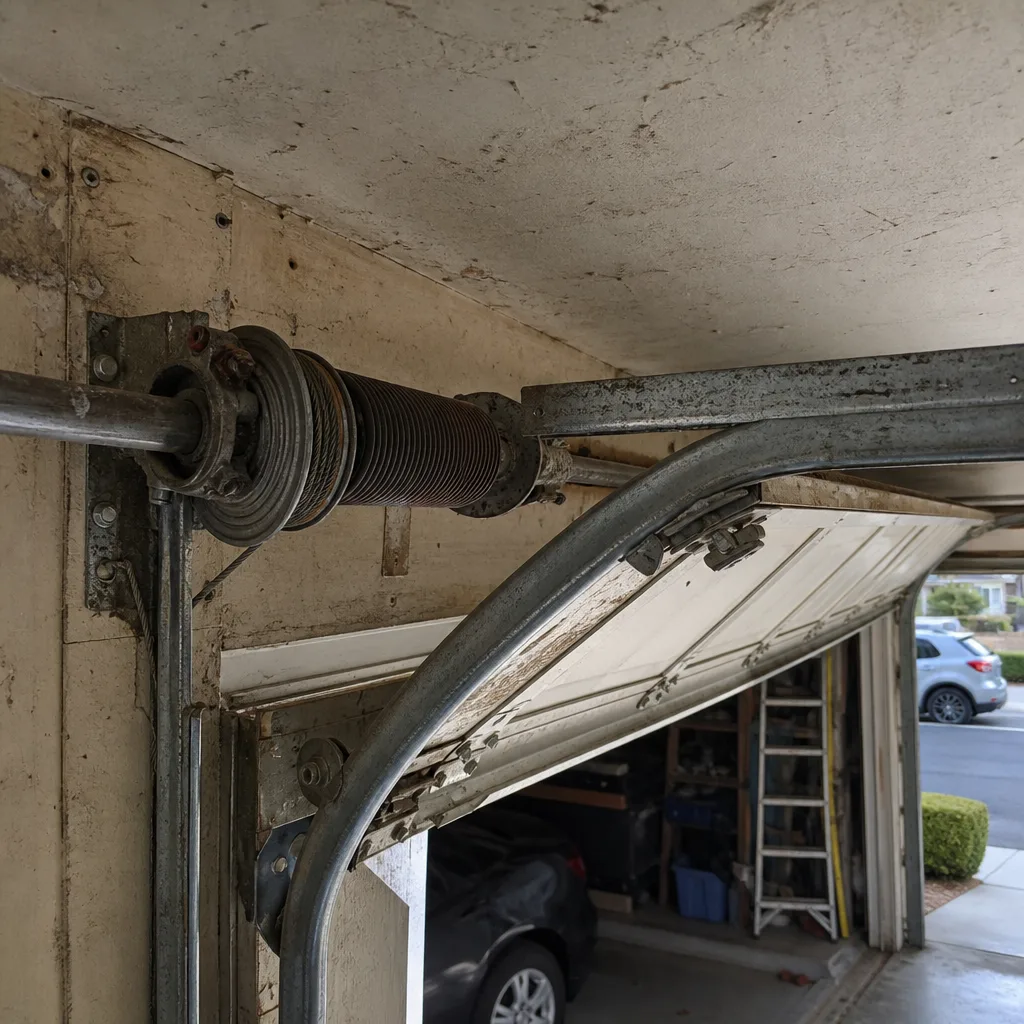 Before
 After
After Before
 After
AfterSeasonal Garage Door Care for Mission Viejo: Year-Round Homeowner’s Guide
Most garage door maintenance schedules fail in Mission Viejo because they’re built for places with real seasons. A homeowner who follows a standard spring/fall lubrication calendar is oiling rollers in June, which is three months too late: the marine layer has already been working on exposed cable ends and roller axles since May. This guide replaces the generic national template with a Mission Viejo-specific cycle built around the three stress periods your door actually experiences: marine-layer months, Santa Ana wind events, and winter inversion nights. For a deeper dive, see The Complete Guide to Garage Door in Mission Viejo. By the end, you’ll know exactly what to inspect, when, and what it should cost if something needs replacement.
Quick Answer
Seasonal garage door care in Mission Viejo means scheduling maintenance around three climate-driven stress periods, not calendar seasons: inspect cable ends and roller axles for marine-layer corrosion between May and August, check track hardware and weatherstripping after every Santa Ana wind event above 50 mph between October and January, and test opener force settings after the first sub-50°F night of winter. A homeowner who performs these targeted inspections with dated notes will catch most failures before they strand a car in the driveway or require an emergency call. Mission Viejo homeowners who log even 20 minutes per season typically extend door and opener life by 3 to 5 years.
Table of Contents
- Marine-Layer Season (May-August): Corrosion Inspection Sequence
- Santa Ana Wind Events (October-January): What to Check After Every 50+ mph Blow
- Winter Inversion Nights: Torsion Spring Contraction and Opener Force Settings
- The Mission Viejo 12-Month Task Map
- How to Keep a Maintenance Log That Holds Up Under Warranty
- What to Lubricate, What to Leave Alone, and Why It Matters Here
- Common Mistakes to Avoid
- When to Call a Professional
- Frequently Asked Questions
BeforeAfterMarine-Layer Season (May-August): Corrosion Inspection Sequence
Mission Viejo sits far enough inland that many homeowners assume the coastal marine layer never reaches them. It does. From May through August, low clouds push through the canyons in the early morning and burn off by midday, and the air they carry is salt-laden and consistently humid. That combination is more corrosive than rain, because the moisture lingers on metal surfaces for hours and then evaporates, leaving a micro-deposit of salt behind. We’ve measured surface oxidation on cable ends in neighborhoods from Lake Mission Viejo to Pacific Hills that looks identical to what coastal garages in Dana Point show over the same period.
The components that fail first are the ones nobody looks at: the swaged ends of lift cables where they attach to the bottom bracket, the roller axles inside hinges, and the set screws on torsion spring cones. These are high-stress contact points already, and pitting from corrosion accelerates fatigue cracking. A cable that snaps under tension can take out a section of track or even damage a car parked in the bay. The inspection sequence below catches surface oxidation before it reaches structural depth.
- Bottom bracket cable ends (5 minutes, May through August, monthly): Look at the point where the steel cable crimps into the bottom bracket on each side. Surface rust is normal after a few years. What you’re watching for is pitting: tiny divots in the metal surface, or a section of cable that looks darker and rougher than the rest. Pitting is the precursor to strand breakage. If you see it, the cable should be replaced before the first Santa Ana wind cycle loads the door with extra vibration. Cable replacement for a standard 7-foot door in Mission Viejo typically runs $120 to $180 per side, parts and labor included.
- Roller axles and hinge pivot points (5 minutes, monthly): Rollers wear differently than cables. The wheel surface is nylon on most doors built after 2005, but the axle is steel and the hinge barrels are steel, and that’s where marine corrosion binds movement. A roller that no longer spins freely transfers the entire opening load to the track edge, which then wears a groove into the track. Test each roller by hand with the door closed: a healthy roller spins with light finger pressure. A bound roller needs replacing, which costs $15 to $35 per roller installed, depending on whether the hinge must also be replaced.
- Torsion spring set screws and winding cones (monthly, visual only): Do not touch these. Look at them. The set screws that hold the torsion spring to the center bearing plate and end cones will show a dusting of surface rust first. That alone is not a failure. What matters is whether the rust has crept into the threads and around the screw head. A corroded set screw can snap when a technician needs to unwind the spring for replacement, which turns a simple job into a dangerous one. Flag it for the next professional service visit. Spring replacement in Mission Viejo, including both springs, labor, and balancing, typically runs $280 to $450 depending on spring wire diameter and door weight.
The marine-layer sequence is not about correcting problems. It’s about generating a dated record of what you observed, because the observation trail is what separates a covered warranty claim from a denied one. If a cable snaps in September and you can show monthly dated notes that documented progressive pitting, the manufacturer has no argument that it was sudden, unpreventable failure. More on that in the maintenance log section below.
If you’re unsure what pitting looks like versus normal surface rust, the team at Garage Door Repair in Mission Viejo can walk through it during any service visit, and every visit closes with a documented photo record so you have evidence of what we found, not just a verbal description.
Santa Ana Wind Events (October-January): What to Check After Every 50+ mph Blow
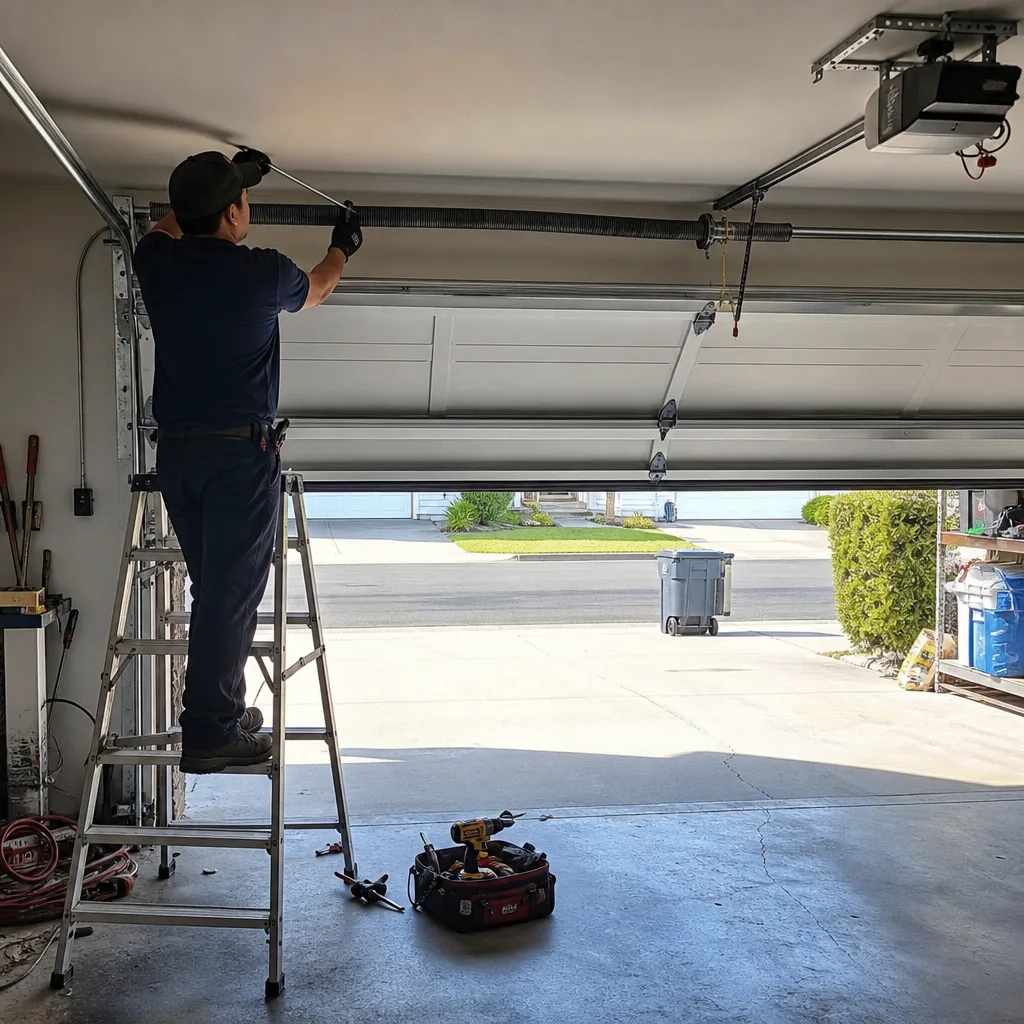
Santa Ana winds are Mission Viejo’s most mechanically destructive weather pattern, and they arrive exactly when most homeowners have stopped thinking about their garage. The winds are dry, gusty, and sustained at 40 to 60 mph for hours, sometimes days. The damage they do to a garage door is not from impact but from sustained vibration loading and dehydration of rubber and vinyl components. A door that bounces against its track for six hours takes a structural beating, and the weatherstripping that seals the bottom edge dries to brittleness in a single season.
Here is the post-event checklist, in order of importance. Run it after any wind event where Mission Viejo rooftop flags were standing horizontal for at least a few hours, which is the practical equivalent of a sustained 50 mph reading at ground level:
- Track mounting hardware (10 minutes): The L-shaped brackets that hold the vertical and horizontal track to the wall and ceiling are lag-bolted into framing. Sustained vibration works those lag bolts loose by tiny increments. Check each bracket by gripping the track and pulling hard toward the center of the garage. Movement of more than an eighth of an inch means the lag bolt has backed out. This is a $2 fix if you catch it early, but if left loose through a full season of door cycles, the track can shift enough to bind the rollers and throw the door off-plane, which becomes a $300 to $600 repair. If you’re not comfortable re-seating a lag bolt into framing, any garage door technician in Mission Viejo can do it in under 30 minutes.
- Bottom weatherstripping (5 minutes): This is the rubber or vinyl strip along the bottom edge of the door. In Santa Ana conditions, the air is dry enough to pull the plasticizers out of vinyl in weeks. Fold a small section back on itself. If it creases and holds the crease like a dry leaf, it’s done. A replacement strip costs $40 to $80 installed and keeps dust, leaves, and the occasional scorpion out of your garage. If the strip cracks, it’s not just an inconvenience: the gap becomes a funnel for dry leaf litter against the door seal, which then becomes a fire risk during Red Flag conditions. Replace it the week you notice the cracking.
- Hinge side play (optional, check only if the door rattles): With the door closed, push the door panel from inside at waist height. If it moves more than a quarter inch toward the track on either side, the hinge rivets or slide plates are wearing. Santa Ana vibration accelerates this wear, and a hinge that fails while the door is opening can tear a panel or drop a section of door. Hinge replacement runs $25 to $65 per hinge installed, with most Mission Viejo doors needing two to four replaced over a 10-year lifespan.
We don’t recommend tightening the track bolts yourself unless you have the door’s original installation manual and the correct torque specs. Most homeowners over-tighten the carriage bolts that hold the track sections together, which crushes the track profile and creates a permanent bind. If the track checks out visually but the door still runs rough after a wind event, the issue may be panel alignment, and that’s a service call, not a wrench job.
Our Servo Garage Doors Mission Viejo home service area includes every neighborhood from the lake down to the 5 corridor, and we see the same track bolt pattern every October: the doors on west-facing exposures with no windbreak fail fastest. Trees and walls are your door’s best protection. If your garage faces an open hillside, plan to replace the bottom seal every two years instead of every three or four.
Winter Inversion Nights: Torsion Spring Contraction and Opener Force Settings
Mission Viejo’s coldest nights come in December and January, when temperature inversions trap cold air in the valley floors and overnight lows dip into the low 40s or upper 30s. That’s not cold by national standards, but it’s cold enough to change the physical behavior of your torsion spring. Spring steel contracts as it cools, and a spring that measured a 0.225-inch wire diameter on a 70-degree afternoon is measurably stiffer at 40 degrees. That changes the balance point of the door and the force required to move it.
Here’s what that means in practice, and what to check after the first cold week of the year:
- Opener force settings drift with temperature. Your opener has internal force limits that tell the motor how hard to push or pull before it reverses. Those settings are calibrated for a door that weighs a certain amount and moves with a certain resistance. When the spring stiffens in cold weather, the effective door weight the opener feels increases by 5 to 10 percent. If the force limits were set near the minimum, the cold night pushback can trip the safety reverse, making the door refuse to close or open halfway and stop.
- How to test it (step-by-step): Unplug the opener, then disengage the emergency release cord and lift the door manually by hand. A correctly balanced door lifts smoothly to waist height with one hand and stays put when you release it. If it drops or feels noticeably heavier than it did in October, the spring has stiffened or the door has shifted. Do not adjust the torsion spring yourself. Torsion springs are under enormous tension and can cause serious injury. What you can adjust is the opener force setting: most LiftMaster and Chamberlain openers have a force adjustment dial or menu setting that can be raised or lowered in small increments. If you’re using a Raynor or Craftsman opener, the force limits may be physical dials on the motor unit. Raise the down-force and up-force only in small increments and test the reverse function afterward by placing a 2×4 flat under the closing door. The door must reverse on contact. If adjusting the force setting doesn’t restore clean operation, the spring itself likely needs replacement, and that’s a job for a trained professional.
When we replace torsion springs in Mission Viejo during the winter months, we use spring wire that’s sized for the door’s weight and cycle rating, not just a generic replacement. A door that’s been through five or six Santa Ana seasons needs a different spring than one that’s been in a sheltered hillside garage for three years. The specifics matter, and the price difference between a correctly specced spring and a cheap one is typically less than $60. For a full breakdown of what to expect, see our Garage Door Cost Breakdown: The Mission Viejo Homeowner’s Reference for 2026, which is why the written quote before any work starts is so important: you should know what you’re getting and what it costs before the first wrench turns.
If you need a Garage Door Installation in Mission Viejo that’s built for the local climate, we spec doors with heavier gauge track and corrosion-resistant hardware, and we include post-installation balance verification on every job, because a new door that’s even slightly out of balance will destroy its own springs within two years.
The Mission Viejo 12-Month Task Map
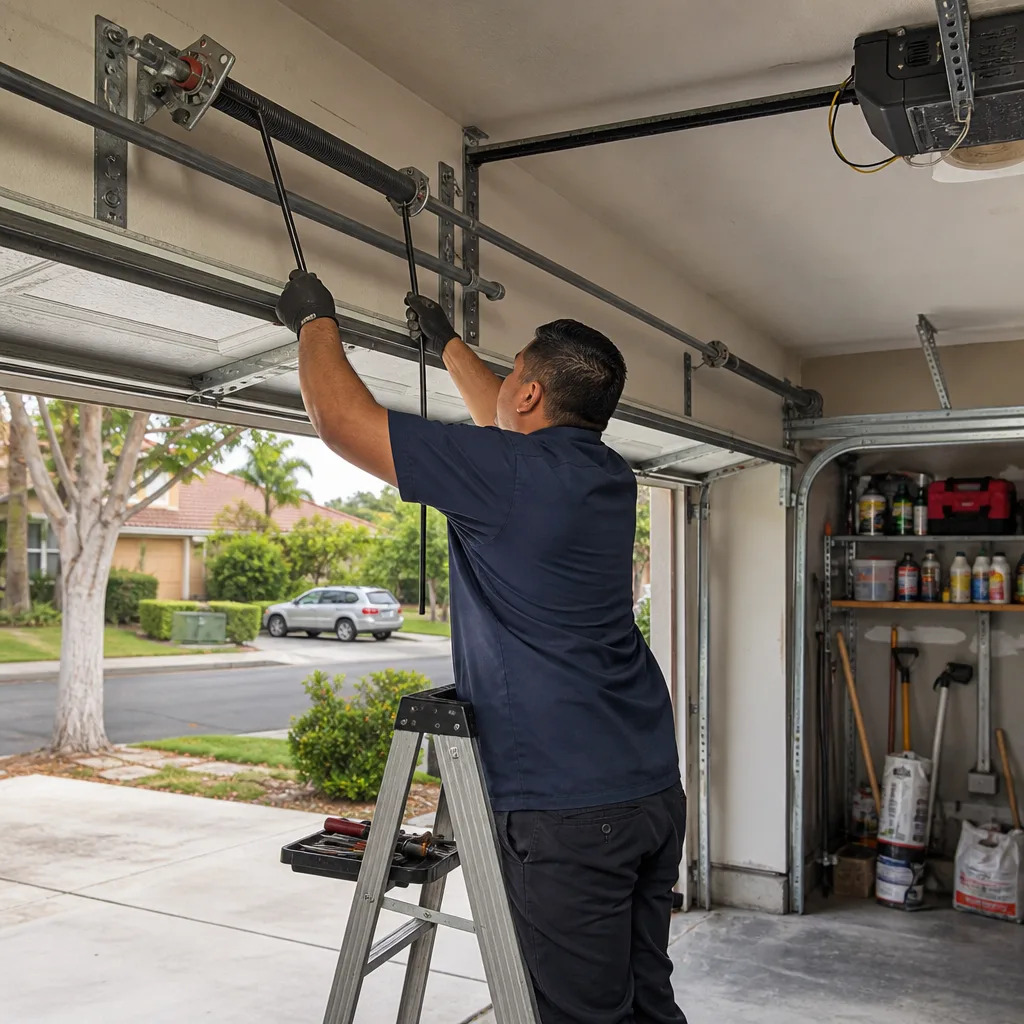
This is not a generic national template with a spring and fall checklist. It’s built around the three Mission Viejo stress periods and the specific components each one attacks. If you only do one thing each month, do the one listed here. Each task takes under 15 minutes unless noted, and each one produces a dated note for your maintenance log.
| Month | Component to Check | Frequency | What a Failure Looks Like |
|---|---|---|---|
| January | Opener force settings (after first cold week) | Once | Door reverses mid-close, opener hums but won’t move door, door refuses to stay closed |
| February | Bottom weatherstripping (post-Santa Ana) | Once | Creases and holds fold, cracks at edges, visible daylight under door |
| March | Track mounting hardware | Once | Track moves when gripped and pulled, lag bolt heads visible above bracket surface |
| April | Spring set screws (visual only) | Once | Rust has crept into threads around screw head, surface pitting on winding cone |
| May | Cable ends (start of marine-layer season) | Monthly through August | Dark roughened sections on cable, pitting at crimp point, frayed strands |
| June | Roller axles and hinge barrels | Monthly through August | Roller won’t spin with finger pressure, grinding sound when door moves |
| July | Cable ends (repeat) | Monthly | Same as May, compare against May notes for progression |
| August | Roller axles (repeat); full door balance test | Once | Door drops below waist height when released, feels heavy on manual lift |
| September | Complete door cycle count and service history review | Once | Door has exceeded 10,000 cycles or 8 years since last spring replacement |
| October | Start Santa Ana season preparation: checks after first major wind event | After each 50+ mph event | Loose track brackets, dry weatherstripping, rattling panels |
| November | Repeat post-Santa Ana checks, especially after multi-day events | After each event | Same as October |
| December | Opener force settings (first inversion cold snap) | Once | Same as January; door reverses or refuses to move on cold mornings |
This map is designed so that no component goes more than 30 days without a visual check during its peak failure season. Most garage door failures in Mission Viejo are not sudden: they’re progressive and observable, and they show up in the monthly note well before they strand a door. The discipline of the map is what catches them.
If any check in this map shows a failure indicator, and you’re not sure whether it’s cosmetic or structural, call us before it becomes an emergency. We’ll quote the repair with a flat, written price and written scope before any work starts, so you can make a decision with the evidence in hand.
How to Keep a Maintenance Log That Holds Up Under Warranty
Warranty language is specific. Most garage door manufacturers cover springs for 3 to 5 years and door sections for 5 to 10 years, but nearly all of them include a clause about “normal wear and tear” and “proper maintenance.” If a component fails and the manufacturer asks for maintenance records, what they’re looking for is a dated trail that shows the homeowner inspected and maintained the door on a reasonable schedule. A notebook with monthly entries beats a verbal assertion every time.
Here’s what a defensible log entry looks like, from a real Mission Viejo door we serviced in 2024:
July 15, 2024: Checked cable ends on both sides. Left cable shows dark roughening at crimp point, about 1/4-inch section. Right cable clean. Roller axles all spin freely except third hinge from bottom on left side, which is stiff but not seized. Photo attached. No action taken. Next check: August 15.
That entry is powerful because it’s dated, specific, and includes a visual record. It shows the homeowner was monitoring, not ignoring. The August entry then either shows the same condition (stable) or progression (worsening). If that cable later snaps, the homeowner can show a documented trend, and the manufacturer’s “sudden failure” defense collapses.
Keep the log simple. A small spiral notebook in the garage or a note on your phone works. What matters is the information, not the format:
- Date and time of inspection. Even if it’s just “Sunday afternoon.”
- Component checked. Be specific: “left cable end at bottom bracket,” not “cables.”
- Observation. What you saw, measured, or felt. Numbers are best.
- Action taken or deferred. “No action” is a valid entry. It shows you looked.
- Photo if anything looks questionable. Your phone camera is the best maintenance tool you own.
When we service a door, our technician photographs the failed component before quoting a replacement, and that photo record is delivered to you with the written quote. Clause 4 of The Haven Standard is why the photo comes before the quote: we believe you should see what we’re seeing before you spend a dollar on our recommendation. If you bring us a competing written estimate from another Mission Viejo garage door company, we’ll give you a free second opinion on it. Bring the paperwork and we’ll go through it line by line.
What to Lubricate, What to Leave Alone, and Why It Matters Here

The most common garage door maintenance mistake we see in Mission Viejo is over-lubrication with the wrong product. WD-40 is not a garage door lubricant. It’s a solvent with a light oil carrier, and it strips the existing lubrication off hinges and rollers while leaving a film that attracts dust. In marine-layer season, that dust becomes a salt paste, and the component wears faster than if you’d done nothing.
Here’s the correct lubrication protocol for a Mission Viejo garage door:
- Use a white lithium grease or a dedicated garage door lubricant. Not WD-40, not penetrating oil, not silicone spray. White lithium grease stays in place, resists washout, and doesn’t attract the same dust load. A $9 can lasts two years.
- Lubricate the torsion spring, hinges, and roller bearings. The spring gets a thin coat along the full length. Each hinge pivot gets one drop. Rollers with exposed bearings get one drop on the bearing surface. Nylon roller wheels themselves do not need lubrication.
- Do not lubricate the track. The track is not a bearing surface. Lubricant on the track picks up dust and creates a paste that increases rolling resistance. Clean the track with a dry cloth if it’s dirty, but leave it dry.
- Do not lubricate the chain or belt on the opener. Chains on modern openers are pre-lubricated and sealed; belts are dry by design and lubrication destroys them. If the chain is rusty or noisy, the opener’s sprocket alignment is likely the problem, not a lubrication deficit.
The right way to apply is sparingly and consistently. A light coat twice a year, timed to the marine-layer season start in May and the Santa Ana season start in October, is more effective than heavy quarterly applications. The goal is to maintain a protective film, not to drown the component.
If you see lubrication issues on the opener itself, such as a belt slipping or a chain that’s riding off the sprocket, that’s typically an Garage Door Opener Repair & Installation in Mission Viejo issue, and it’s one of the few things we recommend calling on rather than attempting to adjust, because the carriage and rail alignment tolerances are tight and very easy to make worse with a wrench.
Common Mistakes to Avoid
- Following a spring/fall national calendar. Mission Viejo’s stress periods don’t align with the equinoxes. Lubricating in April and October means you’re lubricating at the tail end of the marine-layer corrosion window and the start of the Santa Ana dust loading. Shift to May and October, or better, use the 12-month map above.
- Using WD-40 or penetrating oil. It strips existing lubrication and attracts dust. Use white lithium grease and apply sparingly.
- Ignoring the maintenance log until a warranty claim. “I maintained it” with no dated records is not evidence. The manufacturer will deny the claim. Start the log now, even if the door is new.
- Over-tightening track bolts after a wind event. The correct torque is specified in your installation manual, and it’s lower than most people think. Over-tightening crushes the track profile and creates a permanent bind. If track hardware is loose, call someone who knows the spec.
- Adjusting torsion springs or cables without training. These components are under enough tension to cause serious or fatal injury. The inspection sequence above is visual only. Do not touch the spring set screws, the winding cones, or the cable anchor brackets. A trained professional has the right tools and the right procedure.
- Ignoring bottom weatherstripping because it’s “cosmetic.” It’s not cosmetic. It seals the garage against dust, leaf litter, pests, and embers during wind events. A cracked seal on a Mission Viejo door facing open hillside is a fire risk, not just an energy waste.
- Waiting until the door fails to think about a service company. The day your door breaks is the worst day to research who to call. Find a company that gives written pricing before work starts, read their terms, and keep their number in your phone before you need it. The paper trail is what protects you from the $89 service call that becomes a $900 “emergency repair.”
When to Call a Professional
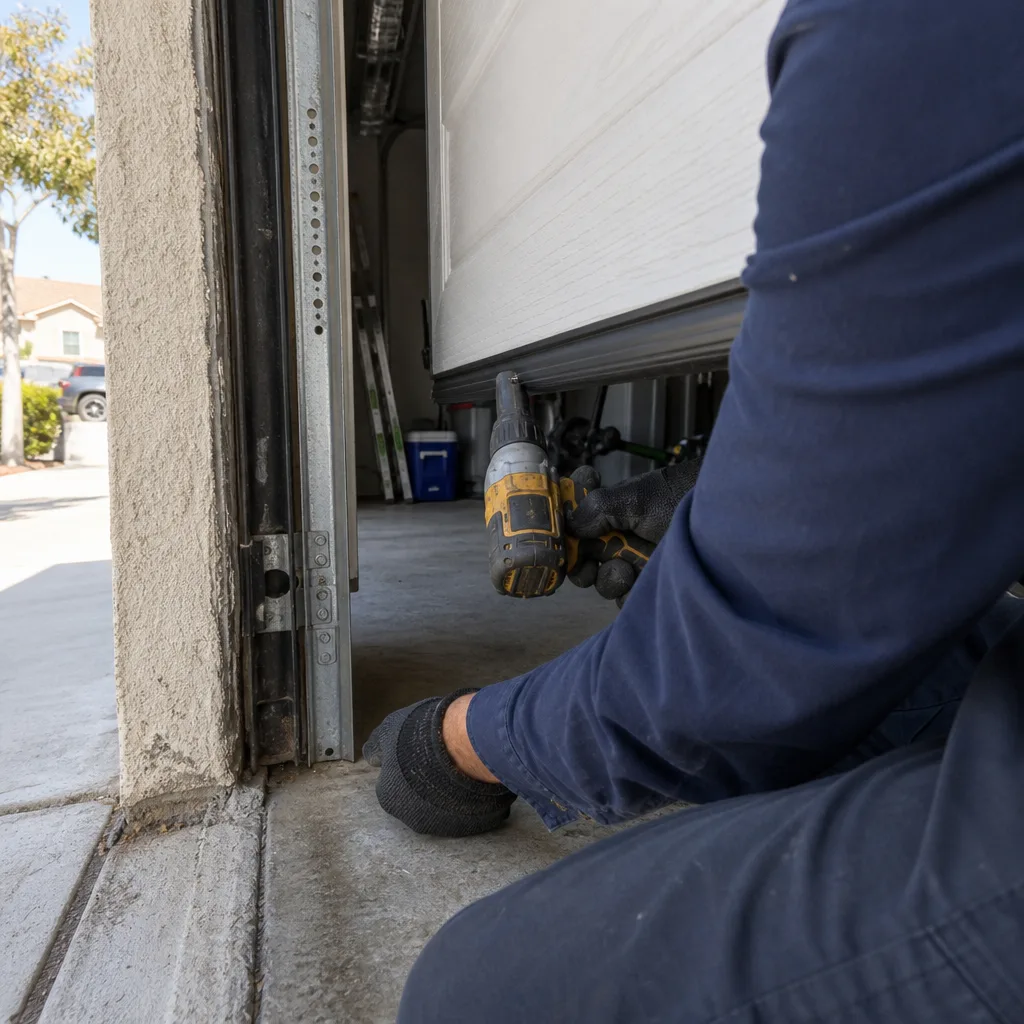
Some conditions are safe to monitor and log. Others need a trained technician immediately. If you see any of the following, call before the next door cycle, not after: a cable showing visible strand fraying or a broken strand at the crimp point, a torsion spring with a visible gap in the coil or a clean break, a door that hangs crooked in the closed position or binds halfway through travel, a bottom panel that’s dented enough to interfere with the seal, or an opener that reverses direction immediately on every cycle. These are not maintenance items; they’re active failures in progress. Servo Garage Doors Mission Viejo offers free estimates in Mission Viejo. Call (657) 293-2416 and we’ll quote a flat, written price and written scope before any work starts, with a documented photo record included on every visit.
Frequently Asked Questions
Monthly during the marine-layer season (May through August) and after every Santa Ana wind event above 50 mph from October through January. During other months, once every six to eight weeks is sufficient. The 12-month map above gives you the exact component to check each month.
A basic lubrication and inspection visit from a Mission Viejo garage door company typically costs $89 to $150, and most companies apply that amount toward any repair discovered during the visit. At Servo Garage Doors Mission Viejo, every quote is a flat, written price with a written scope, so you know the cost before we start. Call (657) 293-2416 for a free estimate.
Yes, for inspection and lubrication tasks. You can check cable ends, roller axles, track hardware, and weatherstripping, and you can apply white lithium grease to hinges and springs. You should not adjust torsion springs, cables, or track alignment, because these components are under high tension and can cause serious injury. Not sure where to draw the line? Our DIY vs Professional Garage Door: The Mission Viejo Homeowner’s Decision Guide breaks it down. Leave anything that requires a wrench on a spring, cable, or track bracket to a trained professional.
Torsion springs are rated in cycles, not years. A standard spring is rated for 10,000 cycles, which for a typical Mission Viejo household using the door three times a day works out to roughly 7 to 9 years. Heavier doors, doors with high cycle counts, and doors on west-facing exposures that endure Santa Ana wind loading tend to fail on the shorter end of that range. If your door is over 8 years old and still on the original springs, budget for replacement.
Yes. Mission Viejo’s canyons channel marine-layer air inland from the coast, and the pattern is consistent from May through August. The salt concentration is lower than at the beach, but the repeated daily wet-dry cycle concentrates it over time. The components affected are the steel cable ends, roller axles, and hinge barrels, not the painted door panels. Monthly visual checks during marine-layer months catch it early.
First, do a manual balance check: disengage the opener and lift the door by hand. If it’s heavy, the spring has stiffened in the cold and the opener force settings need adjustment, or the spring needs replacement. If the manual lift feels normal, raise the opener’s force settings in small increments and test the auto-reverse with a 2×4 on the floor. If it still reverses, call a professional. Call (657) 293-2416 for an exact diagnosis; estimates are free.
The Bottom Line
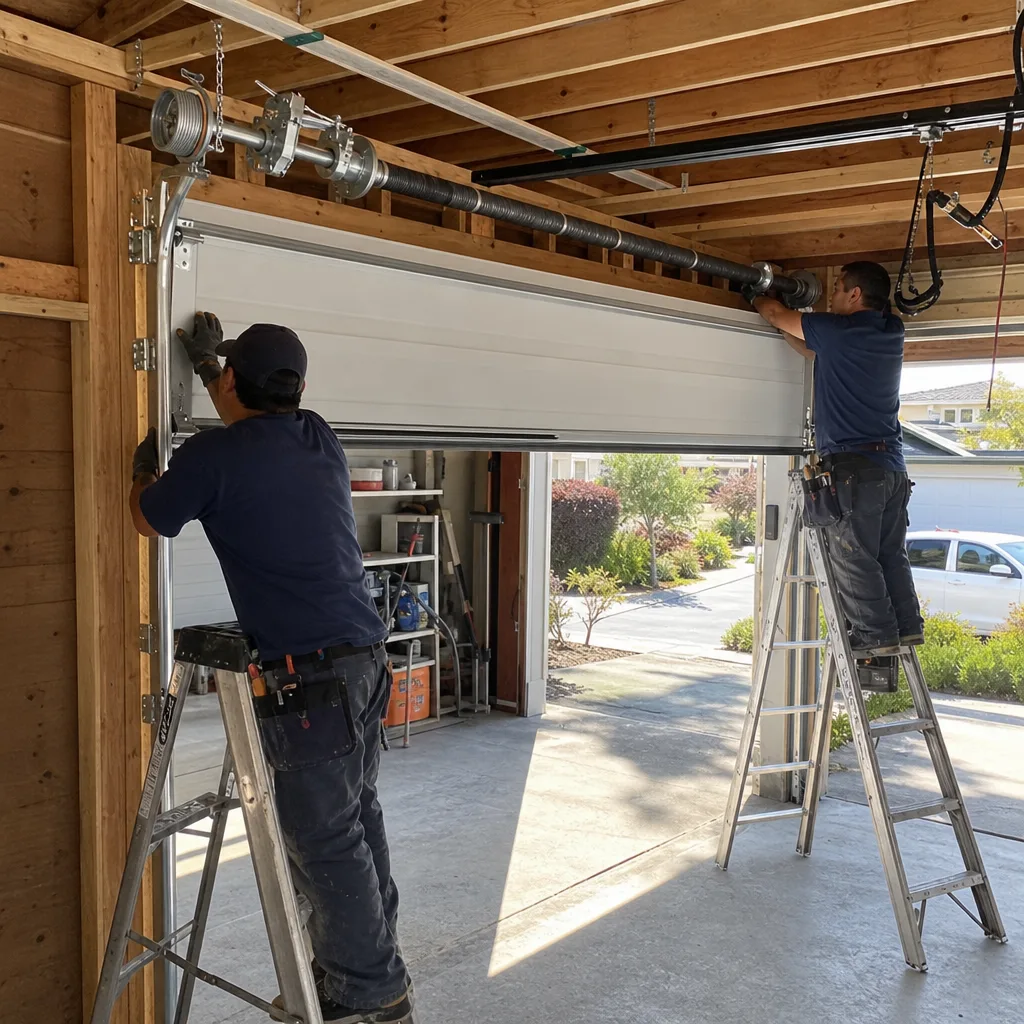
Mission Viejo’s garage doors fail on a predictable cycle, but the cycle is written into the climate, not the calendar. The marine layer corrodes cable ends and roller axles from May through August. Santa Ana winds loosen track hardware and destroy weatherstripping from October through January. Winter inversion nights change the physical behavior of torsion springs in measurable ways. A homeowner who follows the 12-month task map, keeps a dated log with photos, and calls a professional at the first structural indicator will spend less on repairs over the life of the door than someone who reacts to failures. For more guides & resources on maintaining your door, explore our blog. The paper trail is the difference.
Written by Marcus Deller, Owner at Servo Garage Doors Mission Viejo, serving Mission Viejo since 2015.