
Last updated September 19, 2026
Full 25-point door and opener safety check with every visit - springs, cables, rollers, tracks, and your LiftMaster or Chamberlain opener included
You get a price before we start. It does not change when the truck arrives.

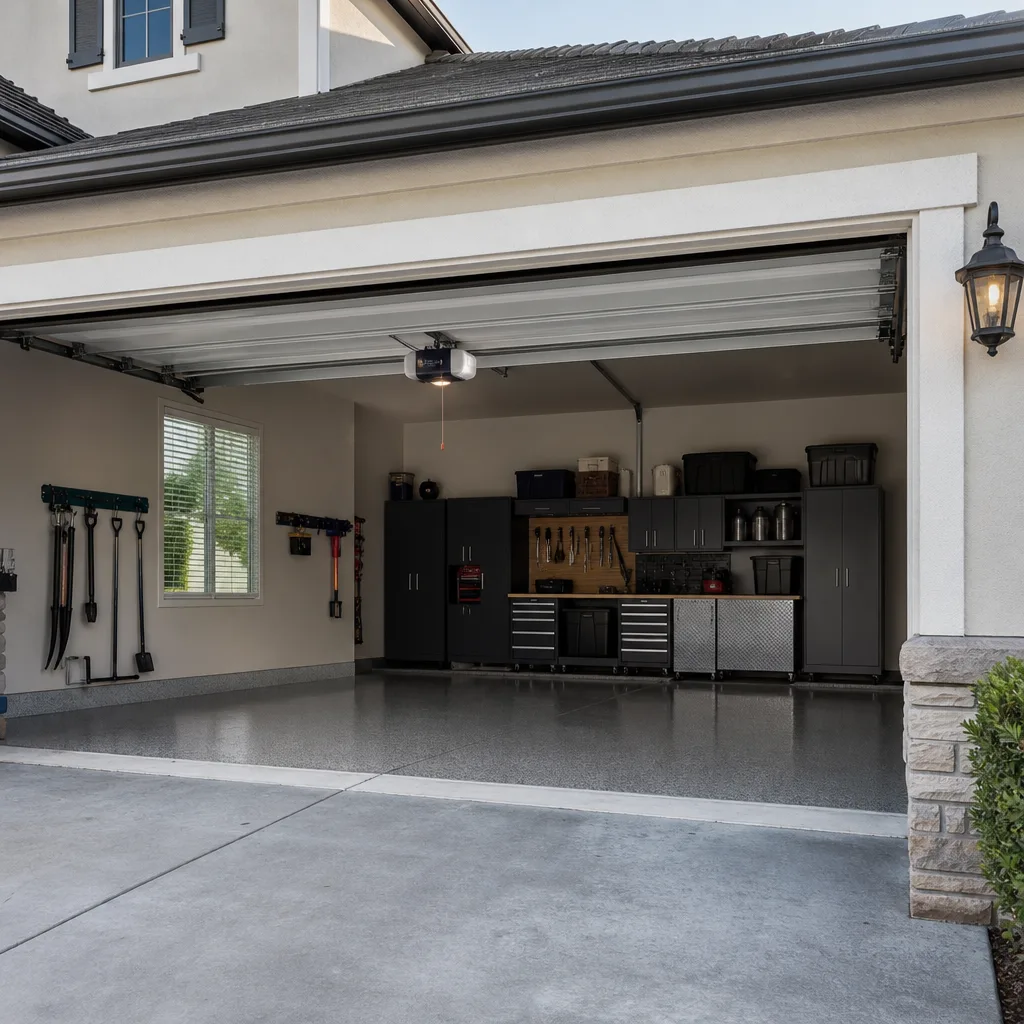
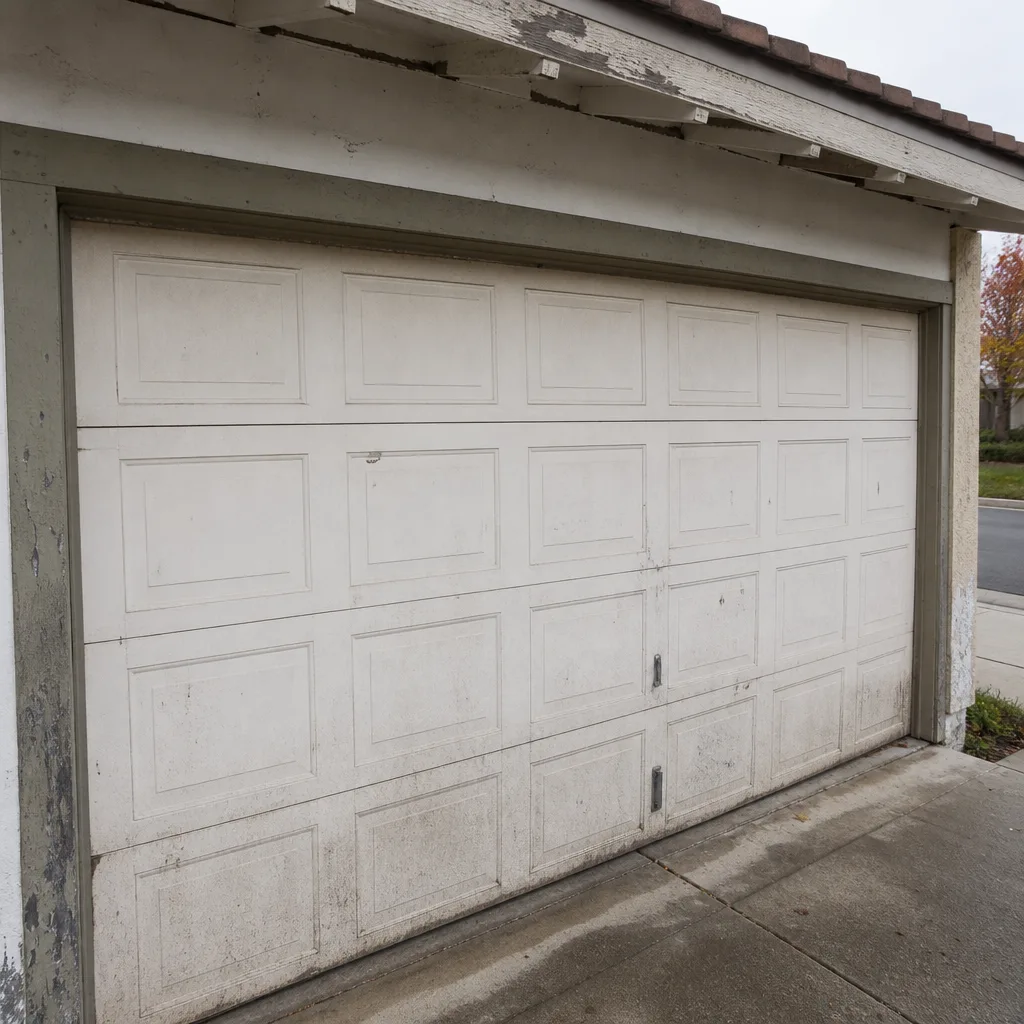 Before
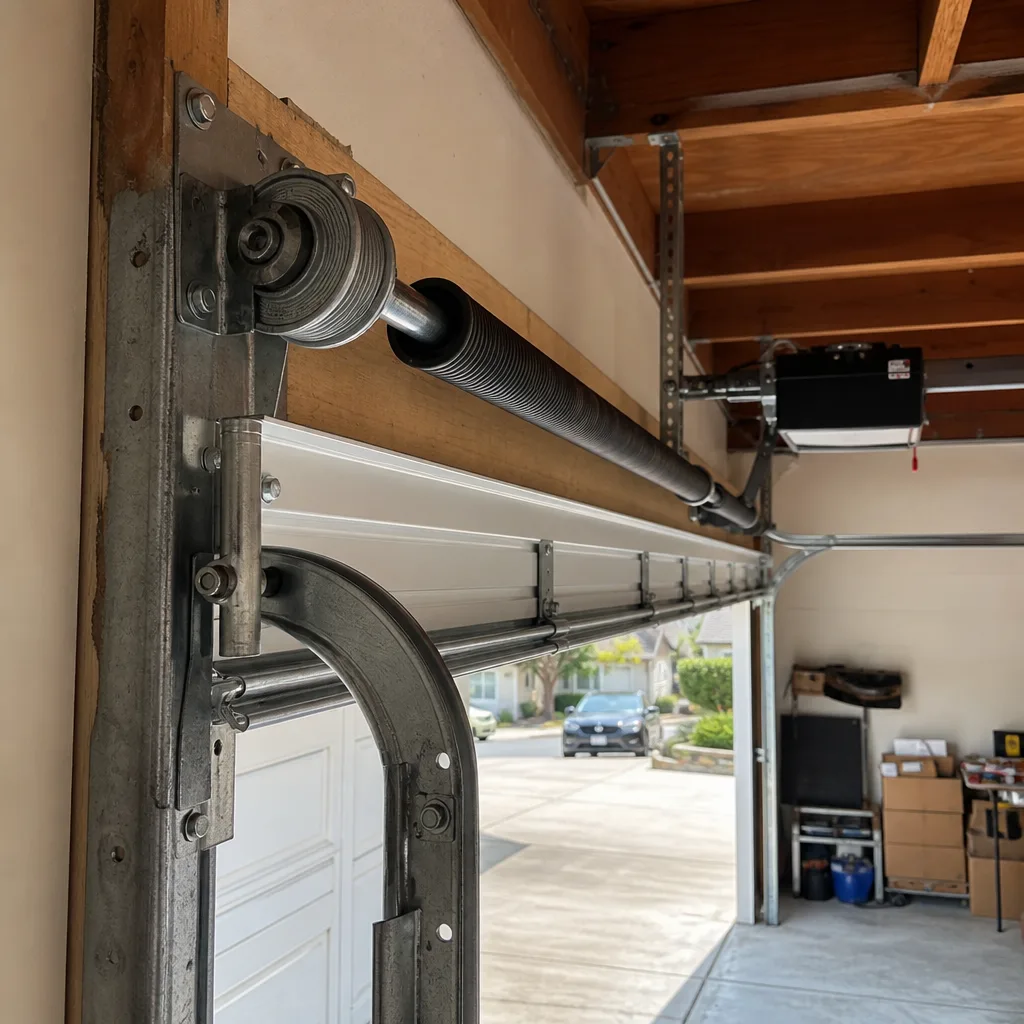 After
After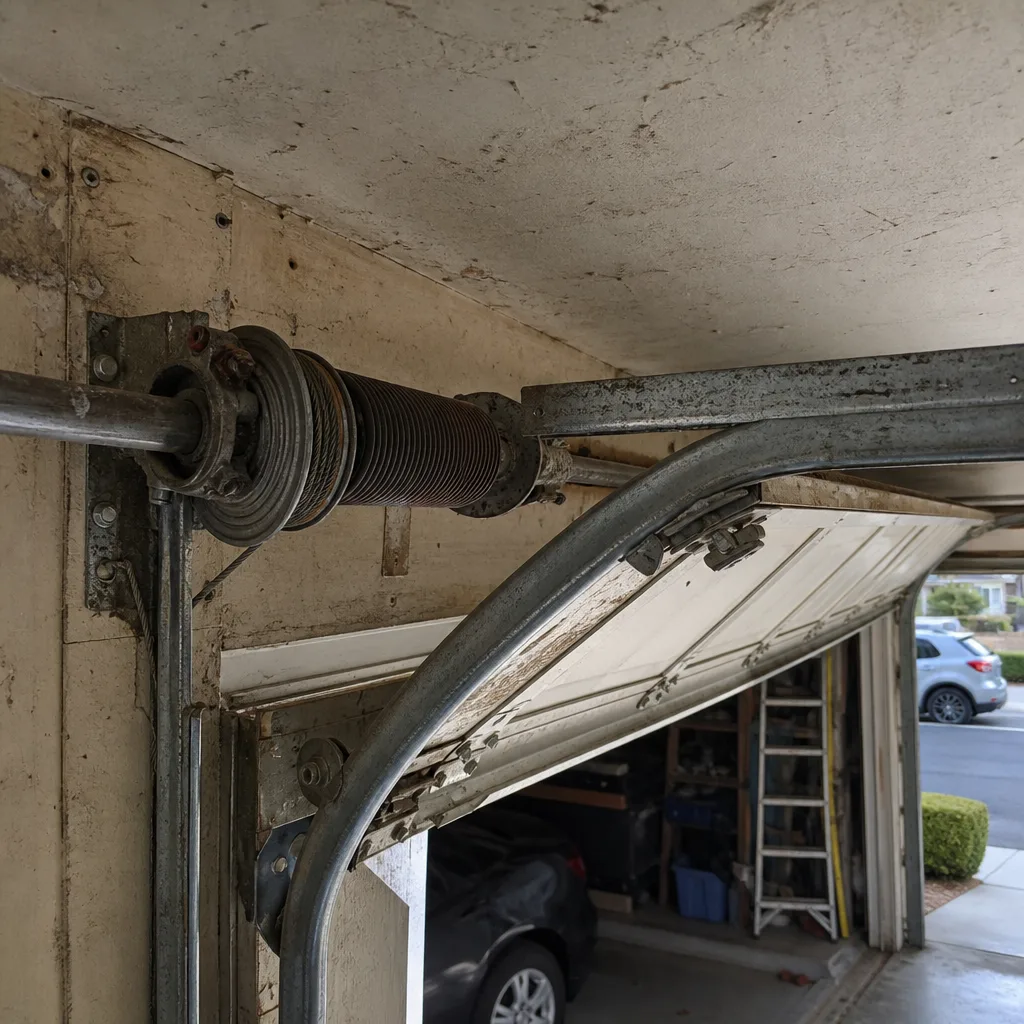 Before
 After
After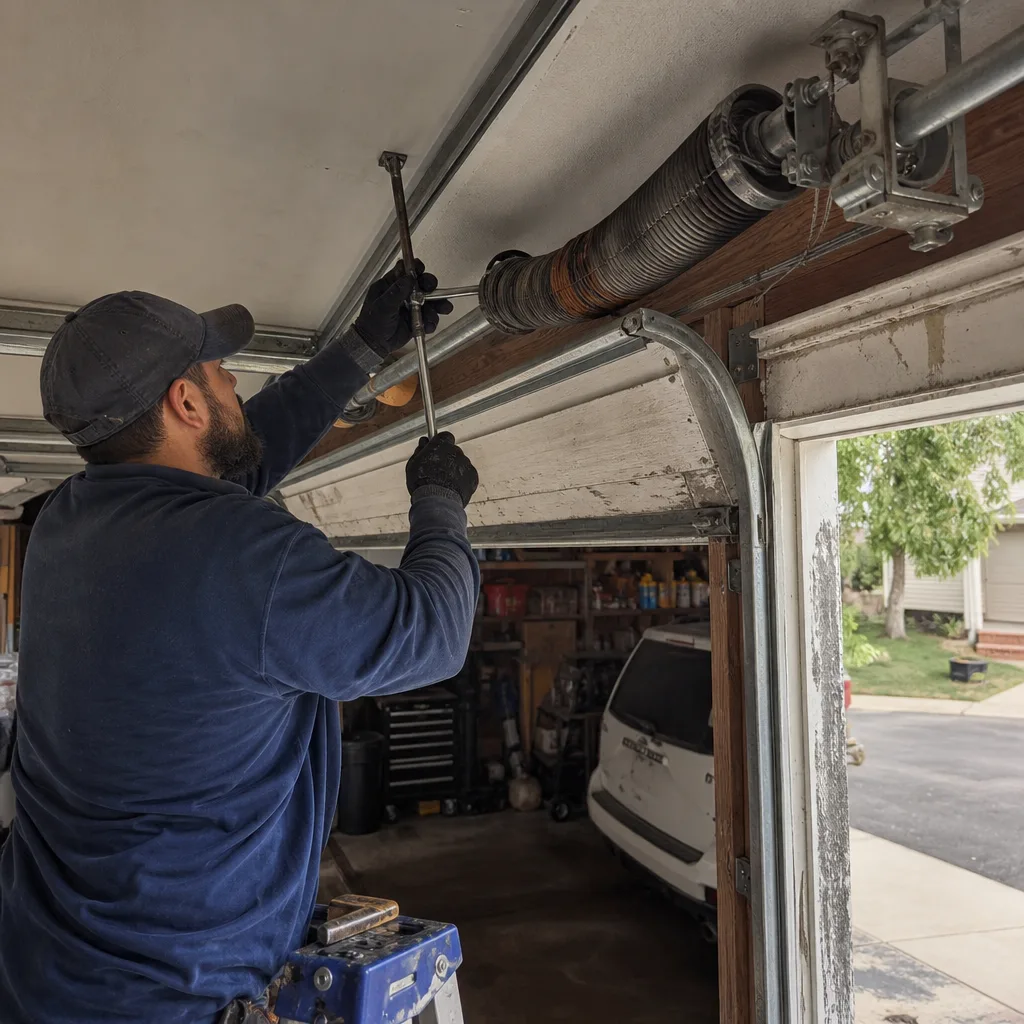 Before
 After
AfterGarage Door Warning Signs: A Mission Viejo Homeowner’s Reference Guide
Most garage door guides stop at the symptom. They’ll tell you the door is “acting up” or “making a strange noise” and leave it there. That’s the exact information gap that leads to over-diagnosis, unnecessary part replacements, and invoices that don’t match the actual problem. A garage door that reverses halfway up isn’t “acting up” - it’s either a photo-eye misalignment, an obstruction in the travel path, or an opener force limit set below the door’s actual weight, and each of those has a different repair cost and a different cause. This guide names the component behind every symptom so that when you call a contractor in Mission Viejo, you’re describing the problem in terms that produce an accurate first conversation, not a vague complaint that invites a broad estimate.
Quick Answer
The most common garage door warning signs in Mission Viejo homes are slow opener response (capacitor or thermal protection), grinding during operation (worn drive gear or loose chain), uneven travel (broken torsion spring or cable off-drum), reversal mid-cycle (force limit or photo-eye sensor), sagging sections (panel fatigue or hinge failure), and excessive noise (worn roller bearings). Each symptom maps to a specific component, and identifying that component before you call determines whether you’re scheduling a $45 roller replacement or a $285 spring job.
Table of Contents
- Symptom-to-Component Mapping: The Seven Calls We See Most in Mission Viejo
- The Three-Second Balance Test: What the Halfway Point Tells You
- Monitor for 30 Days vs. Same-Week Service: Measurable Criteria
- Age-Related Fatigue vs. Installation Errors: How to Tell Them Apart
- How to Photograph and Describe a Warning Sign Before You Call
- How Mission Viejo’s Climate and Housing Stock Affect Garage Door Wear
- Common Mistakes to Avoid
- When to Call a Professional
- Frequently Asked Questions
- The Bottom Line
BeforeAfterSymptom-to-Component Mapping: The Seven Calls We See Most in Mission Viejo
In our experience across Mission Viejo, from the lake-adjacent homes near North Paseo to the hillside tracts off Marguerite Parkway, seven symptoms account for the majority of garage door service calls. Here’s what each one actually means at the component level.
1. Slow Response When You Press the Button
You press the opener and the door takes two or three seconds to move. Or it starts, hesitates, then continues. That delay is usually one of two things: a failing capacitor in the opener motor (the small cylinder that stores the electrical charge needed to start the motor) or the motor’s thermal protection circuit engaging because the unit has overheated from excessive force demands. In Mission Viejo’s summer heat, thermal protection trips more often because garage interiors routinely exceed 100°F, and a motor working against a door that needs lubrication or a spring that’s lost tension draws more current per cycle.
The capacitor is a $28 to $55 part. Thermal protection issues usually point to the door itself, not the opener - the motor is telling you something downstream is working too hard.
2. Grinding or Gritty Sound During Operation
A grinding noise that sounds like metal on metal typically comes from a worn drive gear inside the opener, or a chain that’s come loose and is dragging against the rail. The drive gear is a nylon or plastic gear that transfers motor rotation to the chain or belt. On units from LiftMaster and Chamberlain installed between 2015 and 2022, this gear is a known wear point at roughly 7 to 10 years of use, which matches the age of many homes in Mission Viejo’s newer developments.
If the grinding is consistent regardless of door position, it’s the gear. If it happens only in one section of travel, it’s the chain contacting a misaligned rail. A loose chain is a $65 to $95 adjustment. A worn drive gear is a $140 to $210 repair because the opener has to come down and open up.
3. Uneven Travel: One Side Lifts Before the Other
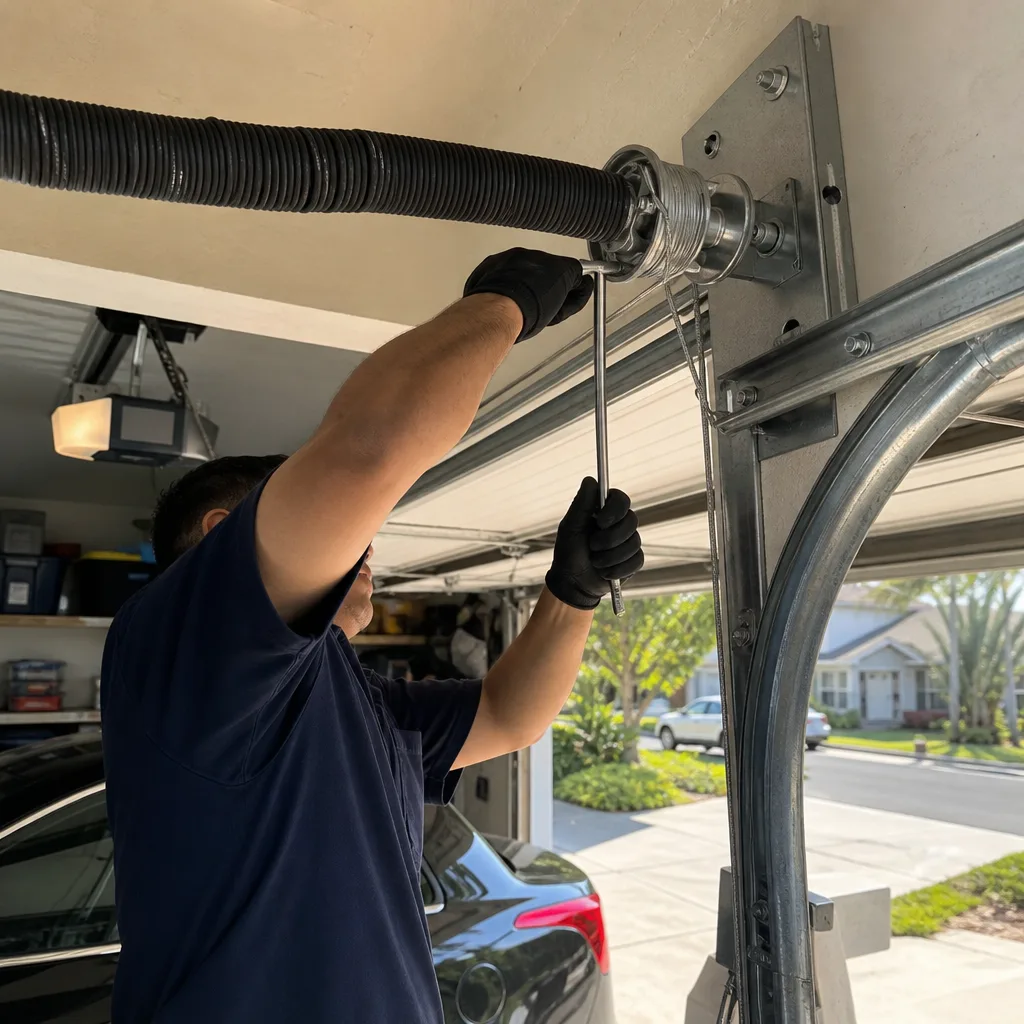
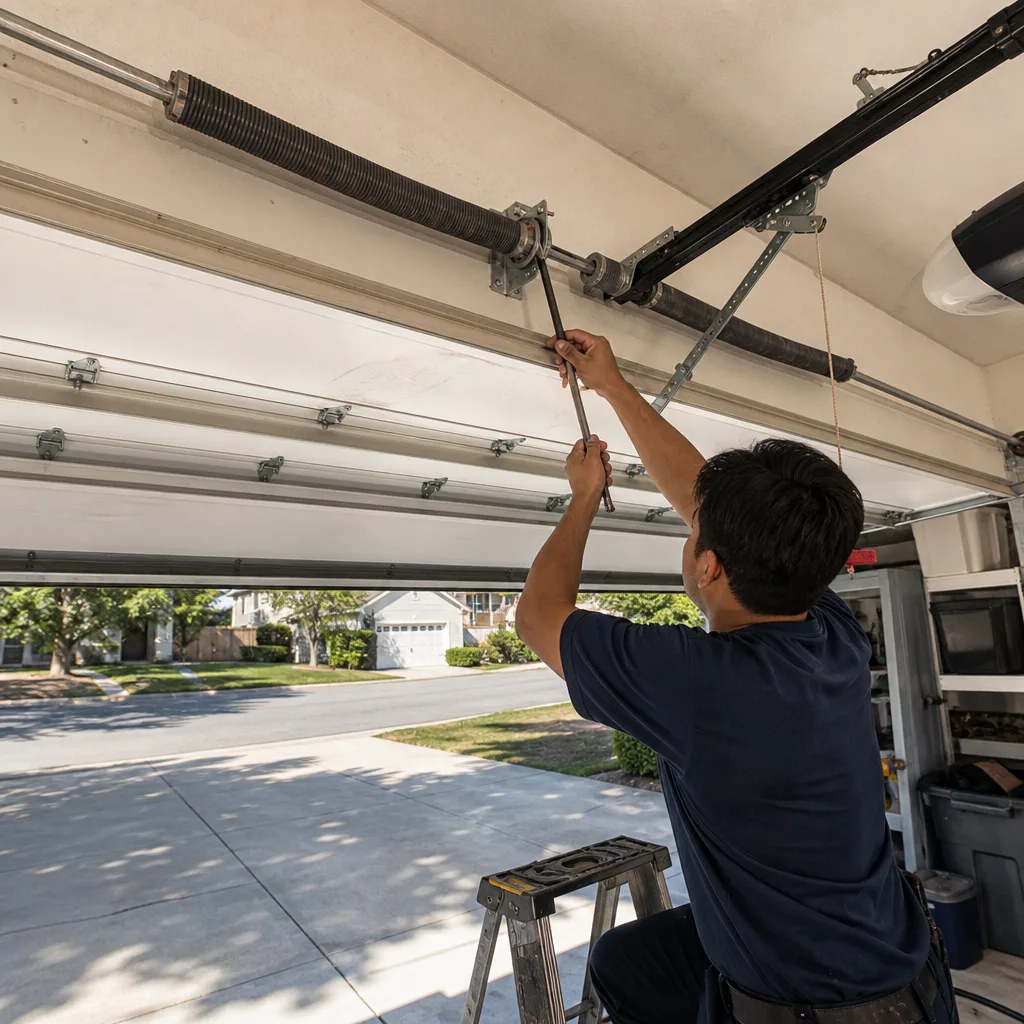
When the door rises unevenly - one side noticeably higher than the other within the first foot of travel - the cause is almost always a broken torsion spring or a cable that’s slipped off its drum. Torsion springs are the coiled springs mounted on the bar above the door opening. They counterbalance the door’s weight so the opener only has to move a few pounds, not 200. When one of a pair fails, the door loses balance on that side immediately.
This is the one symptom on this list that requires same-week attention, and it’s not a DIY job. The spring under tension carries enormous stored energy. A broken spring leaves the door’s full weight on the remaining spring and the opener, which can damage the opener’s travel mechanism within a dozen cycles. Spring replacement in Mission Viejo runs $245 to $385 for a standard two-spring setup on a 16-foot door, depending on wire gauge and cycle rating.
4. Door Reverses Halfway Up or Down
This is the most misdiagnosed symptom we see. Homeowners assume it’s the sensors, and sometimes it is. But there are three distinct causes, each with a different fix:
- Photo-eye misalignment: The small sensors on either side of the door opening near the floor have drifted out of alignment, or the sun is hitting one directly at a low angle - common in east-facing garages in Mission Viejo in the afternoon.
- Force limit setting too low: The opener’s internal setting that determines how much resistance it will push against before reversing. If the door is heavier than the setting (worn springs add weight), the opener reads that as an obstruction and reverses.
- Actual obstruction: A garden hose, a kid’s bike, or debris in the track.
The test: if the problem happens only at a certain time of day, it’s sun hitting the sensor. If it happens consistently regardless of time, it’s almost always the force limit reacting to a door that’s heavier than it used to be - which means the springs are losing tension, not that the opener is failing.
5. Sagging Center Section or Panel Separation
A door that sags visibly in the middle when open is showing panel fatigue or hinge failure. Panel fatigue is common on single-layer steel doors from the early 2000s that have endured two decades of direct afternoon heat on Mission Viejo’s west-facing elevations. The heat doesn’t bend the panel directly, but it accelerates adhesive breakdown between the steel skin and the internal insulation, and the panel loses its structural integrity.
Hinge failure shows differently: the separation appears at the seams between panels, not in the middle of a panel. Hinges are a $18 to $30 part each, and they’re usually replaced in pairs. Panel replacement is a larger decision - on a 16-foot door from Clopay, Amarr, or Wayne Dalton, a single panel runs $310 to $540 installed, and if two or more panels are compromised, replacing the door is usually the smarter financial call.
6. Excessive Noise: Squealing, Rattling, or Popping
Noise is the symptom homeowners tolerate longest, and it’s the easiest to fix early. The culprit is almost always the roller bearings - the small steel or nylon wheels that guide the door along its vertical and horizontal tracks. Over time, the sealed bearings inside the rollers dry out, and metal-on-metal contact produces a squeal that gets progressively worse.
Nylon rollers from a good manufacturer, which are what we install on Mission Viejo repair jobs, run $10 to $20 per roller, and a door needs 12 to 14 of them. That’s a same-day job with a total bill usually under $300. Metal rollers are cheaper but louder - if you have a bedroom above the garage, spend the extra $8 per roller.
7. Hard Manual Operation When the Opener Is Disengaged
Pull the red emergency release cord and try lifting the door by hand. If it feels heavy, won’t stay put, or drifts down on its own, the torsion springs have lost tension. This is the same issue described in symptom three, but caught earlier - before the spring breaks entirely.
A properly balanced door should lift with roughly 8 to 10 pounds of force and stay put at the halfway point. If you can’t hold it there with one hand, the springs are due. Catching spring tension loss before a full break saves you the cost of an emergency dispatch and the risk of a door coming down unexpectedly.
The Three-Second Balance Test: What the Halfway Point Tells You
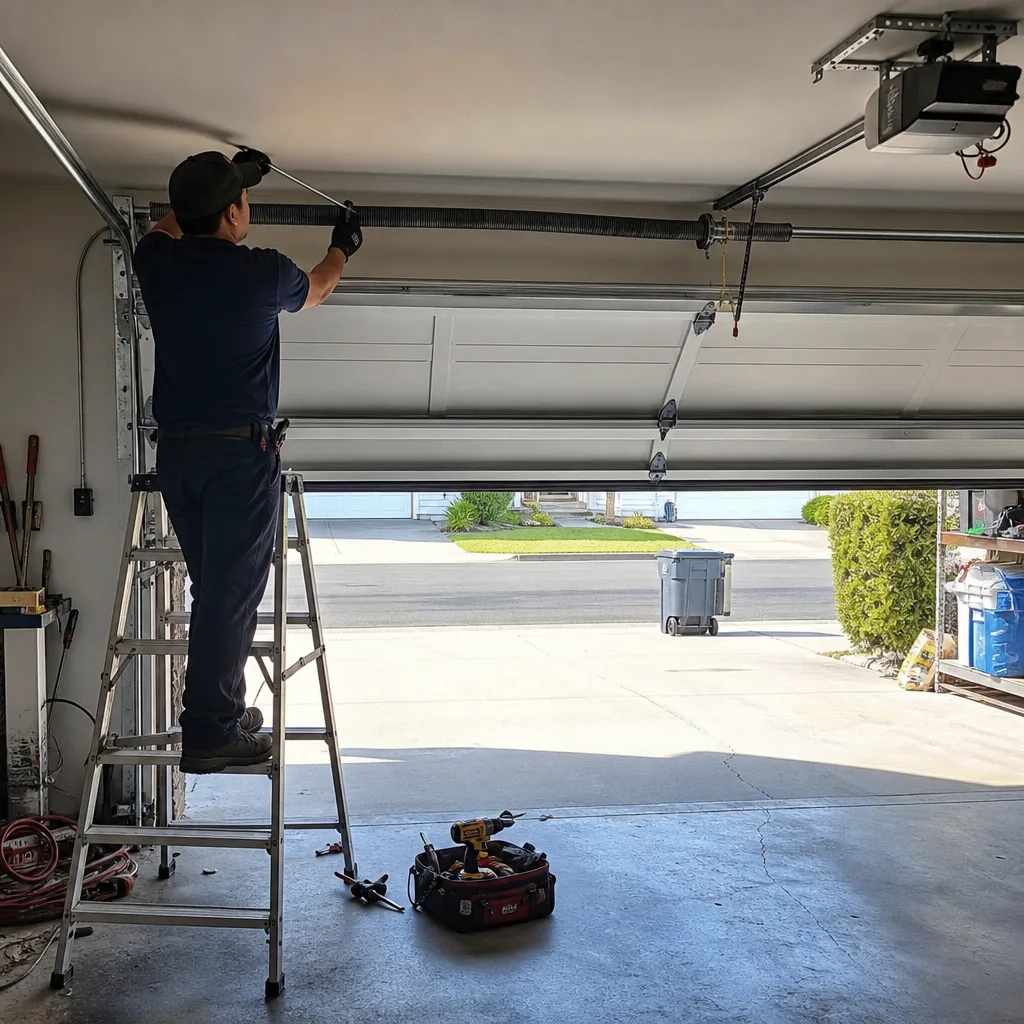
The balance test is the single most useful diagnostic a Mission Viejo homeowner can perform, and it takes three seconds. Here’s how to do it correctly:
- Close the door completely.
- Pull the red emergency release cord hanging from the opener rail. This disengages the opener from the door.
- Lift the door manually to the halfway point - approximately waist height on a standard 7-foot door.
- Let go.
What the door does next tells you what’s happening with the springs:
- Door stays at the halfway point: Springs are functioning correctly, and the door’s weight is properly counterbalanced. No action needed.
- Door drifts downward slowly: Spring tension is declining but not yet critical. You have weeks, not days, before this becomes hard operation and eventual opener strain. Schedule a spring inspection and lubrication.
- Door falls or is hard to hold: One spring has likely broken, or the tension has fallen below functional levels. The opener is currently doing the springs’ job, which will burn out the drive gear within weeks.
- Door rises on its own: The springs are overwound, which is less common but creates a door that slams upward and strains the cables. This happens after a prior service where springs were set incorrectly.
This test isolates the springs from the opener entirely. If the door fails the balance test but operates fine with the opener engaged, you’ve confirmed the springs are the issue and the opener is compensating - which means every cycle is damaging the opener. That’s the information you want before you call anyone, because it changes the conversation from “my door is making a noise” to “the door fails the balance test at the halfway point,” which any competent technician understands immediately.
Monitor for 30 Days vs. Same-Week Service: Measurable Criteria
Not every warning sign needs immediate attention, and part of managing a home in Mission Viejo is knowing which ones can wait. Here’s the distinction, using criteria you can measure rather than urgency language.
Safe to Monitor for 30 Days
- Intermittent roller noise that’s present but not worsening. If the squeal is consistent from week to week, it’s worn rollers, not failing springs, and there’s no structural risk.
- Slow opener response of 1 to 2 seconds with no other symptoms. The capacitor is degrading but functional.
- Minor panel cosmetic issues - surface dents, paint wear, small rust spots - that don’t affect the door’s structural integrity or travel.
- A door that fails the balance test by drifting slowly, not falling. This signals tension loss, and scheduling within 30 days is reasonable.
Same-Week Service Required
- A broken torsion spring: you’ll usually hear it - a loud bang from the garage that sounds like someone dropped a barbell. The door typically won’t open, or opens only a few inches. Continuing to use the opener against a broken spring will destroy the opener’s drive gear.
- A cable that has slipped off the drum: visible as a loose cable hanging near the top of the door opening. The door is now operating on a single spring and cable, which is unsafe.
- The door reversing on every cycle regardless of time of day: this indicates the force limit is reacting to a door that’s become dangerously heavy, or a sensor that’s failed entirely.
- Any situation where the door comes down faster than it used to: a door that accelerates on the way down has lost its counterbalance and can injure someone or damage a vehicle.
These criteria are the difference between a $45 roller replacement and a $950 opener replacement. The monitor list buys you time without consequence. The same-week list doesn’t, and delaying turns a spring issue into a spring-plus-opener issue.
Age-Related Fatigue vs. Installation Errors: How to Tell Them Apart

When a garage door component fails in a Mission Viejo home, the cause is almost always one of two things: the part wore out on schedule, or someone set it up wrong the last time it was touched. Knowing which one you’re looking at changes what you should expect from the repair - and the warranty.
Signs of Age-Related Fatigue
- Gradual decline: the door got noisier over months, or the balance deteriorated slowly, not overnight.
- Original components: the door, springs, and opener are all original to the home, which for homes built in Mission Viejo between 1995 and 2015 means the springs are at or past their cycle rating (typically 10,000 cycles, or roughly 7 to 10 years of daily use).
- Even wear patterns: both sides of the door show similar wear, both cables look equally aged, and the wear points match the door’s primary operation pattern.
- Manufacturer date codes: springs and openers have date stamps. If the components are original to the home, age-related failure is the expected outcome, not a defect.
Signs of Installation Errors
- Sudden failure after service: the door worked fine, you had work done, and a new problem appeared within weeks - often unrelated to the original issue.
- Asymmetric wear: one cable shows more fraying, one spring has more visible coil separation, or one track has wear marks the other doesn’t. This points to an imbalance introduced at installation.
- Incorrect part sizing: a spring with the wrong wire diameter or coil count was installed. The door may work initially but will fail prematurely, or wear out the opener faster.
- Missing or incorrect hardware: bolts that aren’t the right length, brackets that are slightly angled, or a chain/belt that’s visibly looser on one side.
The tell with installation errors is asymmetry. Mechanical systems that wear out on schedule fail evenly. Systems that fail oddly - one cable frayed, one spring broken while the other looks fine, one track bent in a pattern the other isn’t - usually had help. This is why Servo Garage Doors Mission Viejo documents every component before and after every job, and why the photo record matters: if something was done wrong, you can see it. On opener replacements, the same principle applies - a new opener installed with an improperly set force limit will reverse constantly, and the fix is calibration, not a new opener.
How to Photograph and Describe a Warning Sign Before You Call
The quality of your first conversation with a garage door company in Mission Viejo determines the accuracy of your estimate. A vague complaint - “the door is making a noise” - produces a wide range of possible causes, which either means a broad estimate or a technician who shows up without the right parts. Here’s how to photograph and describe the problem like someone who knows what they’re looking at.
What to Photograph
- The component, not the whole door: get close. If the noise is coming from the top of the door near the opener, photograph the chain/belt, the drive gear housing, and the springs. If it’s from the sides, photograph the rollers and tracks.
- Both sides for comparison: a photo of the left cable and the right cable lets a technician spot asymmetry - the classic sign of installation error or partial failure.
- The spring specifically: photograph the spring from the side so the coil spacing is visible. A broken spring shows a clean break with a visible gap. A fatigued spring shows uneven coil spacing.
- The door at the failure point: if the door reverses halfway, photograph it at the exact height where it reverses.
- The opener’s model number: it’s on a label on the side of the unit. This tells the technician which parts are likely involved before they arrive.
How to Describe the Symptom
Use the vocabulary from the first section of this guide. Instead of “it’s making a weird noise,” say “there’s a grinding sound that’s consistent through the entire travel, and it’s louder near the top.” That sentence alone rules out several causes. Instead of “it won’t open,” say “the opener engages but the door only rises about six inches and then stops, and I heard a loud bang in the garage yesterday.” That’s a broken torsion spring, and the technician knows to bring a replacement pair before leaving the shop.
This is exactly the practice that Servo Garage Doors has codified internally: the customer sees the failed component before anyone quotes a replacement. Clause 4 of The Haven Standard requires a photographed component-level diagnosis before pricing is presented. If you bring that same level of precision to your first phone call, the entire process gets faster and the estimate gets tighter.
How Mission Viejo’s Climate and Housing Stock Affect Garage Door Wear
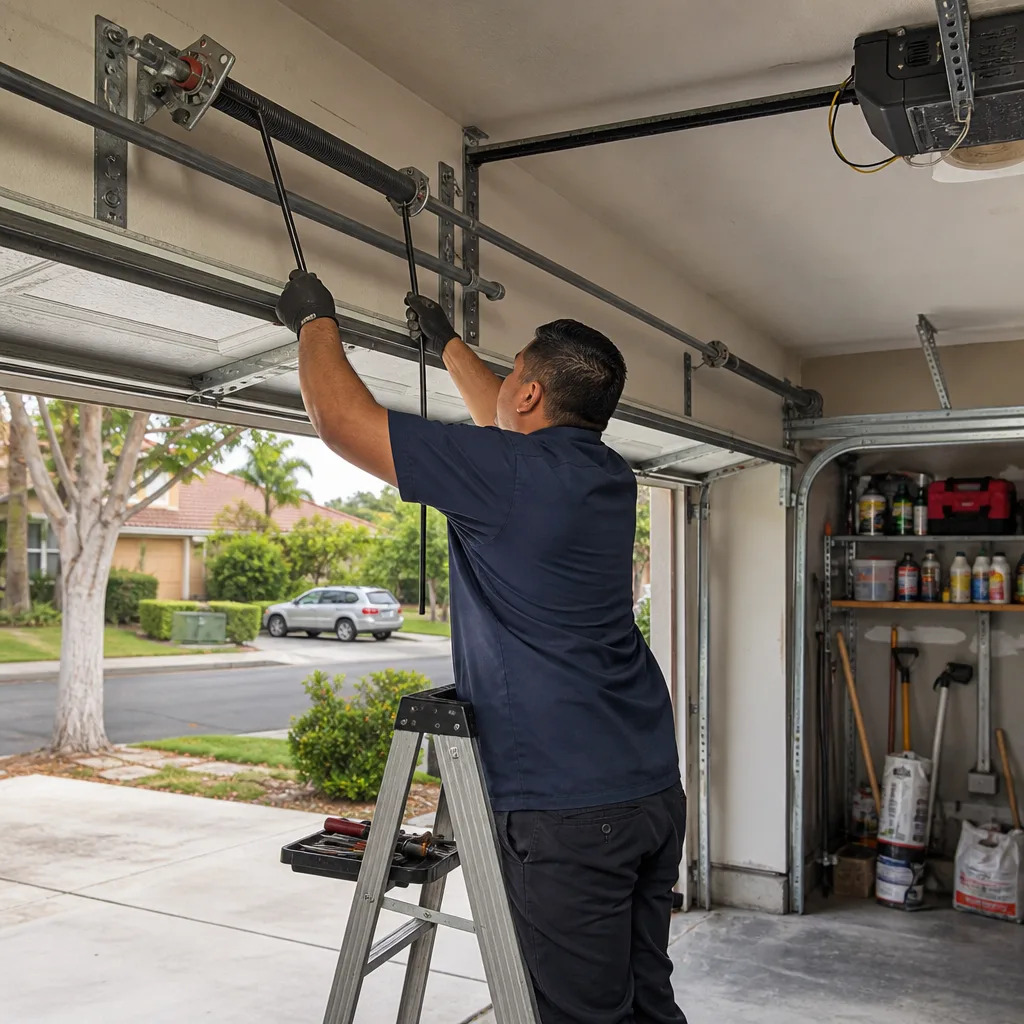
Mission Viejo’s specific conditions create specific wear patterns, and the homes here have a common set of issues that differ from coastal Orange County or inland communities.
The Heat Factor
Summer temperatures in Mission Viejo regularly reach the mid-90s, and garage interiors run 10 to 20 degrees hotter. That heat accelerates two things: the breakdown of lubrication in roller bearings and the thermal cycling of torsion springs. Springs are steel, and steel expands and contracts with temperature. Over years of seasonal cycles, that thermal stress contributes to metal fatigue - and it’s why spring failures in Mission Viejo cluster in late summer and early fall, after the hottest months.
The Housing Stock
Mission Viejo’s housing falls into three broad eras, each with characteristic garage door issues:
- 1970s-1980s homes (the original lake-adjacent tracts): doors from this era are often original single-layer steel, now at 40 to 50 years old. Panel fatigue is common, and many of these doors have had multiple spring replacements without being rebalanced.
- 1990s-2000s homes (much of the central Mission Viejo footprint): these doors are typically builder-grade from Clopay, Amarr, or Wayne Dalton, installed when the home was built. The originals are now at or past their expected lifespan, and the openers from this era are first-generation chain drives that have seen 15 to 25 years of use.
- 2015-2025 homes (newer developments and rebuilds): these have modern openers from LiftMaster or Chamberlain with belt drives and quieter operation, but some have homeowners who’ve never had the door serviced at all - and the first sign of spring fatigue is appearing right on schedule at the 7 to 10 year mark.
The Terrain
Mission Viejo’s hillside homes put garage doors at grade on one side and elevated on the other in some cases, which means drainage around the door opening matters. Doors on downslope lots see more water contact at the base during winter rains, which accelerates track corrosion and can cause sensor issues if the mounting brackets shift on saturated soil.
None of this means Mission Viejo is uniquely hard on garage doors. It means the failure patterns here are predictable, and a local company that’s seen thousands of doors in this specific climate knows what to look for before the truck arrives. That’s the value of garage door repair in Mission Viejo from a company that’s worked here since 2015, not a rotating roster of techs from a call center.
Common Mistakes to Avoid
- Ignoring roller noise until it becomes grinding. Worn rollers are a $250 fix. Worn rollers that damage the track are a $600 fix. The noise is the warning.
- Running the opener against a door that fails the balance test. Every cycle the opener makes against a heavy door is cycle it didn’t have to make. You’re paying for a spring replacement either way - don’t add an opener replacement to the invoice.
- Lubricating the springs with WD-40. WD-40 is a solvent, not a lubricant. Use a lithium-based garage door lubricant on rollers and hinges, and a spring-specific spray on the spring coils. Never spray the belt.
- Adjusting the force limit yourself to “fix” a reversing door. If the door is reversing because it’s genuinely heavy, raising the force limit makes the opener push harder rather than fixing the underlying problem. That’s how motors burn out.
- Writing off a loud bang as “the house settling.” If the sound came from the garage and the door won’t open normally afterward, it was a spring breaking. It’s not house settling. It’s a $285 repair that becomes a $1,100 repair if you keep trying the opener.
- Calling without the model number or photos. The more information you provide in the first call, the more accurate the first estimate. A five-minute photo session before you dial saves the technician an extra trip and saves you an open-ended first quote.
When to Call a Professional
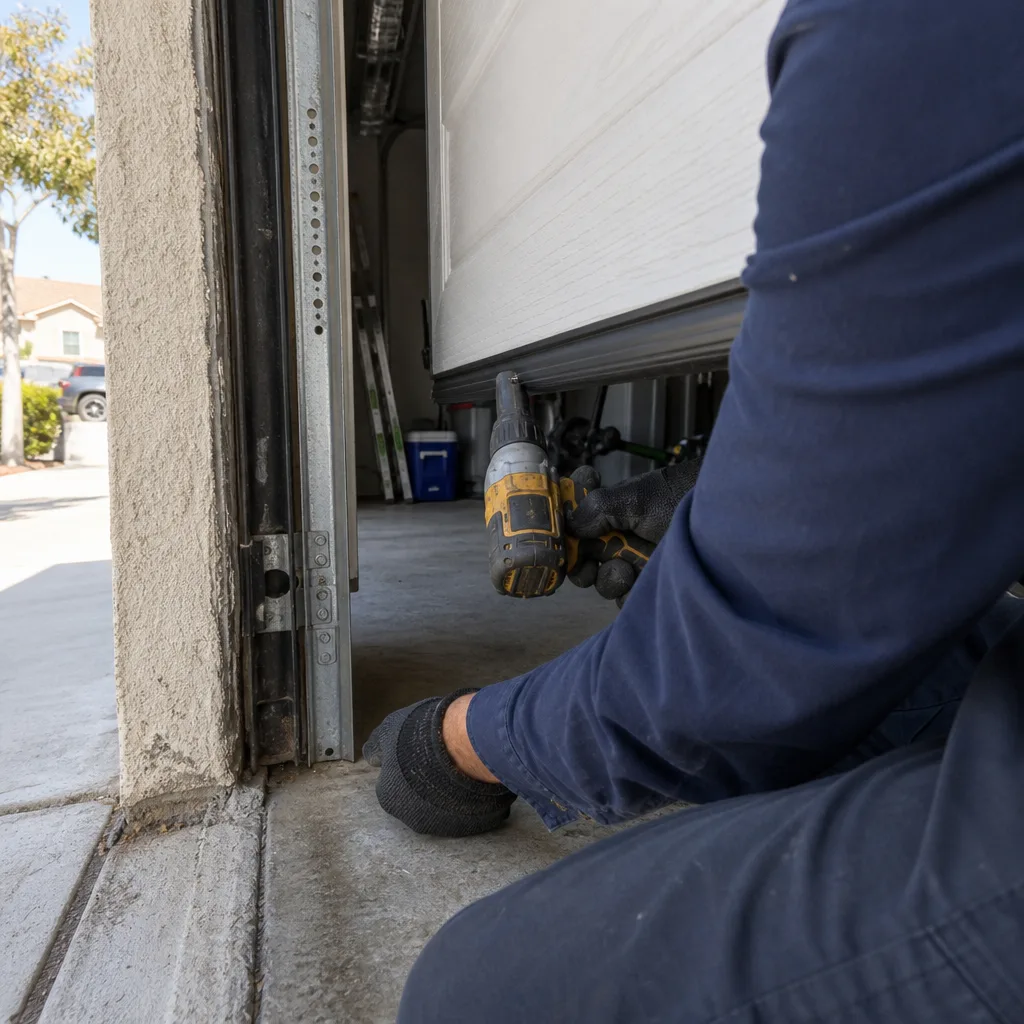
If the door fails the balance test by falling or being difficult to hold at the halfway point, call a professional. If you hear a loud bang and the door won’t open, call a professional and stop using the opener. If the door reverses on every cycle regardless of the time of day, call a professional. If a cable is visibly loose or hanging, call a professional. These are not monitoring situations. Torsion springs and cables are under high tension and are genuinely dangerous to work on without training and proper tools. Servo Garage Doors Mission Viejo offers a Free Second Opinion on any written estimate from another company - bring the paperwork, and we’ll review it against what we see, with a documented photo record from every visit. Call (657) 293-2416 for a free estimate in Mission Viejo.
Frequently Asked Questions
A torsion spring replacement in Mission Viejo typically costs $245 to $385 for a standard two-spring setup on a 16-foot door, including the springs, labor, and a balance test after installation. The price varies based on the spring’s wire gauge and cycle rating, which is why we quote a flat written price after inspecting the specific spring, not over the phone. Call (657) 293-2416 for an exact quote - estimates are free.
In most cases, yes. Roller replacements, hinge replacements, sensor realignments, and opener force-limit adjustments are usually same-day jobs, and our technicians carry common parts on the truck. Spring replacements are also typically same-day if the spring size is in stock from our Mission Viejo inventory. Call (657) 293-2416 and we’ll confirm what’s on the truck before we dispatch.
No. Per Clause 1 of The Haven Standard, the flat written price and written scope are delivered before any work starts, and that’s the price you pay. If we find something unexpected mid-repair, we stop, show you the issue with photos, and quote a new written price before proceeding. The price you agree to is the price on the invoice.
Yes. Our trucks carry the most common replacement parts for Mission Viejo’s housing stock: torsion springs in multiple wire gauges, roller sets, hinges, cables, photo-eye sensors, capacitors, and drive gears for LiftMaster and Chamberlain openers. Most repairs are completed on the first visit because the part was in the truck.
That’s almost always the sun hitting the photo-eye sensor at a low angle, which is common in east-facing garages in Mission Viejo during the late afternoon. The sensor reads direct sunlight as an interruption in its beam and signals the opener to reverse. The fix is usually a sun shield over the sensor or a slight repositioning of the sensor housing - a $45 to $75 adjustment, not a new opener.
We service all eight major brands: LiftMaster, Chamberlain, Genie, Clopay, Amarr, Wayne Dalton, Craftsman, and Raynor. Parts availability varies by brand and model year, but we can source components for any of those manufacturers, and our documented photo record covers every visit regardless of brand. Call (657) 293-2416 to schedule.
The Bottom Line
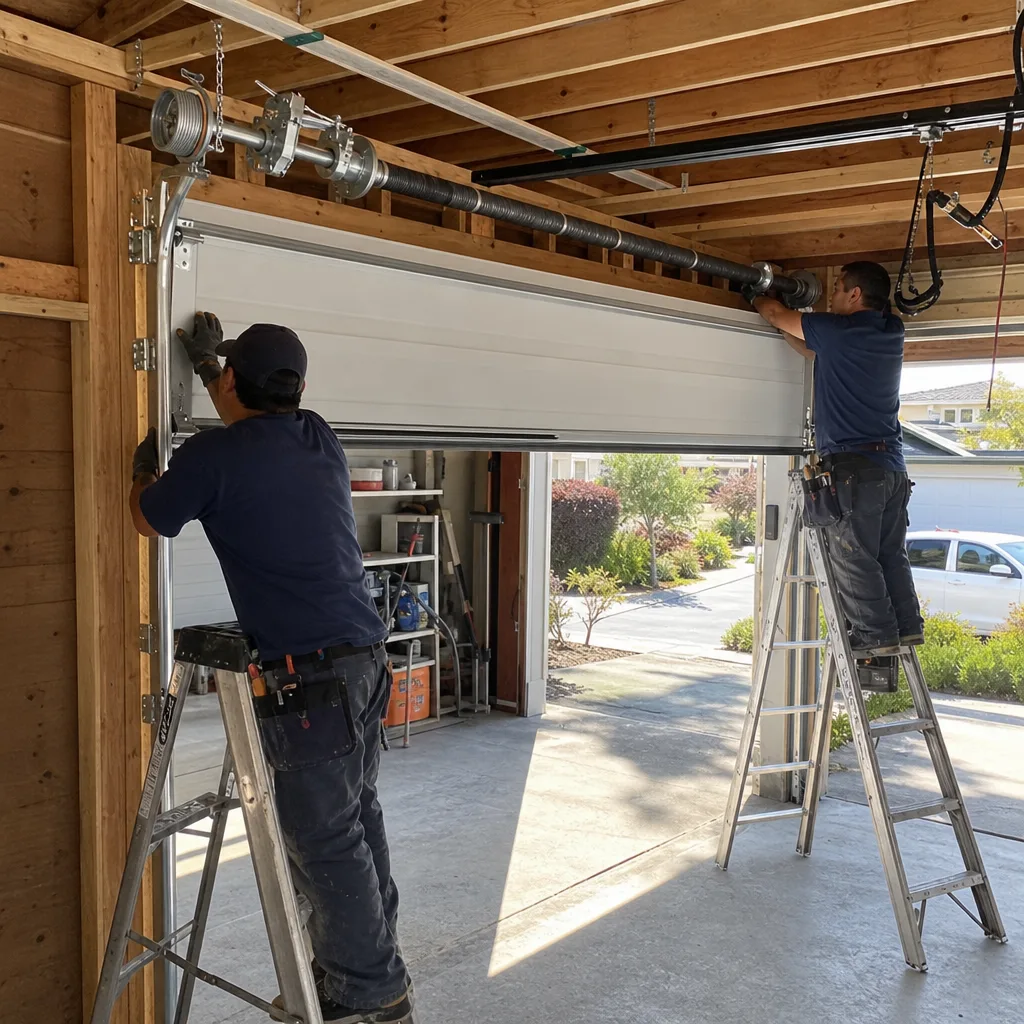
Most garage door warning signs are easy to diagnose if you know which component to look at. The seven symptoms in this guide map to specific parts, and the three-second balance test tells you in seconds whether your springs are doing their job. Measure the problem before you call: photograph the component, note when the symptom occurs, and describe it in component terms rather than general ones. That precision protects you from over-diagnosis and makes the first conversation with any contractor more productive. If the door fails the balance test, a spring has broken, or a cable is hanging loose, don’t wait - those are same-week situations. For everything else, you have time to get it right.
Written by Marcus Deller, Owner at Servo Garage Doors Mission Viejo, serving Mission Viejo since 2015.