
Full 25-point door and opener safety check with every visit - springs, cables, rollers, tracks, and your LiftMaster or Chamberlain opener included
You get a price before we start. It does not change when the truck arrives.

 Before
 After
After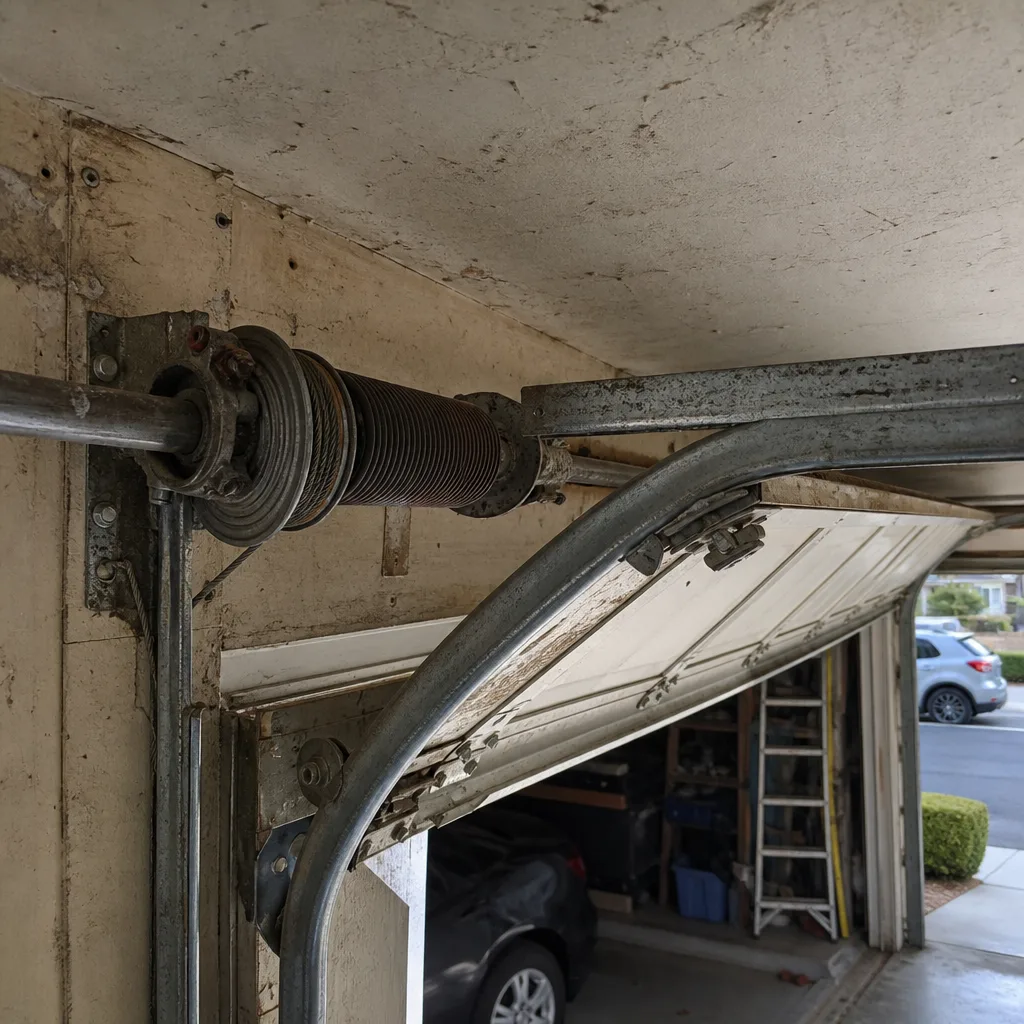 Before
 After
After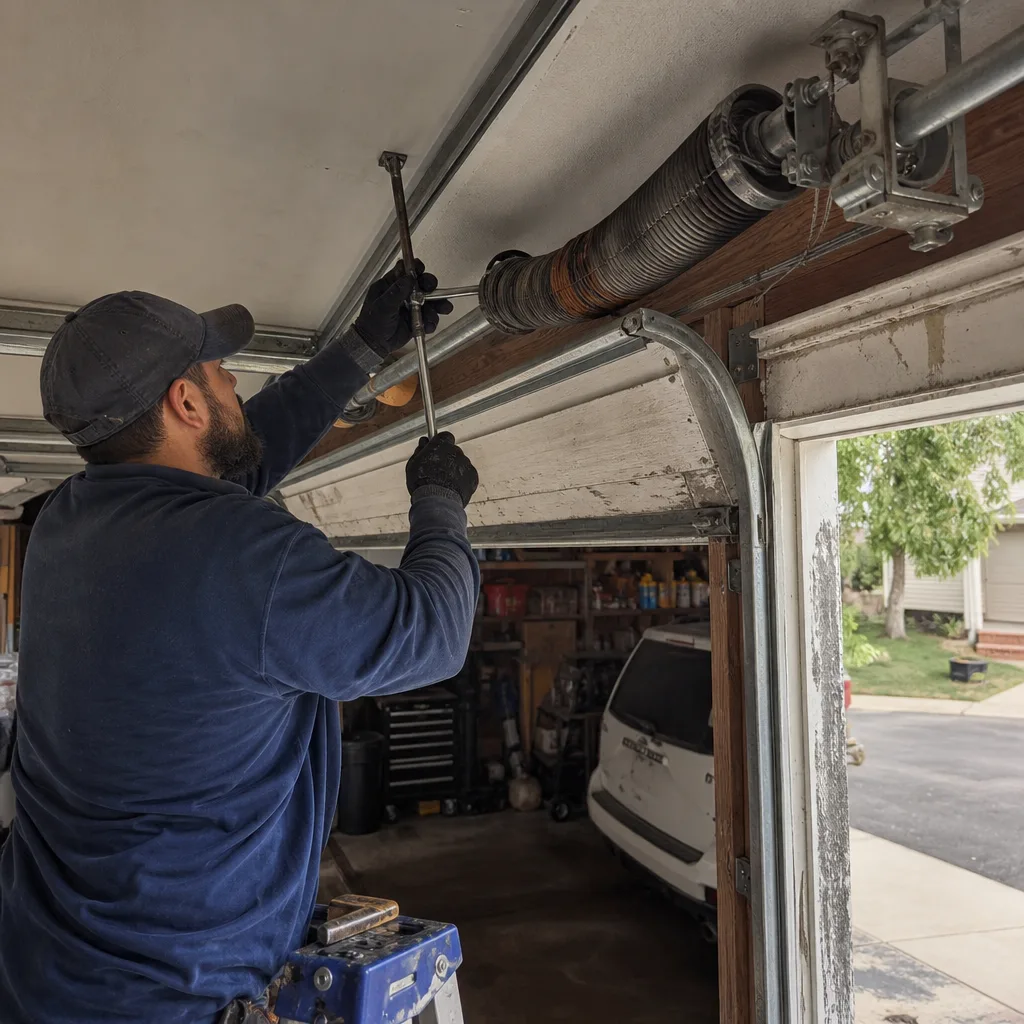 Before
 After
AfterWayne Dalton Cable & Drum Replacement: The Mission Viejo Owner’s Guide
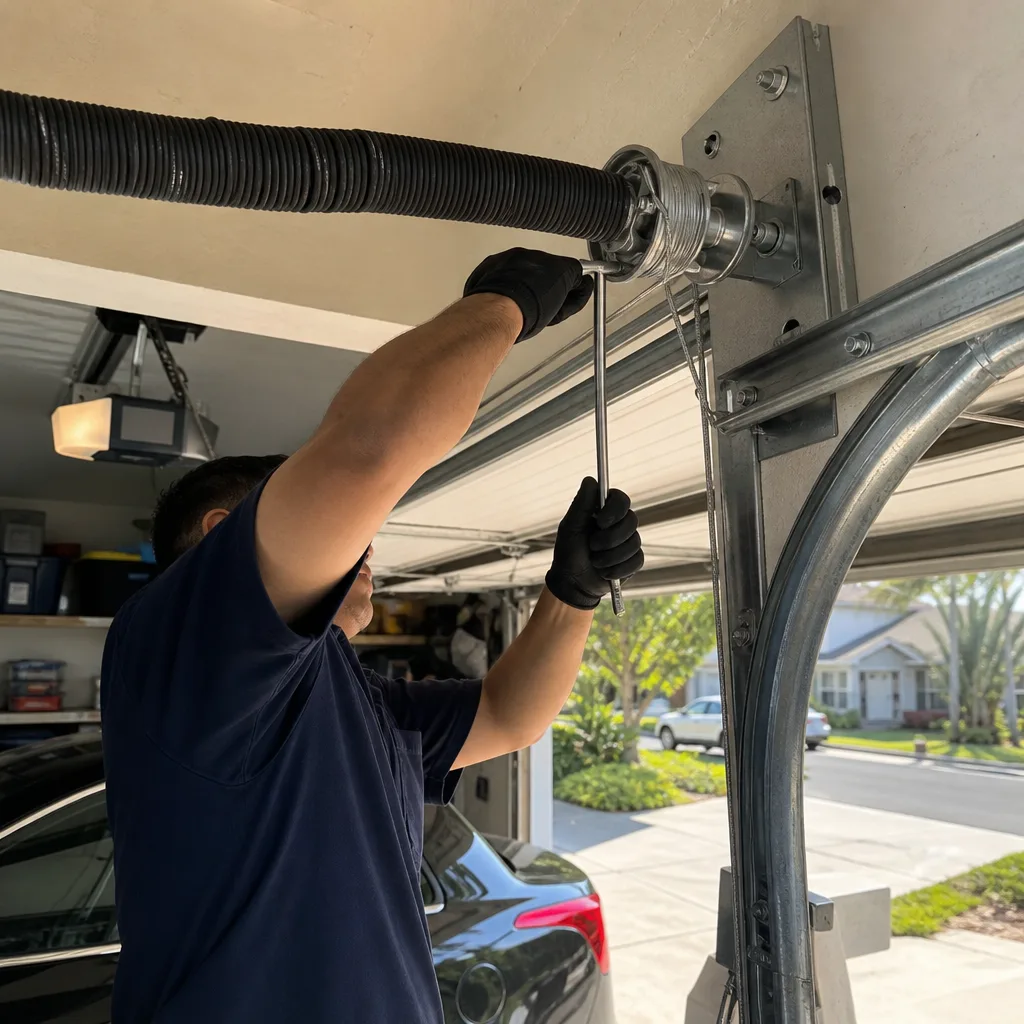
Our trucks carry replacement cables, drums, and related hardware that fit Wayne Dalton TorqueMaster and standard torsion systems, and we install them across Mission Viejo every week. For a Wayne Dalton cable and drum replacement in Mission Viejo, you’re looking at $130-$250 installed for a typical cable swap, with drum replacement falling in the same window depending on what the technician finds when the door is opened. Most owners discover the failure the moment the door jerks sideways, drops one corner, or refuses to lift evenly, and that’s usually a snapped cable or a cracked drum, not a bad opener.
Wayne Dalton doors use a specific cable-and-drum geometry. The drums on a TorqueMaster setup sit inside the torsion tube at the header, not outside on a traditional spring shaft. That difference matters when a technician reaches for a universal replacement part, because a generic drum won’t seat the Wayne Dalton cable properly, and the door will track crooked from day one. We carry Wayne Dalton-compatible drums and cables on the truck for the models we see most in Mission Viejo: the 8000, 9100, and 9600 series, plus the older Quantum and Classic lines still running in Casta del Sol and the neighborhoods off Marguerite Parkway.
Marcus Deller’s rule on this repair is simple: photograph the failed cable and drum before quoting anything. Clause 4 of The Haven Standard, the photo-first rule, applies here like every other job. You’ll see the snapped strand or the cracked drum in your driveway before we ever hand you a number.
Which Wayne Dalton Models This Applies To
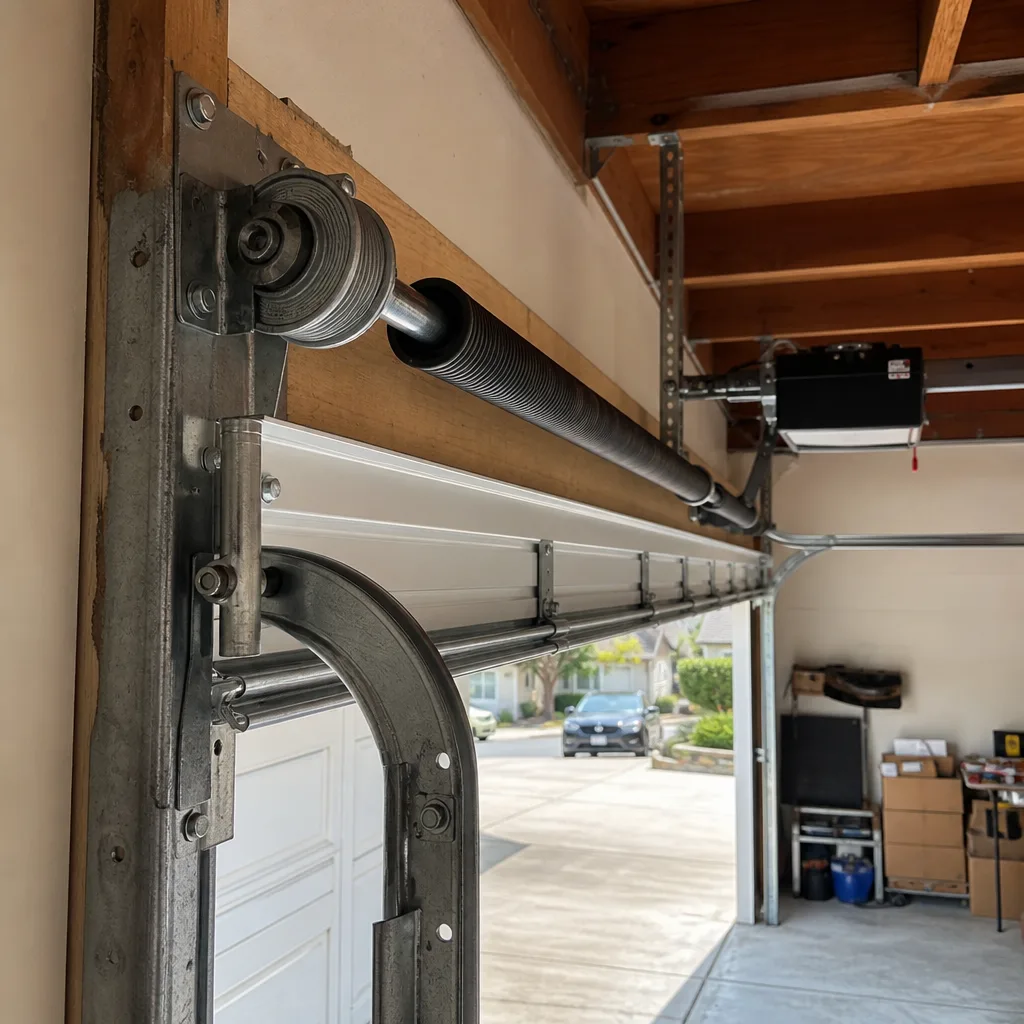
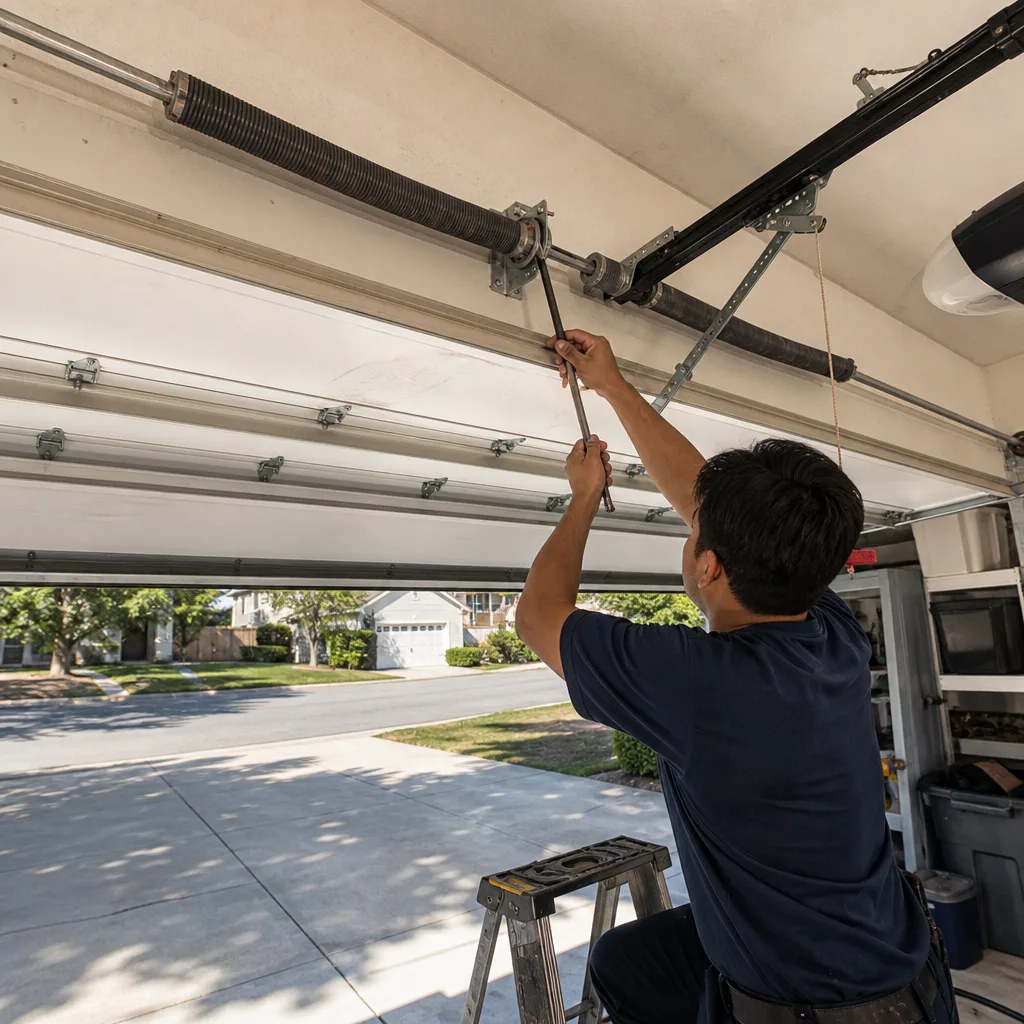
Wayne Dalton builds their residential doors around two distinct torsion systems, and the cable-and-drum replacement part you need depends entirely on which one your door has. TorqueMaster systems (found on most Wayne Dalton doors sold after 2000, including the 8000, 9100, 9600, and newer 4000-series models) route the lifting cable onto a drum that rides inside a tube above the door, with the spring hidden inside that same tube. Standard torsion systems (found on the older Quantum and Classic lines, and on some commercial Wayne Dalton doors) use exposed drums mounted at each end of the spring shaft, with the cable spooling onto the outside of the drum.
If you’re unsure which system you have, look at the header above the closed door. A TorqueMaster door has a single metal tube running between the flag brackets, with no visible spring. A standard torsion door shows you a bare spring, and the drums are visible at both ends of the shaft. We match parts by measuring the cable length and the drum’s cone diameter, not by guessing from a photo. Bring us the model number printed on the label near the bottom panel or on the hinge edge when you call, and we’ll confirm compatibility before the truck rolls.
On OEM versus aftermarket: Wayne Dalton’s own cables and drums are solid, but they’re priced at a premium and stocked through limited distribution. We offer quality aftermarket equivalents that match the original drum profile and cable gauge, because a well-made drum with the right cone angle outlasts a poorly-fit OEM part every time. The aftermarket drums we use are machined to the same diameter as Wayne Dalton’s originals, and that matters: a drum that’s off by even an eighth of an inch changes how fast the cable spools, which changes how level the door sits, which changes how long the hinges last. The drum isn’t the place to save $20.
One compatibility gotcha worth knowing: Wayne Dalton TorqueMaster drums are left-hand and right-hand specific, and they install in mirrored pairs. Order the wrong side and the cable walks off the drum within the first week. We check the side before we quote the part, which is exactly why the written price includes the specific drum we’re installing, not “cable/drum assembly, TBD.”
Signs Your Wayne Dalton Cable & Drum Replacement Is Failing
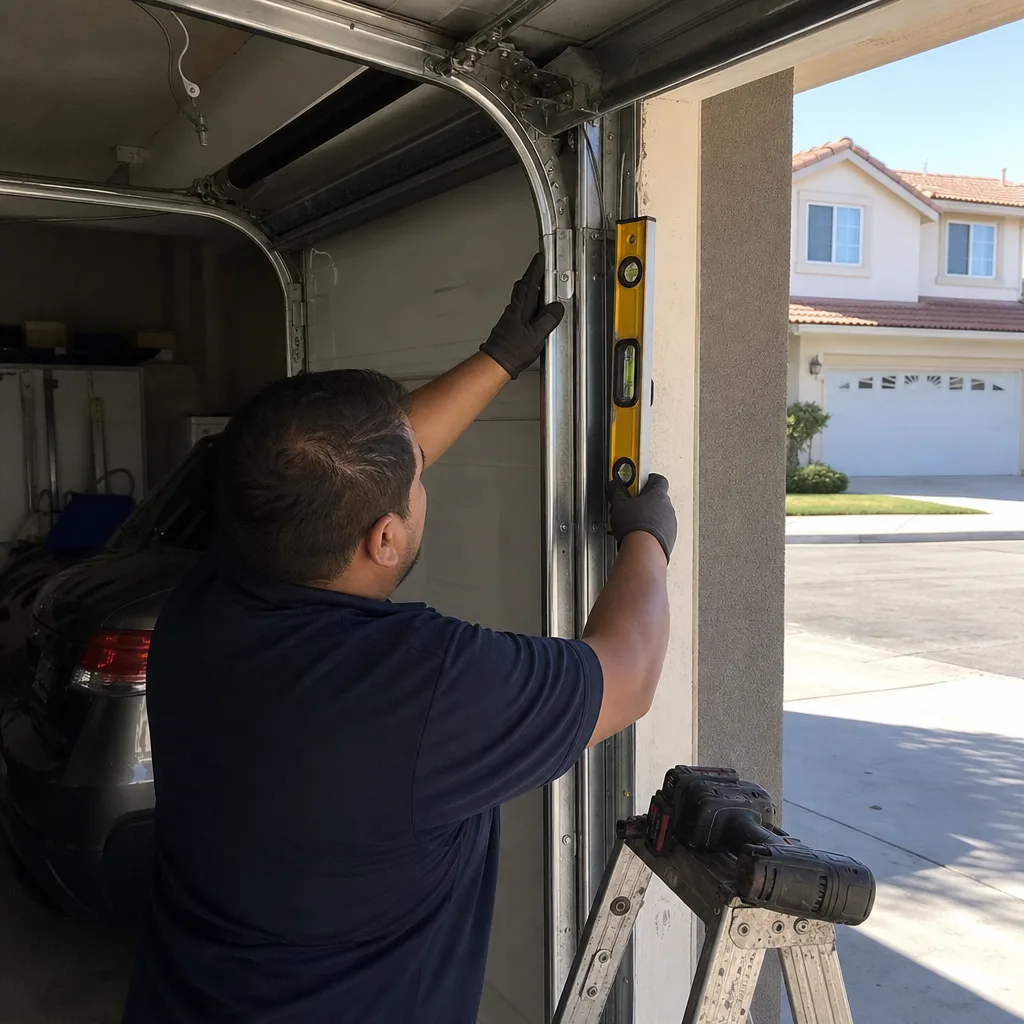
- The door lifts unevenly, one corner rising before the other. This usually means one cable has lost tension or come off its drum entirely, so the remaining cable is doing all the lifting. The door twists in its track, and the problem worsens fast.
- The cable is frayed, kinked, or visibly unraveling near the drum or the bottom bracket. Wayne Dalton cables are galvanized aircraft-grade steel, and they don’t fail silently. Once a few strands snap, the rest follow within days, and a frayed cable can snap while the door is mid-travel.
- A sharp bang from the garage followed by the door freezing halfway up. That’s the sound of a cable snapping under torque. The door will often sit crooked, one side resting on the ground and the other stuck on the track, and trying to operate it with the opener can strip the coupler or bend the rail.
- The drum itself shows a crack, wear groove, or a shiny, polished surface where the cable rubs. Drums are machined aluminum or nylon composite, and after 10-15 years in Mission Viejo’s dry, warm climate, the cable cuts a groove into the drum body. Once that groove forms, the cable binds instead of spooling cleanly, and the bind is what snaps the cable or tears the drum apart.
- You hear grinding, squealing, or metallic popping when the door moves. A cable that’s started to slip on its drum will chirp or squeak, and a drum with a cracked flange will throw off a rhythmic thump every rotation. Ignoring the sound means paying for a cable, a drum, and likely a bent track by the time we arrive.
BeforeAfterReplacement Cost & What’s Included
Wayne Dalton cable and drum replacement in Mission Viejo runs $130-$250 installed for most residential doors. A cable-only replacement sits at the lower end of that range, and a drum replacement with new cables on both sides lands at the upper end. If the technician finds the torsion spring also compromised, spring replacement adds $180-$340, and we’ll show you the failed spring with a photo before we quote that number.
The written price you receive includes the specific parts matched to your Wayne Dalton model, the labor to install them, door rebalancing after the swap, and a check of the bottom brackets and hinges that see load when cables run. That price is quoted and agreed before any work starts, per Clause 1 of The Haven Standard, and it’s the price you pay when the job is done, even if the repair takes longer than we estimated. Every part we remove gets photographed, every part we install gets photographed, and the full photo record is delivered to you before we leave the driveway.
DIY or Call Us?
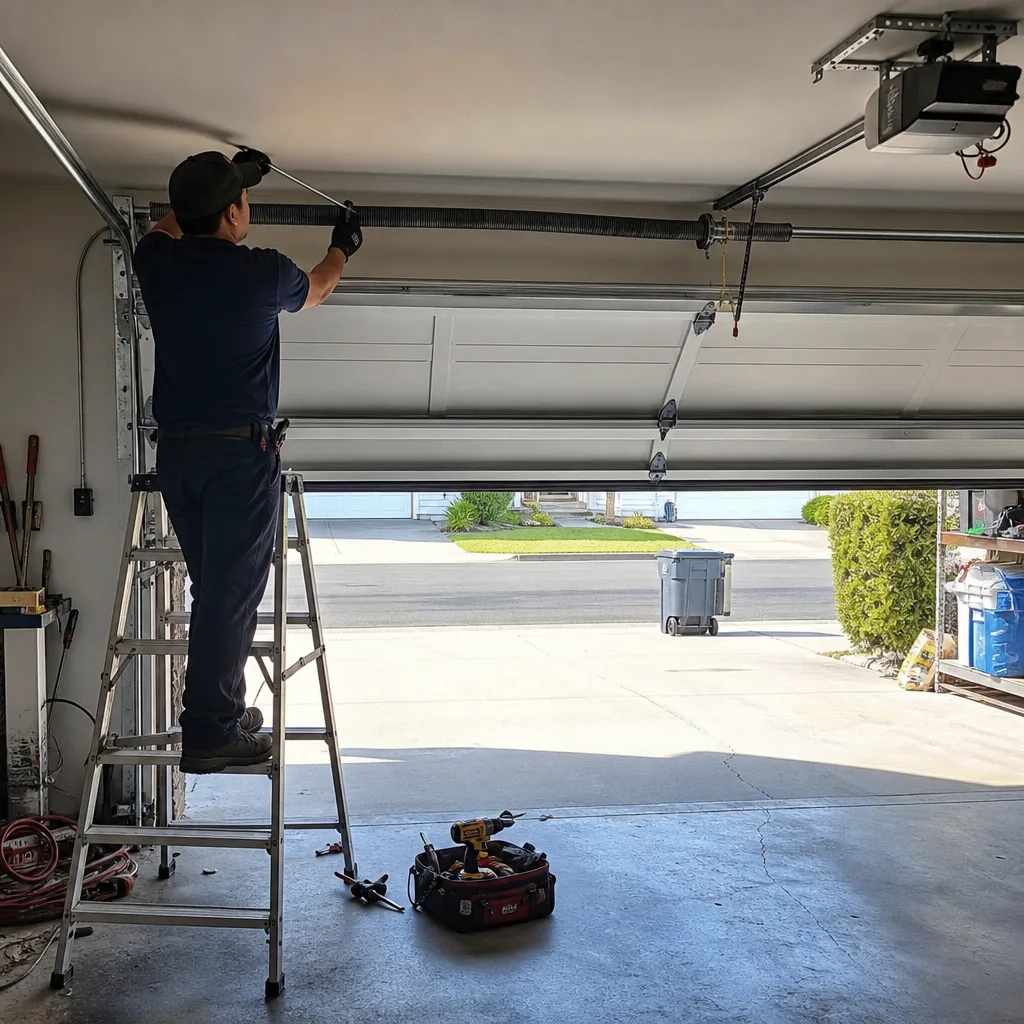
Here’s the honest split. You can safely inspect a Wayne Dalton door yourself: look at the cables where they attach to the bottom brackets near the floor, look at the drums at the header, and look for fraying, shine, or cracks. What you should not do is attempt the replacement yourself. The cables on any torsion door, including Wayne Dalton’s TorqueMaster design, hold spring tension. When a cable is removed incorrectly or the drum is unbolted out of sequence, the spring unwinds fast enough to shatter tooling, lash the cable across the garage, or worse. Even on a TorqueMaster door, where the spring lives inside the tube, releasing the tube’s end plates without the correct winding procedure is the kind of mistake that leaves blood on the floor. Some things in a garage are worth doing once, carefully, with the right gear and the right sequence.
What you can do right now is call (657) 293-2416 and tell us what the door is doing. Marcus Deller will give you a firm dollar range over the phone, and we’ll photograph the failed component on your property before a tool comes out. You don’t guess, and you don’t prepay. You just see what we saw and approve the written price.
FAQs
In Mission Viejo’s dry lake-adjacent air, we typically see Wayne Dalton cables last 10-15 years and drums last 15-20 on a correctly balanced door. Coastal or canyon homes with consistent sun exposure on west-facing doors wear cables a little faster, especially where the sun hits the bottom bracket and stresses the cable end. If your door is older than 12 years and you’ve never had the cables touched, they’re in the replacement window.
No, and any technician who says otherwise is guessing. Once individual strands on a garage door cable are broken, the cable’s strength is compromised in a way that can’t be spliced or taped, and the next failure typically happens while the door is moving. We replace Wayne Dalton cables as a set, both sides, so tension and wear stay even. Call (657) 293-2416 for a free estimate, and we’ll show you the failed cable before we recommend anything.
One hour for a straight cable-and-drum replacement on a standard Wayne Dalton door, including rebalancing and the photo documentation we leave with you. A TorqueMaster door with the spring assembly already compromised will take longer, because we’ll want to replace the spring simultaneously and test the full system under load. We’ll give you a time window before we start, and the written quote holds whether it takes 60 minutes or two hours.
We stock Wayne Dalton-compatible cables, drums, and TorqueMaster hardware on the truck, plus a range of aftermarket replacements for the 8000, 9100, and 9600 series. If your door is a less common Wayne Dalton model, we can typically have the part within one business day and we’ll tell you that before you approve the trip charge. We also stock parts for LiftMaster, Chamberlain, and Genie openers, so if the cable failure damaged the opener’s travel limits or stripped a gear, we can address that in the same visit instead of scheduling a follow-up.
Written by Marcus Deller, Owner, Servo Garage Doors Mission Viejo at Servo Garage Doors Mission Viejo, serving Mission Viejo and nearby areas.