
Last updated September 20, 2026
Full 25-point door and opener safety check with every visit - springs, cables, rollers, tracks, and your LiftMaster or Chamberlain opener included
You get a price before we start. It does not change when the truck arrives.


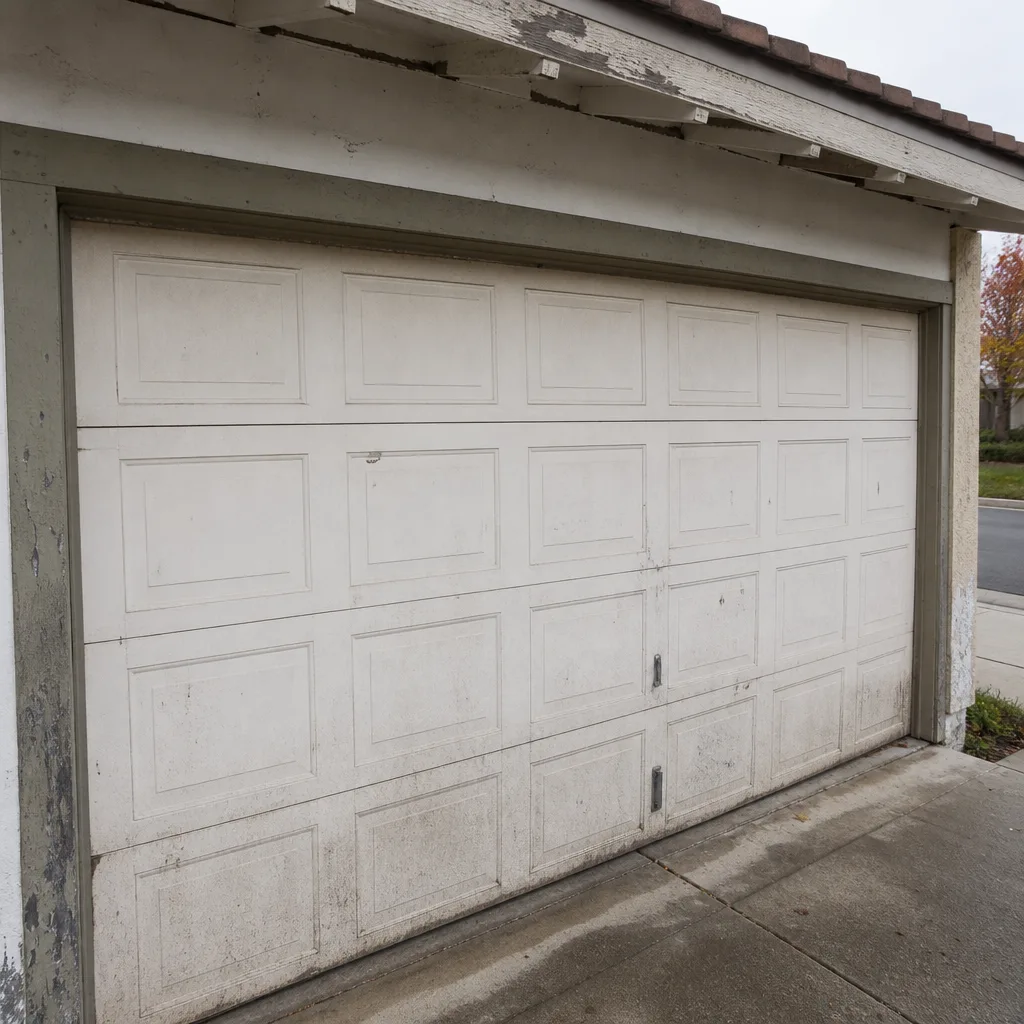 Before
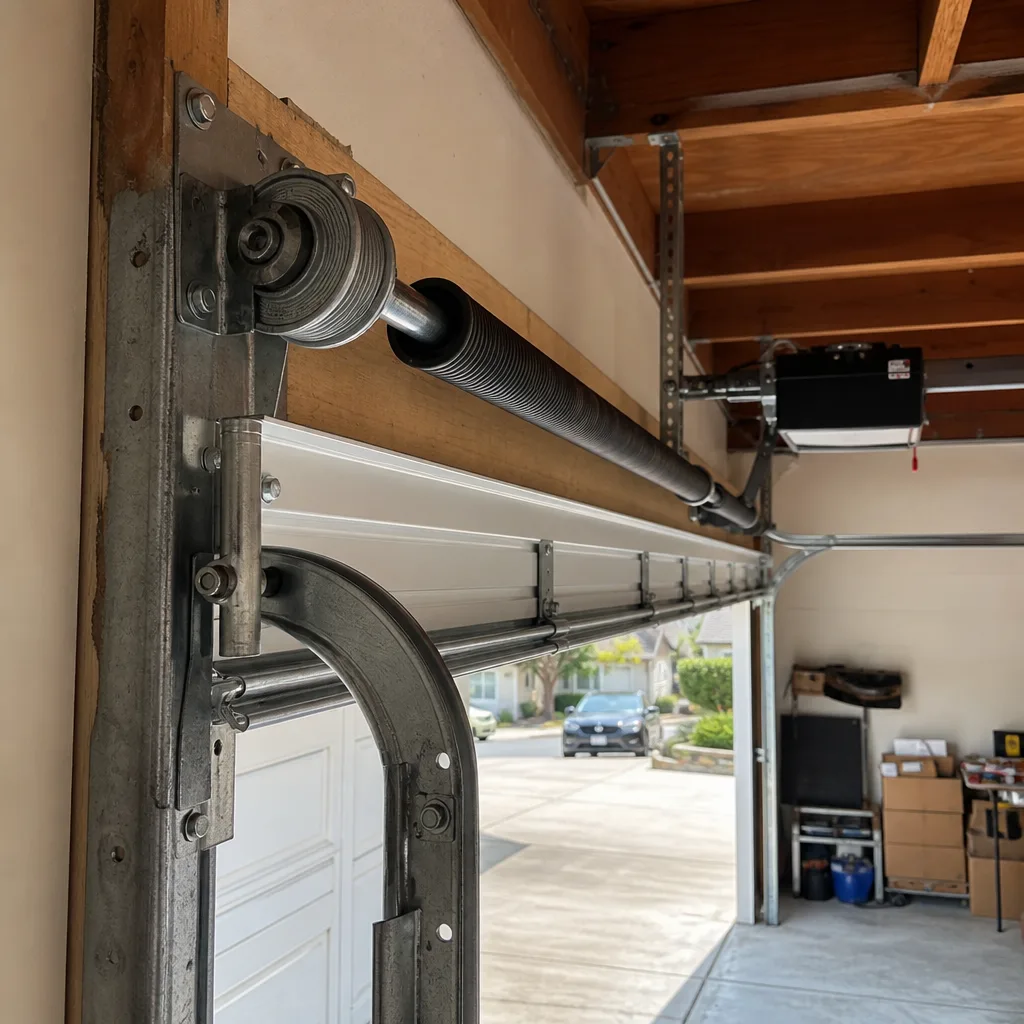 After
After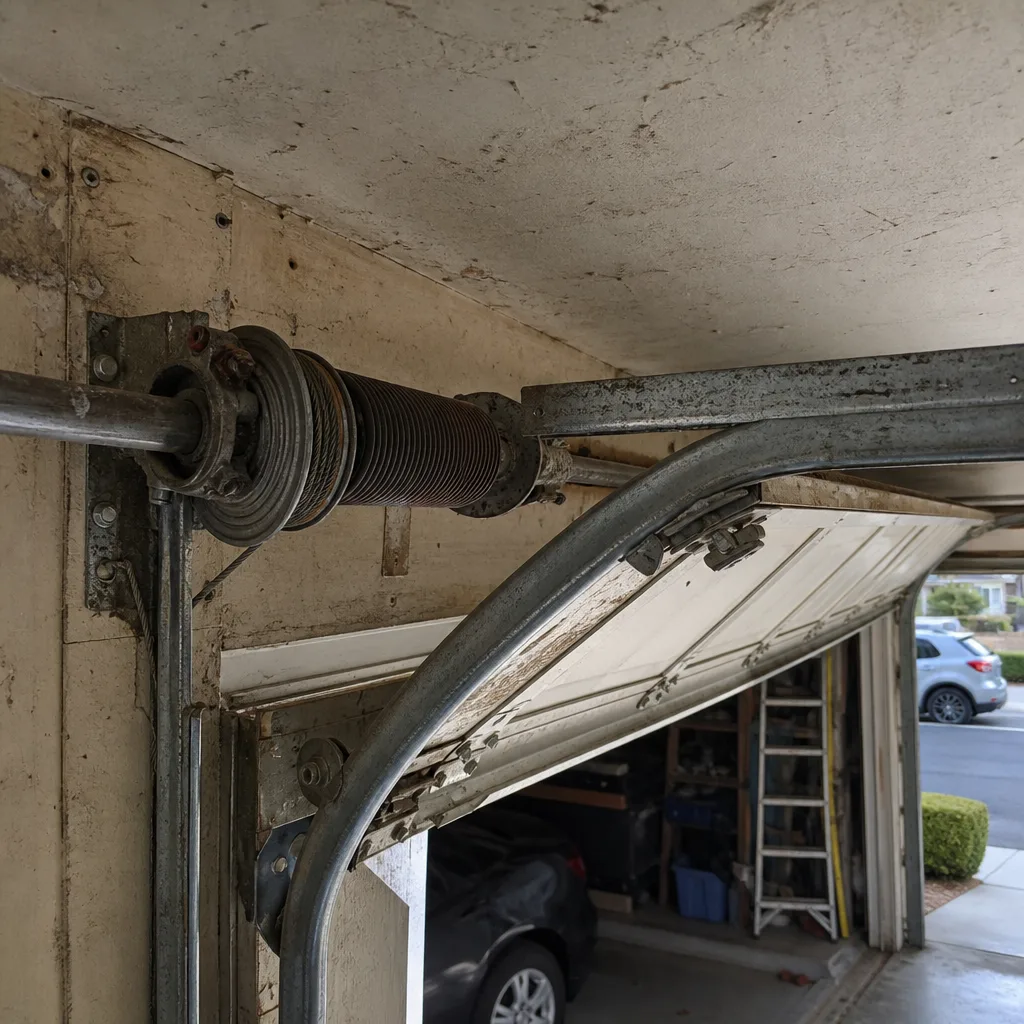 Before
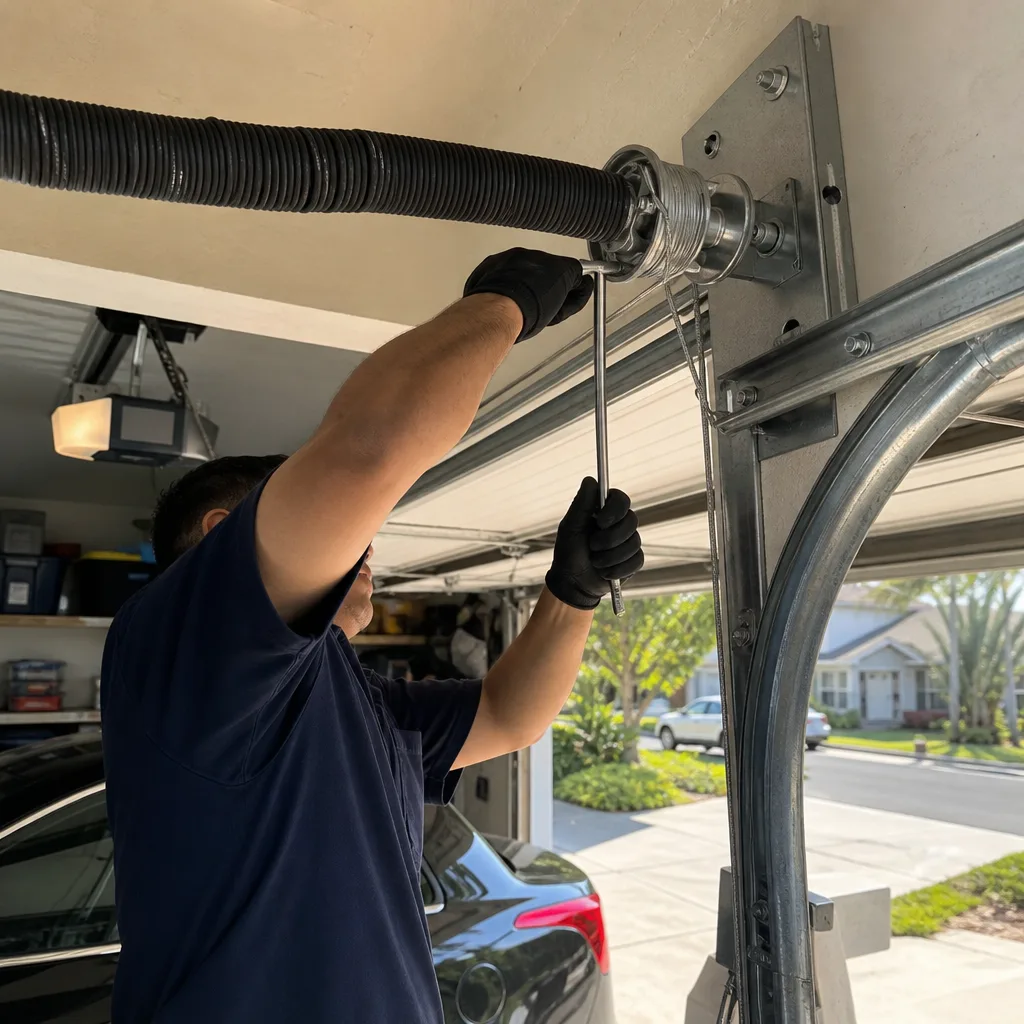 After
After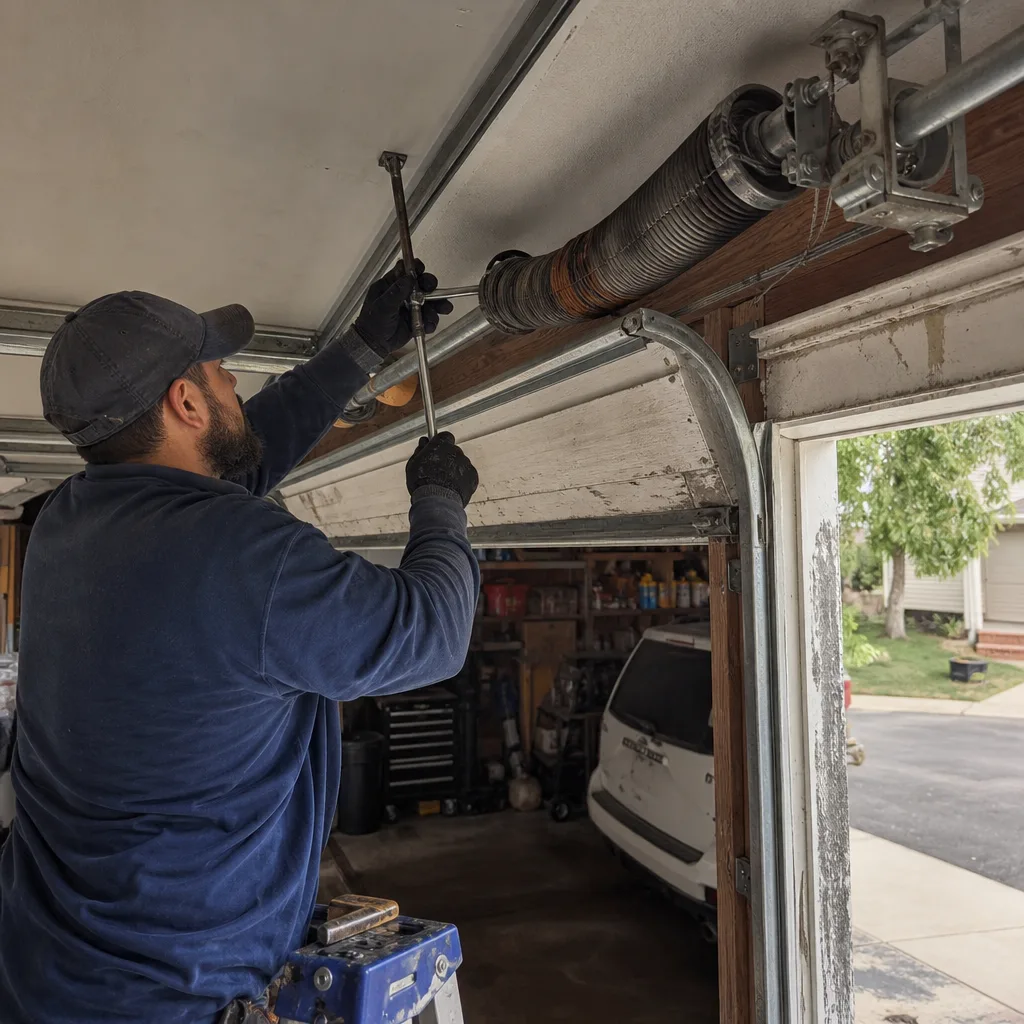 Before
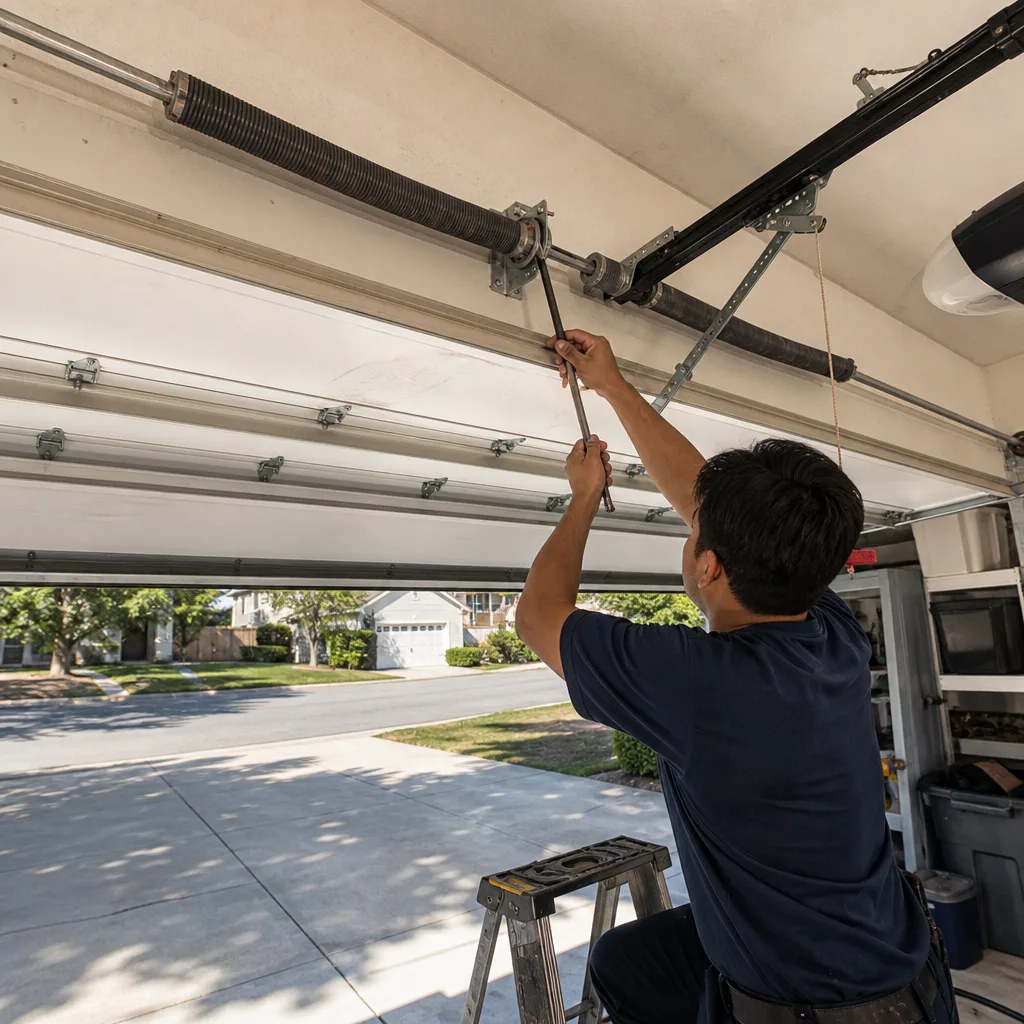 After
AfterGarage Door Permits, Codes & Inspections in CA: What You Need to Know
An unpermitted garage door opener installation doesn’t fail inspection the day it’s installed. It fails four or seven or twelve years later, when you’re sitting at escrow and the buyer’s home inspector flags an electrical modification that was never signed off. By then, the contractor who did the work is gone, the receipt is in a landfill, and you’re the one writing a check to retroactively permit something you didn’t install. This guide explains exactly where California’s permit line falls for garage door work, what Mission Viejo adds on top of state code, and how to check whether prior work on your home was ever properly permitted. For related reading, see our Garage Door Warning Signs: A Mission Viejo Homeowner’s Reference Guide. By the end, you’ll know which projects genuinely require a permit, which ones don’t, and how to document either answer so it never bites you at resale.
Quick Answer
Most garage door work in California does not require a permit. Replacing a door, spring, cable, roller, or opener motor is ordinary repair work. A permit is triggered only when you modify the structural framing (installing a new header or widening the opening), add or alter electrical circuits (new wiring, not a plug swap), or change the building’s structural load path. For typical Mission Viejo homes, that means about 90% of garage door service calls need no permit at all.
Table of Contents
- The Permit Line: What Actually Triggers a Garage Door Permit in California
- California Building Code Section 1105: The Exact Language That Governs Garage Doors
- Structural Work vs. Hardware Replacement: Where the Confusion Starts
- Electrical Work and Garage Door Openers: When a Permit Is Required
- Mission Viejo Local Amendments and the UL 325 Requirement
- What a Final Inspection Actually Checks When a Permit Is Pulled
- How to Pull a Permit History for a Mission Viejo Property
- Who Bears Liability: Contractor vs. Homeowner in Unpermitted Work
BeforeAfterThe Permit Line: What Actually Triggers a Garage Door Permit in California
California’s permit requirement for garage door work is narrower than most homeowners fear and broader than many contractors disclose. The state doesn’t care about the door itself. A garage door is a piece of hardware, like a water heater or a light fixture. What the state cares about is what you attach it to and how you power it.
A permit is triggered under three conditions:
- New header installation: If the opening is being widened, raised, or cut into a wall that didn’t previously have one, you’re altering the load-bearing structure of the home.
- Electrical circuit modification: If a new circuit is run from the panel, or existing wiring is relocated or extended, the electrical work falls under California Electrical Code and requires a permit.
- Structural framing alteration: If studs, beams, or shear panels are cut, removed, or replaced to accommodate the door system, that’s structural work.
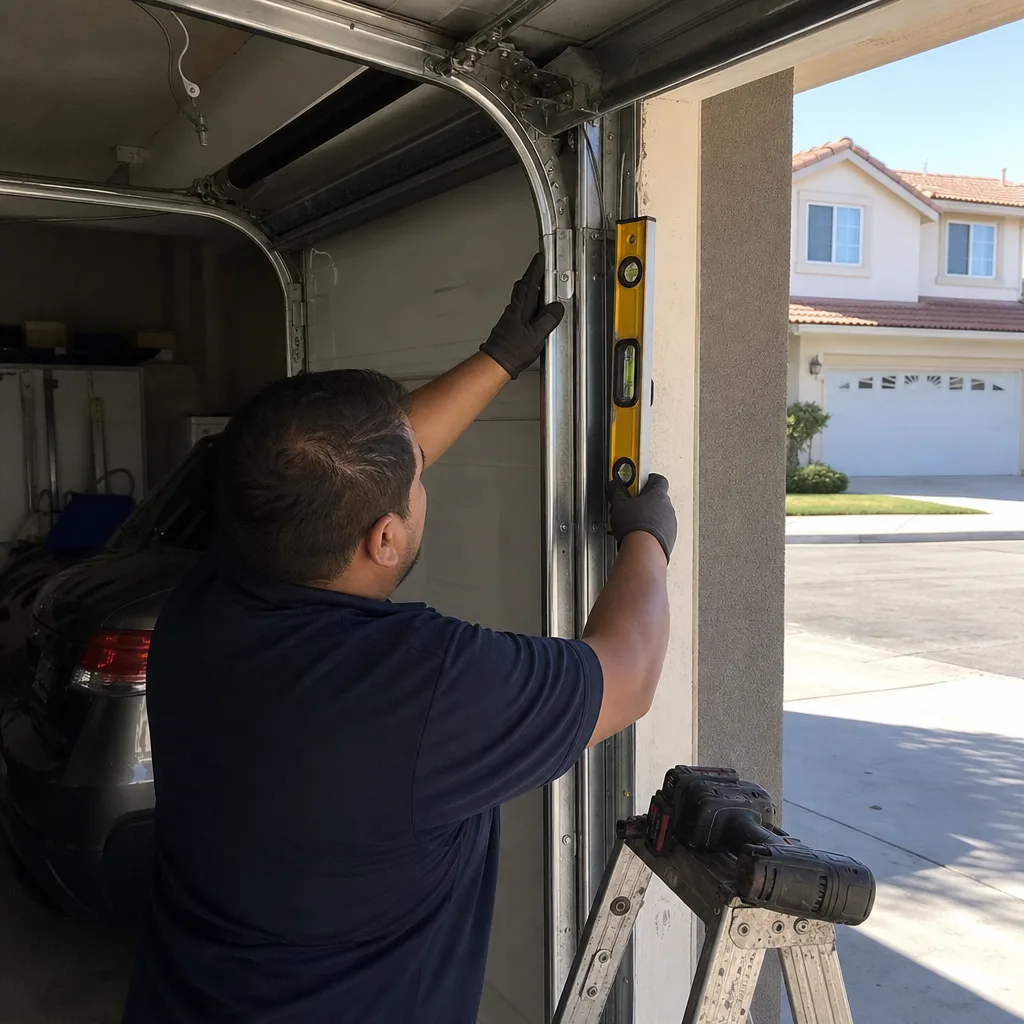
What this means in practice, for a home in Mission Viejo or anywhere else in California: swapping a broken torsion spring, replacing a worn roller set, installing a new opener on an existing ceiling outlet, or hanging a new door in an existing opening with the same dimensions, is repair and replacement, not construction. No permit. No inspection. Just work done to code.
The confusion starts because contractors sometimes treat the word “installation” as if it’s one category. It isn’t. Installing a door into an existing opening is hardware work. Installing an opening where none existed is building work. The difference is whether the home’s structure or electrical system changes. If neither changes, the permit requirement doesn’t trigger.
California Building Code Section 1105: The Exact Language That Governs Garage Doors
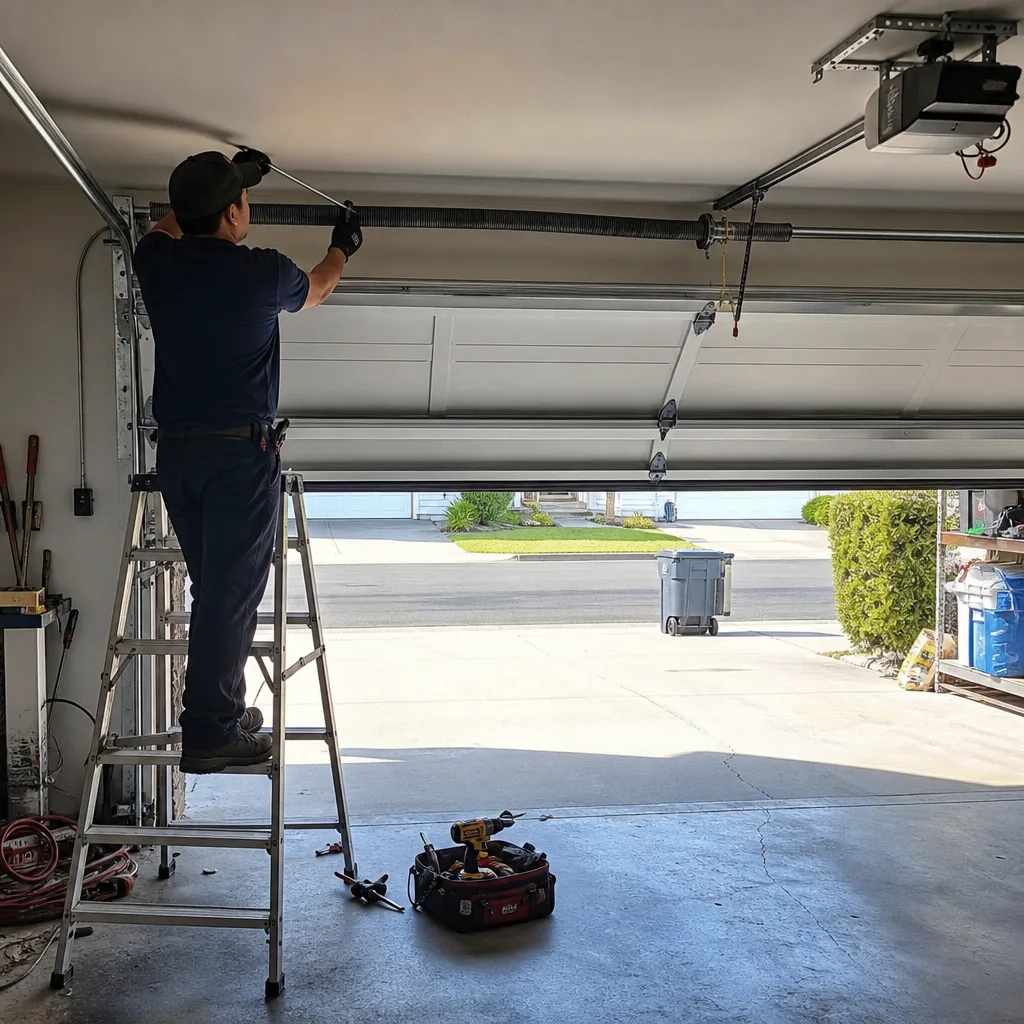
Every two years, California adopts a new edition of the California Building Code (CBC), which is based on the International Building Code with state-specific amendments. Section 1105 of the CBC governs the permitting process itself. It’s the section that says, in substance, that a permit is required when work is done that falls outside the scope of “ordinary repair.”
The CBC defines ordinary repair as work that restores a component to its original condition and does not alter the structure, electrical system, plumbing, or mechanical system in a way that changes how the building functions. A garage door spring that breaks and is replaced with an equivalent spring is ordinary repair. A garage door that’s replaced in an existing opening, with no change to framing, is ordinary repair. A new opener that plugs into an existing, properly permitted outlet is ordinary repair.
What Section 1105 doesn’t do is give a homeowner a checklist. That’s where the confusion settles in, because the code is written for building officials, not for people who just watched their garage door cable snap. The practical interpretation, repeated across building departments in Orange County, looks like this:
- Replacing a garage door panel, track, spring, cable, roller, or hinge: no permit.
- Replacing an entire garage door in the same opening: no permit, assuming the header and jambs are unchanged.
- Adding a new garage door opener that plugs into an existing outlet: no permit, as long as no new circuit is added.
- Installing a new outlet to power an opener: permit required, electrical alteration.
- Enlarging the garage door opening: permit required, structural alteration.
- Converting a wall into a garage door opening: permit required, new header installation.
We’ve seen this same list applied consistently across Mission Viejo projects over the years. The pattern: if the work touches wood framing or copper wire, a permit is in play. If it touches steel track, spring stock, or a power cord, it is not.
Structural Work vs. Hardware Replacement: Where the Confusion Starts
The single biggest misunderstanding about garage door permits in California is the difference between structural work and hardware replacement. Most of the confusion comes from the word “installation.” A contractor says you need a permit to “install” a garage door. A building department says no permit is needed to “replace” a garage door. Both are talking about the same physical object, but the code cares about what’s changing behind it.
Here’s the distinction:
Hardware replacement means the existing opening stays exactly as it was. The header, the jack studs, the king studs, the sill plate, all of it stays put. You remove an old door and hang a new one on the same opening. The door’s weight transfers to the header through the same brackets that were there before. Nothing about the home’s structure changes. From a code perspective, this is no different from replacing a faucet.
Structural work means the opening itself changes. You cut a wider opening for a two-car door where a one-car door used to be. You raise the header to clear an SUV. You add a man-door next to the roll-up. Any of these changes alters the load path: the route by which the weight of the roof and walls transfers to the foundation. When that load path changes, the building department wants an engineer’s calculation proving the new header and supports can carry the load. That’s what the permit is for.
In Mission Viejo, where many homes were built in the 1970s and 1980s with single-car or narrow two-car openings, we see this confusion constantly. A homeowner wants to fit a modern full-size SUV into a garage built for a 1988 Toyota Corolla. The door company says “that’s a structural change.” The homeowner hears “that’s more expensive.” But the permit isn’t a cost add-on, it’s the engineer and inspector verifying that the new header won’t sag and crack the ceiling over the next decade. A sagging header in a Mission Viejo summer, when temperatures push the concrete and wood through daily expansion cycles, is not a cosmetic problem. It’s a load-path failure.
Electrical Work and Garage Door Openers: When a Permit Is Required
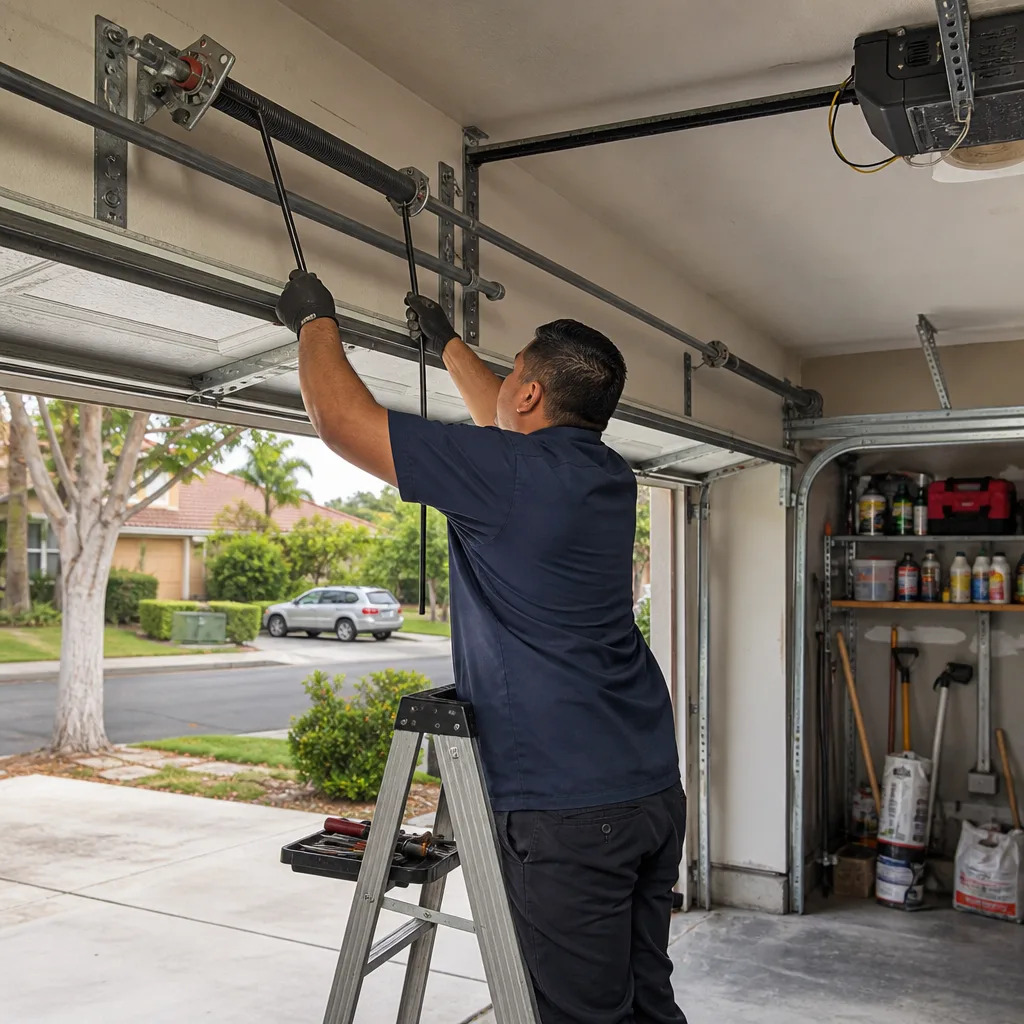
A garage door opener is a motor with a power cord. If the outlet it plugs into already exists and was installed under a previous permitted project, replacing the opener itself is hardware work. No permit.
The permit trigger appears when the electrical installation changes. Here’s the breakdown of what that means in practice:
- New branch circuit: A dedicated circuit run from the main panel to a new outlet for the opener. This requires an electrical permit and an inspection.
- Relocated outlet: Moving an existing ceiling outlet to a new location to accommodate a wall-mounted, side-mount opener like a LiftMaster 8500W. The new wiring path requires a permit.
- Hardwired opener: Some commercial and high-end residential openers are hardwired into the home’s electrical system rather than plugging into an outlet. Any hardwired installation modifies the circuit and requires a permit.
- New subpanel in the garage: If the project includes adding electrical capacity, such as a subpanel for an EV charger and an opener, that’s electrical construction work and requires a permit.
What does not require a permit: replacing a broken opener with a new one that plugs into the same outlet. Replacing a wall switch that controls the garage lights. Replacing a burnt-out outlet with a new one in the same box. These are all ordinary repairs under California’s definition.
The reason this matters at resale is documented electrical work. When a buyer’s inspector opens the garage and sees a hardwired opener with no corresponding permit on file, it gets flagged. Not because the work is dangerous. Because the paper trail doesn’t match the physical installation. And in California’s seller disclosure requirements, an unpermitted electrical modification is a material fact. Sellers who know about it and don’t disclose it open themselves to post-sale liability. Sellers who don’t know about it discover it during escrow, and the deal either dies or gets renegotiated around the cost of retroactive permitting.
Mission Viejo Local Amendments and the UL 325 Requirement
California state code sets the floor. Orange County and the City of Mission Viejo layer additional requirements on top. For garage door work, the local amendment that matters most is the UL 325 entrapment protection requirement, which applies to every garage door opener installation, permit or not.
UL 325 is a safety standard published by Underwriters Laboratories that governs automatic gate and door operators. It requires, among other things:
- Photo-eye sensors: A non-contact sensor beam mounted no higher than 6 inches off the floor that reverses the door if anything breaks the beam while the door is closing.
- Reverse sensitivity: The opener must reverse if it encounters resistance equivalent to a 2×4 laid flat on the floor, or the current rev count of UL 325, which is a force-over-10-second measure.
- Manual release: A red emergency release cord that disengages the opener so the door can be operated by hand.
- Warning labels: Permanent entrapment warning labels on the door, the wall control, and the opener chassis.
- Safety sensor placement: The photo-eye sensors must be mounted no higher than 6 inches from the floor, aligned so the beam is unbroken, and wired so that a blocked beam prevents the door from closing. This is the single most common failure point.
- Reverse sensitivity: The inspector will likely place a test block under the closing door and verify it reverses before contact. If the reverse force is set too high, the opener fails.
- Header load path: If the project involved a new header, the inspector verifies the header size, the bracket fastening, and the load transfer to the jack studs match the approved plans.
- Electrical rough-in: If an electrical permit was part of the project, the inspector checks the wiring method, the outlet placement, and the circuit protection.
- Fire separation: In attached garages, the inspector verifies that the wall between the garage and living space remains a proper fire barrier, that the door self-closes if there’s a man-door, and that the drywall is intact.
- Find the property’s APN: The Assessor’s Parcel Number is on your property tax bill or available through the Orange County Assessor’s website.
- Contact the Mission Viejo Building Division: The city’s building counter can run a permit history check by address or APN. Some records are available online through the city’s permit portal.
- Request the permit jacket: For each permit on file, you can request the application, the approved plans, and the inspection record showing whether the permit was signed off and closed.
- Check for open permits: An “open” permit means work was permitted but never passed final inspection. That’s as much a liability as no permit at all. A permit that was pulled in 2016 and never closed is a red flag for any buyer’s lender.
- Cross-check against the physical house: The paper doesn’t matter if the house doesn’t match it. If a permit was pulled for a two-car garage door and the opening is clearly a single, that’s evidence of unpermitted work.
- During escrow: The buyer’s inspection flags the unpermitted work. The buyer asks for a retroactive permit. The homeowner can’t just “get one” for work that’s already been completed, because the city wants to inspect the work before drywall and finishes cover it. A retrofit permit typically requires opening up walls to expose the framing or wiring the inspector needs to see. That’s a multi-thousand-dollar cost and a closing delay.
- After escrow: If the unpermitted work wasn’t disclosed, and the buyer later discovers it, the seller can be sued for failure to disclose a material fact under California Civil Code. The seller’s argument, “my contractor should have pulled the permit,” doesn’t transfer liability away from the seller, because the seller signed the disclosure.
- Insurance angle: If the unpermitted work causes damage, a homeowner’s insurance carrier can deny the claim on the grounds that the damage originated from unpermitted construction. This is especially relevant for garage door structural work, where a failed header could damage the roof line.
Mission Viejo code enforcement treats UL 325 compliance as a baseline habitability requirement, not a paperwork checkbox. If we replace a door in Mission Viejo and the homeowner’s existing opener doesn’t have working photo-eye sensors, that’s a safety defect the homeowner needs to know about. We write it in the scope document before work starts. The city inspector doesn’t come out for a no-permit hardware swap, so no one is checking unless the work is part of a permitted project. That’s exactly why our documentation matters: the customer gets a photo record of the sensor placement and reverse test so they’re not relying on a contractor’s word that safety equipment was verified.
What a Final Inspection Actually Checks When a Permit Is Pulled

When a permit is pulled for a garage door project, the city sends an inspector to conduct a final inspection before the permit can be closed. Most homeowners have never watched one of these inspections and assume it’s about installation quality: Is the door level? Are the tracks straight? Does the paint match? It is not.
Here’s what a Mission Viejo inspector is actually verifying at a garage door final:
What the inspector does not check: whether the door is aesthetically pleasing, whether the track radius is perfectly tuned for quiet operation, whether the spring balance is within a few pounds of optimal. Those are quality concerns, not code concerns. A door can pass inspection and still be a mediocre installation. That’s one reason we document more than code requires. The inspection proves minimum safety compliance. The photo record we deliver proves what was actually done.
How to Pull a Permit History for a Mission Viejo Property
Before you buy a home in Mission Viejo, or before you start a significant garage project on a home you already own, you can check what permits are already on file. The City of Mission Viejo Building Division maintains permit records, and much of that history is available to the public.
The process:
For garage work specifically, you’re looking for three records: an electrical permit for any opener wiring, a structural permit for any header change, and a final inspection sign-off showing the project was closed. If none of those exist and the house has a hardwired opener or a modified opening, the work was likely done without permits. That knowledge changes the negotiation. And if you’re the one selling, knowing it first changes whether you fix it or disclose it.
Who Bears Liability: Contractor vs. Homeowner in Unpermitted Work
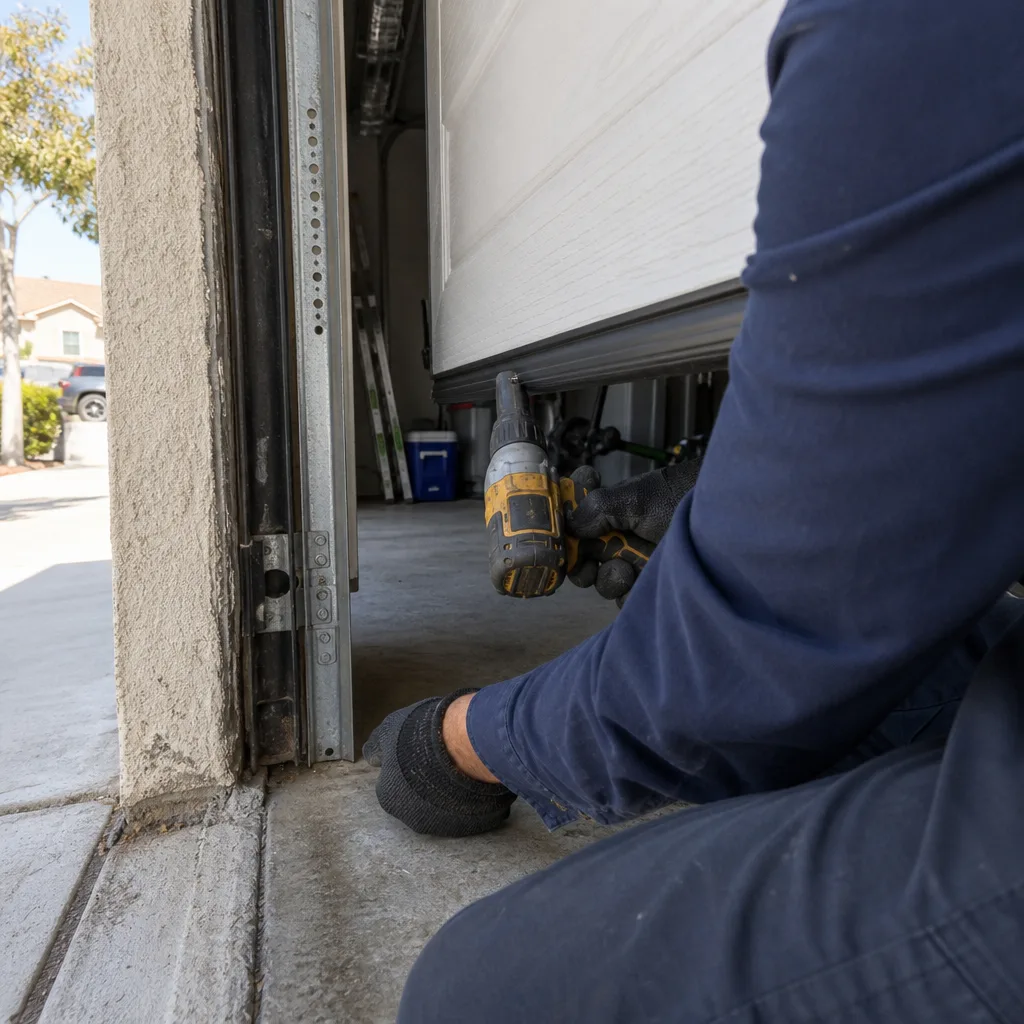
California law is clear about who’s responsible for permitted work: the contractor. Under the California Contractors State License Board (CSLB), a licensed contractor is required to pull permits for work that requires them. If a licensed contractor does permitted work without pulling the permit, the contractor can face CSLB discipline, and the homeowner can file a complaint or a civil claim.
But the practical liability at resale falls on the homeowner, regardless of who was at fault. Here’s how that plays out:
The takeaway: unpermitted work is a homeowner liability, not a contractor liability, at the moment it matters most, which is when the house changes hands. That’s why the written record matters. Our scope document states whether a permit is required for the work we’re doing, and our final photo record shows what was installed and how. If a permit is required, we wait to start until it’s issued. If it isn’t, the paper trail proves it.
Common Mistakes to Avoid
- Letting a contractor talk you out of a permit for structural work. “We don’t need to involve the city for this” is a red flag when a header is being replaced. The permit protects you, not the contractor, and the liability is yours at resale.
- Paying for a permit when only hardware was replaced. We’ve seen homeowners charged $500 for a permit on a simple spring swap. That’s someone selling paperwork, not safety. A torsion spring replacement is ordinary repair.
- Assuming an old opener is UL 325 compliant. Openers installed before 1993 predate the current entrapment protection rules. If your Mission Viejo home has a pre-1993 opener, it’s not compliant, permit or no permit, and it’s a documented safety issue.
- Closing escrow without checking the permit history. The $80 a permit search costs is the cheapest insurance you’ll buy in the transaction. Unpermitted garage work discovered post-closing is a six-figure problem in some cases.
- Trusting the seller’s oral statement. “Oh, the previous owner did the door.” That’s not a disclosure. California requires written disclosure for material facts. If it’s not on paper, it doesn’t exist.
- Doing the structural work yourself to save the permit. A header that fails in an earthquake-prone region is not a DIY victory. California’s seismic codes exist because the ground moves here. Mission Viejo sits in a moderate seismic zone, and an undersized header in a garage wall is a collapse point during a shaker.
When to Call a Professional
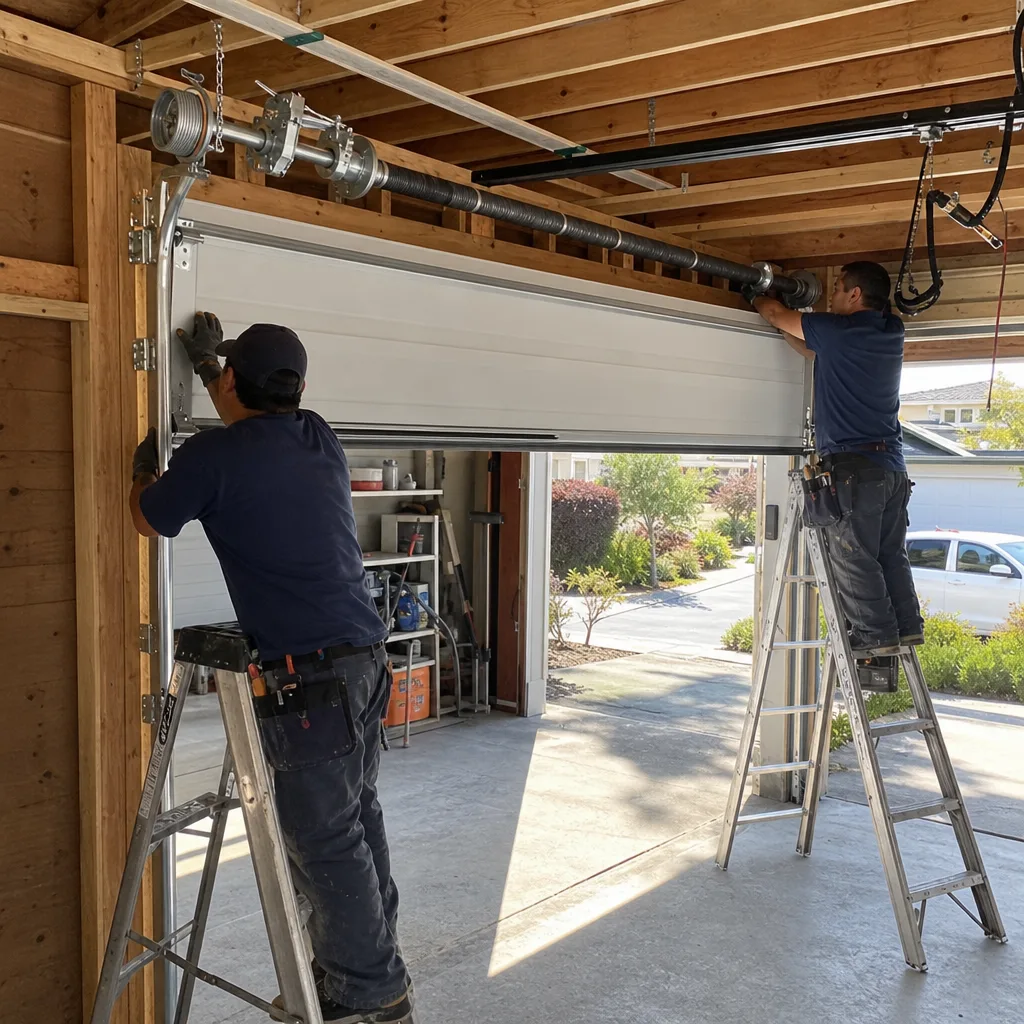
If your project involves a new header, a larger opening, hardwired electrical, or any structural modification, that’s not a garage door job. That’s a construction project with a garage door at the end. You need a general contractor, a structural engineer for the header calculation, and a garage door company that can coordinate with both. If your project involves replacing a door in an existing opening, and you want it documented for resale, that’s where a company that writes a scope and photos the work before quoting matters. Garage Door Installation in Mission Viejo covers the full process, including what our documentation looks like before, during, and after the work. Servo Garage Doors Mission Viejo offers free estimates in Mission Viejo, at (657) 293-2416.
Frequently Asked Questions
No, not if you’re replacing a door in an existing opening with no change to the framing or electrical system. Replacing a garage door panel, track, spring, or entire door assembly in the same opening is ordinary repair under California Building Code Section 1105 and does not require a permit. We document the scope in writing either way, so the answer is on paper for resale.
Only if the electrical work changes. A new opener that plugs into an existing, properly permitted outlet does not require a permit. Running a new circuit, relocating an outlet, or hardwiring the opener requires an electrical permit from the City of Mission Viejo. The UL 325 entrapment protection requirements apply regardless of permit status. Call (657) 293-2416 for an exact answer on your specific setup.
Permit fees vary by city and project scope. A straightforward electrical permit for a new outlet in Mission Viejo typically runs a few hundred dollars. Structural permits, for a header change or opening modification, run higher because they require plan review and often an engineer’s calculation. The fee is small compared to the cost of retroactive permitting if the work is discovered at resale without one.
You disclose it or you risk a civil suit. California requires sellers to disclose unpermitted work as a material fact. If you don’t know about it, the buyer’s inspector typically finds it, and the deal either stalls or gets renegotiated around retroactive permit costs. If you know about it and don’t disclose it, you carry post-sale liability. Pull the permit history before you list.
Sometimes, but it’s expensive. A retroactive or “as-built” permit requires the inspector to see the work that’s supposedly already been completed. For garage door structural work, that often means opening drywall to expose the header and framing. You’ll pay for demolition, inspection, and patching on top of the original work. That’s the cost of skipping the permit the first time.
Yes. For structural work that requires a permit, we coordinate with the engineer and the City of Mission Viejo Building Division before you’re quoted a start date. The permit is in hand before the work starts, and the final inspection is scheduled before the project closes. For hardware work, we document why no permit is required, in writing, in case you ever need to prove it. We’re the Servo Garage Doors Mission Viejo home team, and you can reach us at (657) 293-2416.
The Bottom Line
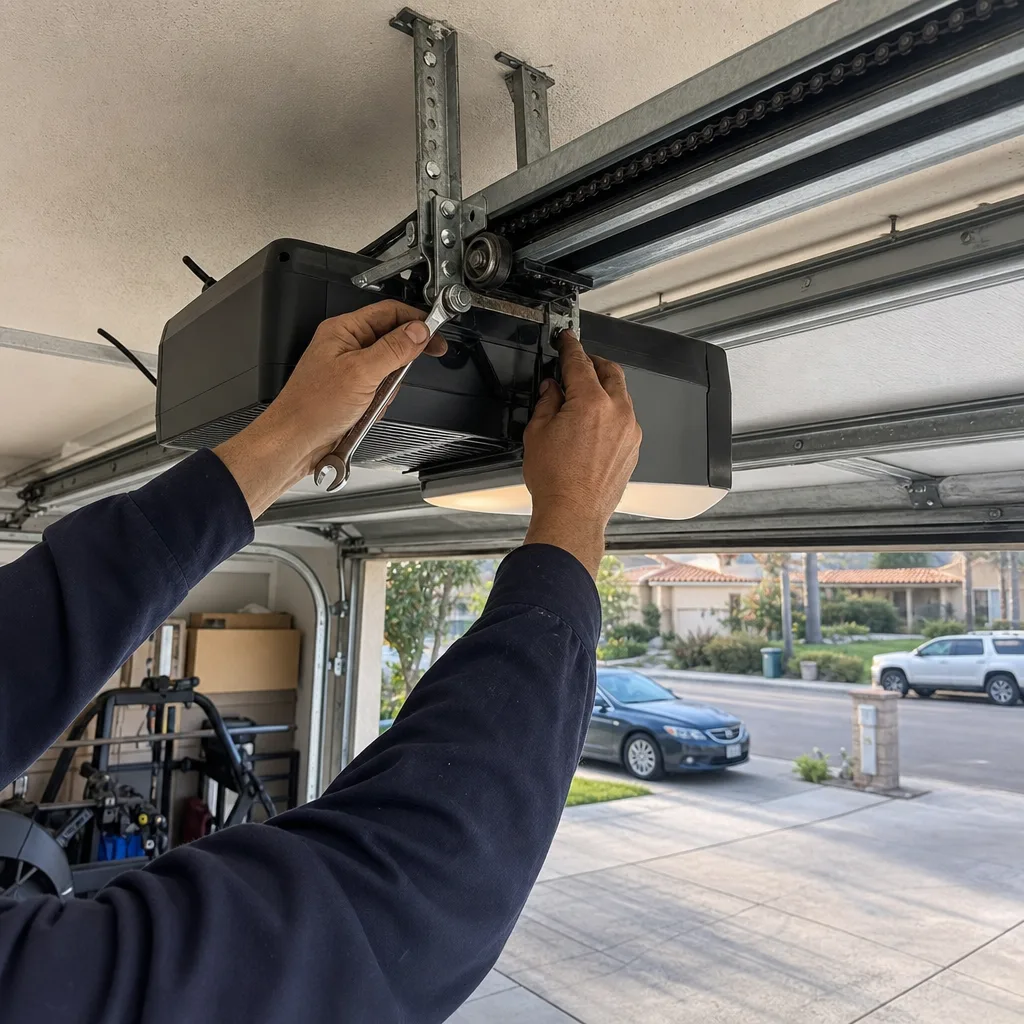
California’s garage door permit rule is a line, not a gray area: structural framing changes and electrical circuit modifications require a permit; hardware replacement does not. Mission Viejo’s local code adds the UL 325 entrapment requirements for any opener installation, permit or not. The liability for unpermitted work lands on the homeowner at resale, regardless of which contractor skipped the paperwork. Pull the permit history before you buy. Get the scope in writing before you hire. Keep the final record after the work is done. Garage Door Repair in Mission Viejo and Garage Door Opener Repair & Installation in Mission Viejo follow the same documentation rule: you see what’s wrong, in writing and in photos, before anyone quotes a fix.
Written by Marcus Deller, Owner at Servo Garage Doors Mission Viejo, serving Mission Viejo since 2015. Browse more guides & resources.